You are currently viewing SemiWiki as a guest which gives you limited access to the site. To view blog comments and experience other SemiWiki features you must be a registered member. Registration is fast, simple, and absolutely free so please,
join our community today!
During the 1940s when aerospace engineers were attempting to break the sound barrier for the first time, they were confronting a slew of new technical issues that had never been dealt with before, and in some cases never seen before. In subsonic flight airflow was predictable and well understood. In crossing the sound barrier, … Read More
Automotive cybersecurity is an intractable nightmare with significant though inchoate implications for consumers and existential exposure for auto makers. This reality became painfully clear earlier this month when the U.S. Supreme Court declined to hear FiatChrysler Automotive’s appeal in a class action lawsuit over … Read More
The semiconductor conference season has started out strong and the premier verification gathering is coming up at the end of this month. SemiWiki bloggers, myself included, will be at the conference covering verification so you don’t have to. Verification is consuming more and more of the design cycle so I expect this event to … Read More
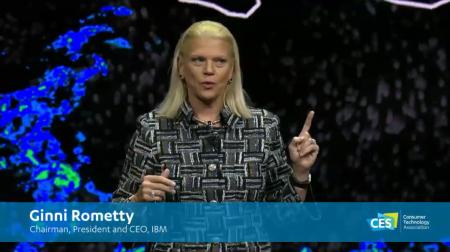
Ginni Rometty, chairman, president and CEO of IBM was kind enough to take on the task of an hour-long keynote at CES 2019 in Las Vegas last week. She used the opportunity to highlight three areas of computational innovation at IBM – deep data, broad AI and quantum systems – with the help of three partners: Delta Airlines, Wal-Mart… Read More
After 8 SemiWiki years, 4,386 published blogs, and more than 25 million blog views, I can tell you that IP is the most read semiconductor topic, absolutely, and that trend continues. Another correlating trend (from IP Nest) is the semiconductor IP revenue increase in relation to the semiconductor market (minus memory) which more… Read More
We have entered the age of AI specific processors, where specialized silicon is being produced to tackle the compute needs of AI. Whether they use GPUs, embedded programmable logic or specialized CPUs, many AI chips are based on parallel processing. This makes sense because of the parallel nature of AI computing. As a result, in… Read More
U.S. Department of Transportation Secretary Elaine Chao has agreed to mount the stage at the upcoming Consumer Electronics Show in Las Vegas to share her vision of the positive economic impact of technology unleashed from regulatory oversight. It’s a powerful message but it’s going to be a tough sell.
Chao is likely taking the… Read More
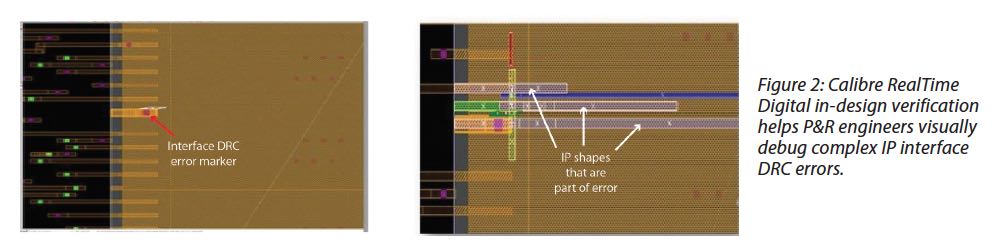
When floor planning (FP) and place & route (P&R) tools took over from custom layout tools for standard cell based designs, life became a lot better for designers of large digital chips. The beauty of the new flows was that all the internals of the standard cells and many IP blocks were hidden from view, lightening the load … Read More
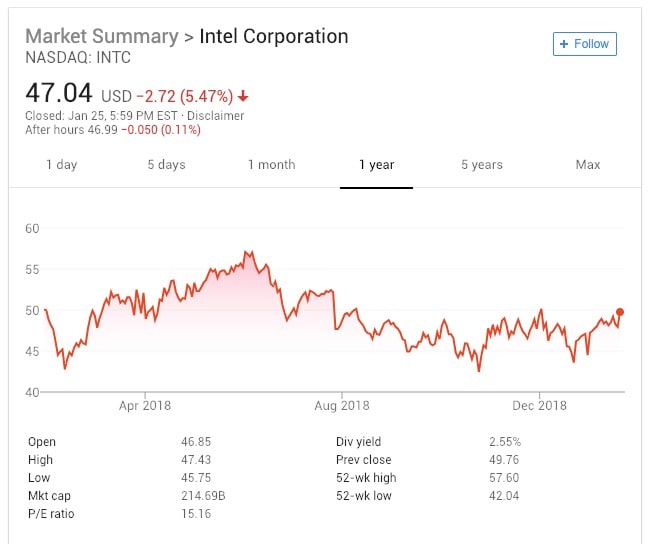
2018 was the 50th year for Intel in the semiconductor business, and their Q4 2018 conference call just happened last week, so I’ll get you all caught up on what they talked about. Bob Swan is the CFO and interim CEO, as the company continues to search for a new CEO after Brian K. was ousted for misconduct. Here’s a quick financial… Read More
In a hand-waving way it’s easy to answer why any hardware goes custom (ASIC): faster, lower power, more opportunity for differentiation, sometimes cost though price isn’t always a primary factor. But I wanted to do a bit better than hand-waving, especially because these ML hardware architectures can become pretty exotic, so … Read More











Quantum Computing Technologies and Challenges