WP_Term Object
(
    [term_id] => 64
    [name] => Solido
    [slug] => solido
    [term_group] => 0
    [term_taxonomy_id] => 64
    [taxonomy] => category
    [description] =>
    [parent] => 157
    [count] => 57
    [filter] => raw
    [cat_ID] => 64
    [category_count] => 57
    [category_description] =>
    [cat_name] => Solido
    [category_nicename] => solido
    [category_parent] => 157
    [is_post] =>
)
Process variation has been a top trending term since SemiWiki began as a result of the articles, wikis, and white papers posted on the Solido landing page. Last year Solido and TSMC did a webinar together, an article in EETimes, and Solido released a book on the subject. Process variation is a challenge today at 28nm and it gets worse… Read More
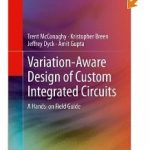
IC designers using advanced nodes are acutely aware of how variation effects in the silicon itself are causing increased analysis and design efforts in order to yield chips at acceptable levels. Four authors from Solidoare so passionate about this topic that they combined their years of experience into a book that I had a chance… Read More
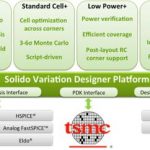
Solido Design Automation and TSMC recently published an article in EE Times describing how Solido’s High-Sigma Monte Carlo tool is used with TSMC PDK’s to achieve high-yield, high-performance memory design. This project has been a big part of my life for the past three years and it is time for a victory lap!
In TSMC 28nm, 20nm and … Read More
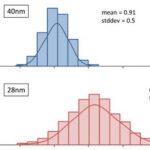
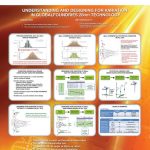
At DAC 2012 GLOBALFOUNDRIES and Solido presented a user track poster titled “Understanding and Designing for Variation in GLOBALFOUNDRIES 28-nm Technology” (as was previously announced here). This post describes the work that we presented.
We set out to better understand the effects of variation on design at 28-nm. In particular,… Read More
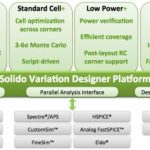
I met with Amit Gupta, President and CEO of Solido at DAC on Tuesday to get an update on their EDA tools used in the design of memory, standard cells and low-power. In 2012 they’ve expanded to add three new software packages: Memory, Standard Cell, Low Power. They must be doing something right because at DAC this year I see more… Read More
For a small company, Solido has some very large customers and partners, TSMC being on of them. Why? Because of the high yield and memory performance demand on leading edge technologies, that’s why.
Much has been made of and will continue to be said on the march of Moore’s Law. While economics of scale and performance vs. power… Read More
On Wednesday there is a User Track Poster Session that examines the design impact of process variation in GLOBALFOUNDRIES 28nm technology. For those of you who are wondering what process variation looks like at 20nm take this 28nm example and multiply it by one hundred (slight exaggeration, maybe).
Variation effects have a significant… Read More
Having spent a considerable amount of time with Solido, they were one of the founding members of SemiWiki, I can tell you that at 20nm the Variation Designer Platform is a critical part of the emerging 20nm design methodology. You can read more on Solido’s SemiWiki landing page HERE. It is well worth the click.
With technology… Read More
In today’s era, high performance mobile devices are asserting their place in every gizmos we play with and guess what enables them work efficiently behind the scene – it’s large chunks of memory with low power and high speed, packed as dense as possible. Ever growing requirement of power, performance and area led us to process nodes… Read More
Hello Daniel,
I am very interested on the articles on the PVT simulation, I have worked in that area in the past when I worked in process technology development and spice modeling and I also started a company called Device modeling technology (DMT) which built a Spice model library of discrete components, such as Bipolar/MOS /POWER… Read More