You are currently viewing SemiWiki as a guest which gives you limited access to the site. To view blog comments and experience other SemiWiki features you must be a registered member. Registration is fast, simple, and absolutely free so please,
join our community today!
            WP_Term Object
(
    [term_id] => 159
    [name] => Siemens EDA
    [slug] => siemens-eda
    [term_group] => 0
    [term_taxonomy_id] => 159
    [taxonomy] => category
    [description] =>
    [parent] => 157
    [count] => 828
    [filter] => raw
    [cat_ID] => 159
    [category_count] => 828
    [category_description] =>
    [cat_name] => Siemens EDA
    [category_nicename] => siemens-eda
    [category_parent] => 157
    [is_post] =>
)

WP_Term Object
(
    [term_id] => 159
    [name] => Siemens EDA
    [slug] => siemens-eda
    [term_group] => 0
    [term_taxonomy_id] => 159
    [taxonomy] => category
    [description] =>
    [parent] => 157
    [count] => 828
    [filter] => raw
    [cat_ID] => 159
    [category_count] => 828
    [category_description] =>
    [cat_name] => Siemens EDA
    [category_nicename] => siemens-eda
    [category_parent] => 157
    [is_post] =>
)
We’ve packed each day full of exciting activities focused on the latest in cutting-edge design. Use this site to find your favorite Mentor experts and events—whether in our suites and networking events, at our partner booths or in the conference. You won’t want to miss a thing!
Celebrating Your Design Creativity!
Rejuvenate with… Read More
DAC is coming up in a month (OMG less than 4 weeks and we are so not ready I hear a hundred marketing people cry out). That gives you four weeks (and a couple of days) to tell Mentor what you do in your spare time that you are passionate about (spare time, I hear a hundred engineers cry out, what is that?) and you could win $300.
For DAC, Mentor… Read More
Last week I had the pleasure of presenting at the Electronic Design Process Symposium (EDPS) workshop. This was my first time attending and I was very impressed. There were good presentations but I learned as much from the Q&A and the side conversations before/after/breakfast/lunch/etc. If you have the opportunity to attend,… Read More
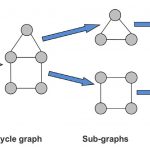
I think by now a lot has been said about the necessity of multi-patterning at advanced technology nodes with extremely low feature size such as 20nm, because lithography using 193nm wavelength of light makes printing and manufacturing of semiconductor design very difficult. The multi-patterning is a novel semiconductor manufacturing… Read More
I was at EDPS in Monterey the last couple of days. It is one of the most interesting conferences to attend. Go next year since you already missed it this year. It is not big but the quality of the content is high. Historically the dinner in the middle is in the Monterey Yacht Club and there is a keynote speech. A few years ago it was me but this… Read More
Most IC engineers learn best by hands-on experience when another more experienced person can show us what to do. If you cannot find that experienced person, then the next best thing is a video from an expert. I was surprised to find out that video was so important today that the #2 most viewed web site on the Internet was www.youtube.com… Read More
Archaic tech metaphors abound, stuck in the psyche of users everywhere. We still “dial” numbers, long after the benefit of a short pull area code disappeared. (Humans could dial 1, 2, or 3 a lot faster on a rotary phone, and there were fewer dialpulses for central office switches to decode – thus big cities with more phone traffic like… Read More
Mentor Graphics acquired Berkeley Design Automation this morning. The details of the deal were unannounced. This is a strong move by Mentor to challenge Cadence and Synopsys in the nanometer analog/mixed-signal market and nanometer memory characterization market, respectively. Mentor not only acquires the technology and… Read More
If you are a Mentor user, U2U, the Mentor User group is coming up on April 10th. This is an all day event at the DoubleTree. The event is free. Registration starts at 8am and the agenda itself starts at 9am. There is a reception from 5-6pm in the evening.
There are three keynotes. At 9am: Wally Rhines, CEO of Mentor. The Big Squeeze. For … Read More
By Jeff Wilson, Mentor Graphics
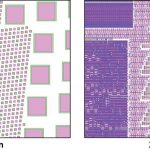
We’ve talked about the new requirements for Fill in IC design for advanced nodes in previous blogs on this site. This time I’d like describe the fill solution that Mentor and TSMC have jointly developed to meet the requirements of fill for TSMC’s 20nm (N20) manufacturing process.
The traditional… Read More