You are currently viewing SemiWiki as a guest which gives you limited access to the site. To view blog comments and experience other SemiWiki features you must be a registered member. Registration is fast, simple, and absolutely free so please,
join our community today!
WP_Term Object
(
    [term_id] => 157
    [name] => EDA
    [slug] => eda
    [term_group] => 0
    [term_taxonomy_id] => 157
    [taxonomy] => category
    [description] => Electronic Design Automation
    [parent] => 0
    [count] => 4551
    [filter] => raw
    [cat_ID] => 157
    [category_count] => 4551
    [category_description] => Electronic Design Automation
    [cat_name] => EDA
    [category_nicename] => eda
    [category_parent] => 0
    [is_post] =>
)
Will 14nm Yield?by Daniel Nenni on 03-26-2013 at 9:00 pmCategories: EDA, Synopsys
If I had a nickel for every time I heard the term “FinFET” at the 2013 SNUG (Synopsys User Group) Conference I could buy a dozen Venti Carmel Frappuccinos at Starbucks (my daughter’s favorite treat). In the keynote, Aart de Geus said FinFET 14 times and posed the question: Will FinFETs Yield at 14nm? So that was my mission, ask everybody… Read More
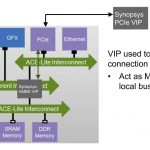
So, you dropped that piece of complex IP you just licensed into an SoC design, and now it is time to fire up the simulator. How do you verify that it actually works in your design? If you didn’t get verification IP (VIP) with the functional IP, it might be a really long day.
Compliance checking something like a PCIe interface block is a … Read More
I was at SNUG earlier today at both Aart’s keynote that opened the conference and at his “meet the press” Q&A just before lunch. The keynote was entitled Bridges to the Gigascale Decade. And the presentation certainly contained lots of photos of bridges! Anyway, I’m going to focus on just one thing,… Read More
Amidst frequently changing requirements, time pressure and demand for high accuracy, it is imperative that EDA and design companies look at time consuming processes in the overall design flow and find alternatives without losing accuracy. High Frequency Analysis of IC designs is one such process which is traditionally based… Read More
Pure digital routers for IC designs have an easier task than mixed-signal routers, because mixed-signal routers have more constraints like:
- Shielded buses
- Differential pairs
- Twisted pairs
- Matched RC routing
- 20nm technology rules
- Double Patterning Technology (DPT)
…
Read More
EDA vendors, IP suppliers and Foundries provide an eco-system for SoC designers to use in getting their new electronic products to market quicker and at a lower cost. An example of this eco-system are three companies (TSMC, Atrenta, Sonics) that teamed up to produce a webinar earlier in March called: Unlocking the Full Potential… Read More
When Semiwiki readers see the name Forte Design Systems, they may think of the live bagpipers’ performance that closes the yearly Design Automation Conference. Forte has been the sponsor of this moving end to DAC since 2001. Step with me behind the plaid kilts for a good look at this remarkable company headquartered in San Jose, … Read More
These days when we talk of SoC verification, what comes to our mind immediately is VirtualPlatform. Of course with the increasing size, complexity and different styles of designs, it is very much a need.
However, that is supported by actual verification engines and methodologies which are varying considerable with digital, … Read More
Back when I was a programmer at VLSI Technology in the mid-1980s, I was responsible for all the data management in the VLSI Design Tools. By responsible for, I mean that I designed the whole system and wrote all the code. Prior to the 5th release of our product, there was no data management, designers simply used filenames and it was … Read More
Many engineers dream about starting their own company some day, and today I talked with an engineer that has gone beyond the dreaming stage to actually start an EDA company and then get that company acquired. His name is Brad Quinton and the start-up was called Veridae Systems, now part of Tektronix.
Brad Quinton… Read More













ChipAgent Raises $134Million and Why it Matters