You are currently viewing SemiWiki as a guest which gives you limited access to the site. To view blog comments and experience other SemiWiki features you must be a registered member. Registration is fast, simple, and absolutely free so please,
join our community today!
WP_Term Object
(
    [term_id] => 157
    [name] => EDA
    [slug] => eda
    [term_group] => 0
    [term_taxonomy_id] => 157
    [taxonomy] => category
    [description] => Electronic Design Automation
    [parent] => 0
    [count] => 4380
    [filter] => raw
    [cat_ID] => 157
    [category_count] => 4380
    [category_description] => Electronic Design Automation
    [cat_name] => EDA
    [category_nicename] => eda
    [category_parent] => 0
    [is_post] =>
)
Dual in-line memory modules (DIMM’s ) with double data rate synchronous dynamic random access memory (DDR SDRAM) have been around since before we were worried about Y2K. Over the intervening years this format for provisioning memory has evolved from supporting DDR around 1995, to DDR1 in 2000, DDR2 in 2003, DDR4 in 2007 and DDR4… Read More
Extraction Features for 7nmby Tom Dillinger on 08-21-2017 at 12:00 pmCategories: Cadence, EDA, FinFET
Frequent Semiwiki readers are familiar with the importance of close collaboration between the foundries and EDA tool developers, to provide the crucial features required by new process nodes. Perhaps the best illustration of the significance of this collaboration is the technical evolution of layout parasitic extraction.… Read More
I’ve written before about how Ansys applies big data analytics and elastic compute in support of power integrity and other types of analysis. A good example of the need follows this reasoning: Advanced designs today require advanced semiconductor processes – 16nm and below. Designs at these processes run at low voltages, much… Read More
Traditionally, EDA has been a brute force methodology where we buy more software licenses and more CPUs and keep running endless jobs to keep up with the increasing design and process complexities. SPICE simulation for example; when I meet chip designers (which I do quite frequently) I ask them how many simulations they do for a … Read More
FPGA-based prototyping has provided a major advance in verification and validation for complex hardware/software systems but even its most fervent proponents would admit that setup is not exactly push-button. It’s not uncommon to hear of weeks to setup a prototype or of the prototype finally being ready after you tape-out. … Read More
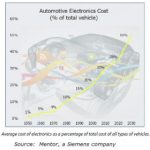
Semiwiki readers are no doubt very familiar with the increasing impact of the automotive market on the semiconductor industry. The magnitude and complexity of the electronic systems that will be integrated into upcoming vehicle designs reflects the driver automation, safety, and entertainment features that are in growing… Read More
Whether you’re right out of college, starting on your first design, a burn-and-churn designer thinking there must be a better way or an ASIC designer wanting to do a little prototyping, this webinar may be for you. It’s a fast start on using the Aldec Riviera-PRO platform for verification setup, run and debug, and more. There are … Read More
At the recent DAC conference in Austin I attended a panel discussion over lunch where engineers from four companies talked about how they approached mixed-signal design and verification challenges for automotive and IoT systems. It seems like 2017 was the year of automotive at DAC, while in 2016 it was all about IoT. Both segments… Read More
Mentor, A Siemens Business, just released a new white paper entitled, “The True Costs of Process Node Migration” written by John Ferguson. This is a good quick read that highlights some of the key areas that are often over looked when contemplating a shift of process nodes for your next design.
When considering a shift to a more advanced… Read More
Machine learning (ML) is the hot new technology of our time so EDA development teams are eagerly searching for new ways to optimize various facets of design using ML to distill wisdom from the mountains of data generated in previous designs. Pre-ML, we had little interest in historical data and would mostly look only at localized… Read More











Musk’s Orbital Compute Vision: TERAFAB and the End of the Terrestrial Data Center