You are currently viewing SemiWiki as a guest which gives you limited access to the site. To view blog comments and experience other SemiWiki features you must be a registered member. Registration is fast, simple, and absolutely free so please,
join our community today!
WP_Term Object
(
    [term_id] => 157
    [name] => EDA
    [slug] => eda
    [term_group] => 0
    [term_taxonomy_id] => 157
    [taxonomy] => category
    [description] => Electronic Design Automation
    [parent] => 0
    [count] => 4441
    [filter] => raw
    [cat_ID] => 157
    [category_count] => 4441
    [category_description] => Electronic Design Automation
    [cat_name] => EDA
    [category_nicename] => eda
    [category_parent] => 0
    [is_post] =>
)
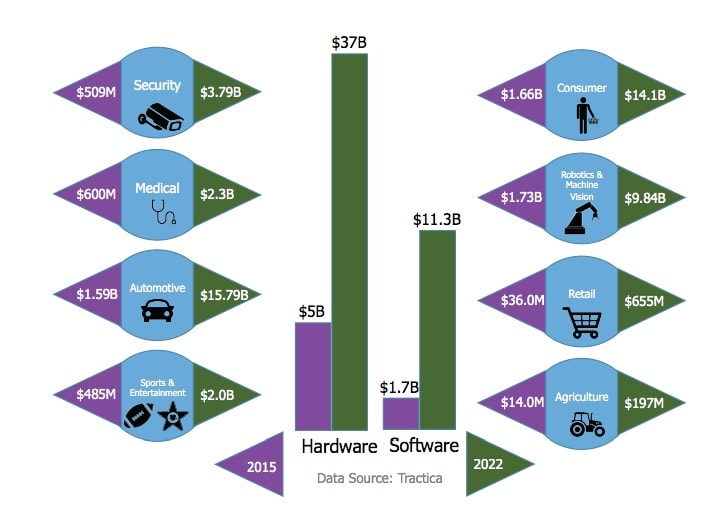
Computer vision as a research topic has been around since the 1960’s and we are enjoying the benefits of this work in modern-day products all around us as robots with computer vision are performing an increasing number of tasks, even our farmers are using computer vision systems to become more productive:
…
Read More
One of the more interesting parts of blogging for SemiWiki is getting to know emerging EDA and IP companies from around the world. As I have mentioned before, there are some incredibly intelligent people in the fabless semiconductor ecosystem solving very complex problems. It is a two way exchange of course since we know the market… Read More
In the old days to learn about new semiconductor IP you would have to schedule a sales call, listen to the pitch, then decide if the IP was promising or not. Today we have webinars which offer a lot less drama than a sales call, plus you get to ask your questions by typing away at the comfort of your desk, hopefully wearing headphones as … Read More
DeFacto and their STAR technology are already quite well known among those who want to procedurally apply edits to system-level RTL. I’m not talking here about the kind of edits you would make with your standard edit tools. Rather these are the more convoluted sort of changes you might attempt with Perl (or perhaps Python these days).… Read More
Clock Domain Crossing (CDC) is a common occurrence in a multiple clock design. In the FPGA space, the number of interacting asynchronous clock domains has increased dramatically. It is normal to have not hundreds, but over a thousand clock domains interactions. Let’s assess why CDC is a lingering issue, what its impact and the … Read More
With each new silicon process node, the complexity of SoC design rules and physical verification requirements increases significantly. The foundry and an EDA vendor collaborate to provide a “reference flow” – a set of EDA tools and process design kit (PDK) data that have been qualified for the new node. SoC design methodology … Read More
In the EDA space, nothing seems to be more fragmented in-term of solutions than in the Design Verification (DV) ecosystem. This was my apparent impression from attending the four panel sessions plus numerous paper presentations given during DVCon 2018 held in San Jose. Both key management and technical leads from DV users community… Read More
The time is 1995 and my mandate as Layout Manager is to grow my team. I advertised everywhere but there were no experienced people in Canada that I can hire so the solution was back to training. I was the trainer a few times in Israel in MSIL but there we had a very organised material for layout, UNIX, software, etc. We had exercises, tests,… Read More
The semiconductor industry has gone through several major transitions driven by different dynamics such as shift in business models (fab-centric to fab-less), product segmentation (system design house, IP developers) and end market applications (PC to cloud; and recently, to both automotive and Internet of Things — IOT’s,… Read More
On LinkedIn I have some 2,116 connections and many of those are students looking to enter the field of EDA, IP or semiconductor design. What a wonderful opportunity these students have by attending the 55th annual DAC in San Francisco this summer from June 24-28. Technical sessions, keynote speeches, exhibitors, networking, … Read More







Musk’s Orbital Compute Vision: TERAFAB and the End of the Terrestrial Data Center