RVN! 26 Banner revised (800 x 100 px) (600 x 100 px)

Will Google Go Thermonuclear?

Will Google Go Thermonuclear?
by Ed McKernan on 01-06-2013 at 8:30 pm

“It’s not like we started it,” said Larry. “After all the idea of going Thermonuclear was first broached by Steve to Eric at their outdoor café meeting in Palo Alto way back in 2010. We’re just following by example and as Steve was wont to quote Picasso; “good artist copy, great artist steal” so why not go Thermonuclear with our Android partners before they get too large and unmanageable. The stakes are too high not to take things into our own hands and the X-Phone will be the start – however we’ll need some new partners to help carry the load. Let’s just remember that whatever we do, make sure there’s no evil involved.”

The shifting Mobile Tectonic plates are bound to create new partnerships and alliances as the old Wintel empire retreats to its legacy comfort zone. What remains today are four players looking to dominate the mobile platform (i.e. Apple, Google, Samsung and Amazon) and each need to expand their presence in the coming new year or fall behind. Recent rumors abound that Amazon is going to build a smartphone; Google will create its X-Phone to outflank Samsung who in response is hedging its O/S options with Tizen, another mobile Linux O/S that is also backed by Intel. Get the picture: trust no one, especially not your “partners.”

Apple’s introduction of the iPAD Mini is one more step in the race to solidify the standardization of form factors based on whether it is a one-handed or two-handed mobile device. It is now clear that true personal mobility will be encased in a device that holds a screen that is between 4 and 8” and costs from $0 subsidized to $699 unsubsidized with the latest baseband technologies at the high end. In this expanded market place one can include iPods, smartphones, tablets and e-readers. This eventually becomes a market of multiple billions of units a year and served only by those who can assemble a very efficient integrated supply chain like Apple and Samsung do today. Over the past year, Google has come to understand that these former partners will be strict gatekeepers who intend to exclude their maps icon from the devices that fall into a new customers hand. Savvy buyers will know hoe to upgrade but many will stay with the default settings and thus deny Google revenue. Amazon also knows that their marketplace will depend on mobile shoppers who don’t have a one button access to their web site. The current Kindle platform is not feature rich enough to attract premium buyers.

Legacy is still profitable for Wintel but is likely to shrink in terms of dollars in a manner similar to how IBM’s mainframe business declined. The original 10” iPAD, we can now say was Apple’s way to test the market on the concept of internet consumption being more important than the Microsoft Office Suite. Consumers were expected to dabble but would corporate? The answer in the end was yes and it caught Intel and Microsoft by surprise because it was underpowered and didn’t support traditional apps. Intel received their heads up from Transmeta in 2000 on the importance of battery life in a wireless world but spent the next ten years pushing performance in large notebooks.

While Apple shipped iPADs with $30 processors, Intel launched Sandy Bridge and Ivy Bridge “ultra low voltage” parts at premium prices (>$200) and thus not only stunted the launch of ultrabooks but also tablets. Apple’s model can be summarized as giving away the processor, graphics and iOS while getting paid a premium on Batter Life, NAND storage and 4G LTE. In the end, the high valued piece of computing that Moore’s Law addresses is that which is most mobile and connected. Intel could have vectored off the performance roadmap years ago to build an ultra low power x86 that was economical, but perhaps they were too distracted by AMD and NVidia. I have a strong suspicion that Apple understood that Wintel would breakup based on each vendors desire to maintain their high margin component and compromise was out of the question. Microsoft’s decision to build their own tablet with an ARM processor shows that it is late in the game. And so Apple’s model to give away the processor and O/S is in many ways similar to Microsoft giving away Internet Explorer for Free in order to dispatch the once thriving upstart known as Netscape. One can hear the oxygen being sucked out of the room.

In the coming year Apple and Samsung will look to extend their leads as they ping pong faster product iterations to close the gaps that once existed between a 3.5” iphone and a 10” tablet. Look for an iPAD mini refresh with a Retina Display in the months ahead that will be priced at $359 and allow the current device to drop to $299. Also look for an iPod with a 5” display as well as a new iPhone with a larger display, better camera and NFC. Samsung will splatter the wall with even more versions at ever smaller price point increments as they leave no product hole. Google sees this coming and has to move quickly or lose its leverage.

The issue for Google is not just the creation of the X-Phone, it also entails the creation of a whole supply chain and retail stores or stores within stores. Android started as an O/S that was meant to be proliferated to multiple OEMs who each took a small slice of the pie and thereby enable the creation of the equivalent Microsoft’s PC strategy for the current decade. Samsung took the free O/S and leveraged its incredible vertical supply chain and fantastically expensive marketing budgets to buy off the channel while still making a profit. The other Android players withered at the assault. And so now Google has to conjure up advanced products to outflank Samsung. Google will need help on the hardware side. Will they turn to Intel as a Fab for cheap mobile chips and in return swear to stay x86 in their data centers. Is Amazon thinking the same thing?

Apple’s plan to ramp at TSMC this year with its A6X processor is a sign that they are looking to be completely independent of Samsung in the next 18 months. If they were unable to make a deal with Intel as a second Foundry then the latter has to aggressively move to partner with one of the other platform players. Paul Otellini sits on Google’s Board and I am sure has made the pitch. Is there a conflict of interest here that has caused him to resign from Intel early in order to facilitate a partnership? Time will tell. However mistakes at this stage will be magnified down the line. Where we sit today was unimaginable a year ago and where we sit January 2014 is likely to be significantly beyond what we can now dream.


Full Disclosure: I am Long AAPL, INTC, ALTR, QCOM

Celebrity Electronics Show 2013 (CES)

Celebrity Electronics Show 2013 (CES)
by Daniel Nenni on 01-06-2013 at 4:00 pm

Time to pack up for the 2013 Consumer Electronics Show in Las Vegas, I will be driving down with my beautiful wife Shushana because she does not like to fly. The drive takes the better part of a day so we will leave early and see the sunrise over the desert. She is great company, the time will fly by. We will be 2 of the more than 150,000 people to attend this year. Wow!

Last year’s celebrities included: Basketball bad boy Dennis Rodman, Fitness guru Jillian Michaels, Gadget fan boy Justin Bieber, Rapper 50 Cent, Reality stars PaulyD and Snooki, Actor Will Smith, Singer Kelly Clarkson, Ryan Seacrest, Rapper/Actor LL Cool J, and Justin Timberlake, just to name the most famous ones. No telling what CES has in store for us this year. Rumor has it Bill Clinton will be here (surrounded by booth babes I will bet) which would be worth the wait.

Since I’m on the CES press list I have been pelted with emails on what to expect this year. Last year the OLED HD TV’s were the coolest. Unfortunately I need a 63” to replace my current plasma screen and OLEDs only come in 55” so I will wait. Same thing with Apple TVs I’m told, 55” is the sweet spot. Ultrabooks were big last year but I have yet to buy one. I recently bought (2) HP laptops since they were half the cost of Ultrabooks. We are a smartphone/tablet family now so laptops are only for work that is easier on a laptop like blogging and QuickBooks. Samsung had the biggest booth last year with the most impressive collection of phones and tablets. It will be interesting to see who challenges Samsung this time (Apple doesn’t go to CES).

This year it’s TV Tablets, Google TVs, and a new Smart TV from Samsung that all other TVs are rushing to see:

One of the most interesting new products will be flexible screens from Samsung which will be 5.5″ bendy displays with a resolution of 1280 x 720 HD and a pixel count of 267 ppi. Nothing like getting twisted in Las Vegas!

A Red Ridge Tablet from Intel? Red Ridge is Intel’s Medfield-based tablet platform, which is definitely blog worthy and from what I have read it is already in production. More on that after I get to see/touch one.

Intel will also talk in detail about actual 22nm mobile SoCs. The Bay Trail-T is rumored to be a quad-core scheduled for a 2014 launch and the Valleyview-T which will take on NVIDIA’s Tegra 3 and Qualcomm’s S4.

In a counter announcement, NVIDIA will show the Tegra 4 which is TSMC 28nm (my all time favorite process node). Tegra 3 is TSMC 40nm and has done quite well in the HTC One X+ and tablets such as Google’s Nexus 7 and Microsoft’s Surface. Tegra 4 is a quad core ARM A15 SoC with monster graphic capabilities. I would bet there will be Tegra 4 based tablets at the show.

Cars were pretty big last year but this week even more so. Audi, Chrysler, Ford, General Motors, Hyundai, Kia, Subaru and more than 100 auto tech companies displaying the latest in-car technology. Lots of fitness and health related products too making bio engineering and robot people even closer to reality.

OK, that’s my 600 words for today. It would be a pleasure to meet you if you are in Las Vegas this week. I will definitely be at the GOLBALFOUNDRIES party on Wednesday night. This is their third year at CES and I congratulate them for bringing the fabless semiconductor ecosystem to Las Vegas. After all, this is where our customers are.

Joinn the CES 2013 discussion HERE.


Online Schematic Capture and SPICE Circuit Simulation

Online Schematic Capture and SPICE Circuit Simulation
by Daniel Payne on 01-04-2013 at 11:33 pm

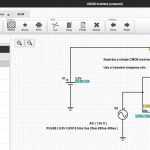
I love all things SPICE so when I read a tweet tonight from @PartSimI just had to try out their Schematic Capture and SPICE circuit simulator in a browser. The site is www.partsim.com and all you need is a web browser and short registration process, then it’s off to the Examples where I found a simple CMOS inverter and then extended it to be two inverters:


Continue reading “Online Schematic Capture and SPICE Circuit Simulation”


Tech Forum, February 5, features 32/28-, 20-, 14-, and 10-nanometer processes

Tech Forum, February 5, features 32/28-, 20-, 14-, and 10-nanometer processes
by Daniel Nenni on 01-04-2013 at 7:00 pm

The Common Platform Alliance — IBM, Samsung Electronics, Co., Ltd., and GLOBALFOUNDRIES — continues to redefine the landscape of the semiconductor industry with its groundbreaking collaboration. Join us at our 2013 Common Platform Technology Forumon Tuesday, February 5, 2013 at the Santa Clara Convention Center as we showcase the latest technological advances being delivered to the world’s leading electronics companies.


Real Collaboration = Big Business


At the Common Platform Technology Forum, you’ll see and hear firsthand how the combined expertise of our partners is addressing the most demanding IC design and manufacturing challenges. Our collaborative research and innovative technology development have resulted in an accelerated roadmap and rapid customer adoption, and we’ll touch upon these key highlights:

    [*=left]Leading-edge process technologies at 32/28-, 20-, 14-, and 10 nanometer
    [*=left]Advanced innovations such as FinFET, design & technology co-optimization, and double patterning

Plus:

    [*=left]A peek into the future of next-generation device innovations being researched: silicon nanowires, carbon nanotubes, and 3D device structures
    [*=left]A showcase of our ecosystem partners and Common Platform design, enablement, and implementation offerings in our Partner Pavilion

And, visionary keynotes by IBM, Samsung, GLOBALFOUNDRIES, and ARM.

Register now for this FREE technical event!


Audio/Voice DSP IP core: the next road to billion unit shipment

Audio/Voice DSP IP core: the next road to billion unit shipment
by Eric Esteve on 01-04-2013 at 6:09 am

When mentioning CEVA DSP IP cores, the first reaction is to think about the complexes DSP functions used into wireless Modem Application like 3G and Long Term Evolution (LTE). Considering that CEVA market share is above 70% for these products, such a reaction makes sense. But did you knew that CEVA DSP IP cores are also empowering audio/voice devices, in wireless (handset, smartphones) applications requiring ultra low power consumption, as well as in consumer oriented (non wireless) applications, where the highest performance is key?

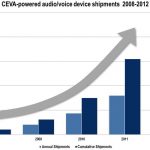
If you still have a doubt about CEVA positioning in this field, just have a look at CEVA–powered audio/voice device (ie: IC, not cores!) shipments over 2008-2012: more than 2 Billion cumulated shipments of IC integrating CEVA DSP IP cores tailored for audio or voice application:

The explosion of smartphones shipments has obviously put a strong focus on the Application processor and Baseband modem shipments, respectively empowered by the main CPU and DSP IP cores, delivered by ARM Ltd. and CEVA respectively. But, as well as ARM is investing the graphic market with their MALI GPU core family, CEVA has invested the Audio/Voice market with the Teak Lite family. Looking at smartphone block diagram, you can find this DSP located in three main places:

[LIST=1]

  • Audio/Voice processing in dedicated DSP within Baseband Processor

    • Super wideband voice codecs, noise reduction, echo canceller, audio codecs

    [LIST=1]

  • Audio offloading to dedicated audio DSP in Application Processor

    • Low power audio codecs (long playback time), post processing (e.g. DM3+)

    [LIST=1]

  • DSP integrated within or in conjunction with audio/voice CODEC chip

    • Ultra-low power voice processing (e.g. voice trigger), noise reduction, audio PP

    As usual, a precise picture (Credit: The Linley Group) will help to clearly understand the DSP positioning within (1), (2) and (3):

    It’s impressive to see how voice processing in mobile handsets is allocated with increasing DSP MIPS (200-300MHz today), to meet new requirements (higher bandwidth vocoders, noise suppression, ANC like in the iPhone 5 and more), calling for Audio/Voice dedicated DSP offering up to 500 MHz MIPS in the very near future, say in 2015.

    The race for performance is even more critical in CE market segments, with emergence of connected or smart TV, integrating camera and microphones. CEVA proposes a solid roadmap for the Teak Lite (TL) 32 bit DSP core family:

    the TeakLite III is being integrated in products shipping today in production, allowing customers to implement their own software in the audio codec to help differentiate their products from the competition.

    The next architecture generation based on the TeakLite 4 DSP core, will offer a framework of Application Specific DSP IP core, in order to provide the best Power/Performance/Area (PPA) optimization for the targeted application, including the future high end home or gaming applications, yet to come, that will require even higher performances for audio/voice processing – the 500 MHz MIPS already mentioned.

    The TeakLite 4 DSP IP core family is more than just another DSP IP core, CEVA understood how efficient it was for customers to benefit from a platform, rather than simply a naked core. That is, the platform offer integrates the various folowing features, I should say differentiators:

    • Most powerful audio/voice DSP

      • Dual 32-bit MAC, quad 16-bit MAC
      • 1.5 GHz at 28nm HPM
      • Variable 10 stage pipeline
    • Special emphasis on power optimization
    • Extensive audio/voice SW library (with more than 100 SW codecs and functions by CEVA and partners)
    • Area optimized, down to 90K gates (Small memory footprint, using 16 and 32-bit instruction width)
    • Extensible architecture, allowing customer differentiation and user defined ISA

    Last, but not least, CEVA has understood very early that the success of a processor core (whether it’s a CPU, DSP or GPU) will not only be based on the most advanced architecture (necessary condition, but not sufficing) but also on the long term building of a large ecosystem, made of SW developers partners, IP vendors, Silicon Foundries, EDA tools vendors… and satisfied customers! Sounds familiar when you remind how ARM Ltd has built his position of #1 IP vendor. Both companies are on the same track, one with CPU, the other with DSP, and we don’t see how they could lose their respective leader position, one with DSP (CEVA), one with CPU (ARM).

    Eric Esteve from IPNEST


  • Engineer to Engineer, Embedded Instrumentation

    Engineer to Engineer, Embedded Instrumentation
    by Daniel Payne on 01-03-2013 at 10:28 pm

    Last month the folks at Tektronix did something very useful, they invited 30 engineers to talk directly with their chief engineer of embedded instrumentation as part of “Meet the Experts” in Santa Clara, CA.

    Brad Quinton, Chief Architect created a new and efficient approach of embedding instrumentation in your ASIC design when doing an FPGA prototype. His start-up company was called Veridae and they were acquired by Tektronix in 2011.

    Don Dingee and I have been blogging about this new technology for a few months now:


    Most EDA companies today will buffer their development team from the actual end-users in hopes that the marketing folks can keep everyone happy and productive. Only the start-up companies allow their developers to directly meet and interact with the engineers that could use the technology, and the rewards are great:

    • Deeper understanding of what the technology can and cannot do.
    • Tips on how to best use the software.
    • Frank discussion on the philosophy behind the software and the approach used.
    • Confidence in the expertise level of the developer.

    At the December 11th event there were engineers from several companies leanring about Tek’s new software called Certus 2.0:

    • Infinera
    • Cisco
    • Avago
    • Qualcomm
    • LumaSense Technologies
    • Simutest
    • Broadcom
    • Sandisk
    • A popular microprocessor company
    • Marvell
    • MicroSemi
    • Apple

    If you’d be interested in attending the next “Meet the Experts” then leave a comment below and I’ll let you know when and where it will be held.


    Apple’s Next Threat

    Apple’s Next Threat
    by Randy Smith on 01-03-2013 at 9:30 pm

    It seems only appropriate that at the beginning of the year we should look at who is going to be the next significant threat to Apple’s profitability machine. During Apple’s meteoric rise over the past 9 years (APPL share price: Jan-2004 @ $11 vs. Jan-2013 @ $550) different companies have been put up as Apple’s next significant threat or competitor. At various times we have heard that next impediment to Apple’s success is IBM, Samsung, Google, Sony, Intel, HP, Nokia, Microsoft, etc. The list is long, yet none of them makes much of a dent in Apple’s profitability or market cap. In fact, Apple’s market cap is more than twice any of those listed here and traded on Nasdaq.

    One factor is that Apple gets its revenue from many sources – smart phones, laptop computers, desktop computers, tablets, media content, licensing, software, services, handhelds players (iPod), and peripherals. As of July 2012, about 73% of Apple’s revenue was coming from iPhone and iPad. None of these competitors above is in all of these markets. Apple leverages its broad base of revenue to target competitors in certain segments. Also keep in mind that margins vary by segment.


    Figure 1. Apple Changing Revenue Mix

    There has been tremendous concentration on Google as a threat to Apple. This comes from the fact that the ‘mobile internet’ is viewed as a fast growing and highly valued market. For Google, this is also a ‘special’ advertising conduit. The last similar market was probably the desktop operating system market in which Microsoft was a runaway winner. Many people predict that the mobile internet will also be primarily a winner-take-all-market. Microsoft failed at its first offerings in this segment and is hoping its latest offering will succeed – I doubt it based on what I have seen so far. The current war has multiple OS fronts – smart phone, tablets, home set tops, etc. But Google’s revenue comes primarily from advertising – wouldn’t that make Facebook a more significant competitor to Google? It doesn’t matter, Apple is taking all of the profits from the segment.

    What I see is that these devices have moved well beyond being a smart phone. iPods are becoming less important for Apple since the same function is in the iPhone – plus the iPhone has a camera, movie player, eBook reader, etc. To top it off, all age groups seem to be adopting these new apps and devices. What do they have in common – media content. The iTunes store generates nearly as much revenue for Apple as Desktops and iPods combined, has better margins, and it is growing. There is no such uniform offering on Google. Google Music has been virtually ignored by the market. To compete with Apple you need some content. Google’s margins per phone are quite small and Apple users are not shying away from paying Apple’s higher prices. People have become accustomed to getting content from the Apple Store(s), both online and in the retail stores.

    So, who has access to a lot of content? Who has entered or is entering the big markets of smart phones and tablets? The next threat to Apple is Amazon. They are working on a phone and they already have Kindle for the tablet space. Amazon’s phone is not out yet, but the rumors have been flying about Foxconn manufacturing them. Amazon’s LAB126 is working on an SOC. And Kindle Fire has been doing pretty well. Also extremely important is the growing area of cloud computing were Amazon has a huge presence and is way ahead in cloud apps and infrastructure. Apple’s cloud offering so far is small, at least in terms of features. Both of them have retail and distribution as well, which Google does not.

    There are certainly a list of obstacles Amazon would need to overcome to compete well against Apple. The Kindle Fire is missing many of the apps people use on their smart phones. But in many ways, Amazon is ahead of Apple. If Amazon can build, borrow, and buy pieces to pull it together, Amazon could be bringing us their dominant electronic retail marketplace more integrated with our everyday lives. In doing so, they would build a more sticky following than the Android users who never seem quite happy.

    Full disclosure: I am a happy iPhone, iPad, iPod, and Windows 7 user.


    Are you good at identifying languages? Win an iPad Mini

    Are you good at identifying languages? Win an iPad Mini
    by Paul McLellan on 01-03-2013 at 8:12 pm

    Did you watch Atrenta’s holiday video (it’s only one minute)? Various Atrenta employees from all over the world wished you happy holidays in their own languages. Now Atrenta are having a competition. If you identify all the languages in the video then you can win an iPad Mini.

    To enter the competition, or to view the video, go to this page. You have to enter by 11th and there are some other rules (like you can’t be an Atrenta employee).

    Oh, and I turned off comments to this post just in case some of you decided to crowd-source the answer that way. No cheating, you have to do it on your own.


    HiFi Mini, Always Listening

    HiFi Mini, Always Listening
    by Paul McLellan on 01-03-2013 at 10:28 am

    Next week it is the Consumer Electronics Show (CES) in Las Vegas and so there are announcements around the areas where consumer overlaps with semiconductor, which these days is primarily mobile. Then in February in Barcelona is Mobile World Congress, which is even more focused on mobile. Expect more announcementst there.

    Currently voice recognition like Apple’s Siri requires some additional activation such as pressing a button on the phone. Ideally voice recognition would be on all the time and so we could just talk. However, the power consumption required to do that with current processors is too high.

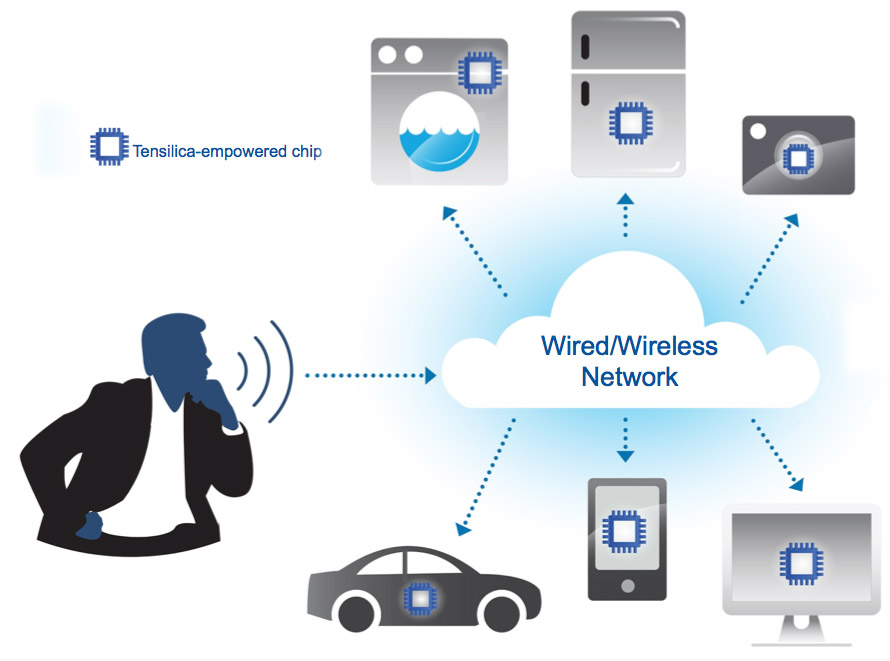
    Today Tensilica introduced the HiFi Mini DSPcore targeted at “always listening” voice trigger and speech command. It is optimized specifically for the smallest area and lowest power in smartphones, tablets, appliances, and automotive applications. The HiFi Mini core enables a hands-free experience. Tensilica is working with Sensory and other software partners that will provide the voice-activation, speech command recognition, voice pre-processing and noise reduction products optimized on the HiFi Mini DSP.

    Power is the single most important factor in enabling always-on listening capability in mobile devices. HiFi Mini is able to achieve just 400 uW running Sensory’s Truly HandsFree voice control technology. I think that we can expect more and more voice control over time as it migrates into all sorts of areas such as automotive and consumer appliances. Some of this is driven by the software side of things, but under the hood there is always the need for a very low power DSP to run the software since it is always listening.

    If you are attending CES then Tensilica Tensilica will demonstrate Sensory’s Truly HandsFree voice trigger and speech command products on HiFi Mini at in booth MP25060.


    Integrating your SoC into the analog world

    Integrating your SoC into the analog world
    by Don Dingee on 01-02-2013 at 7:00 pm

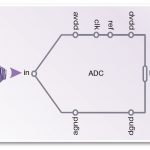
    Our world is decidedly analog, made up of stimuli for our five basic senses of sight, touch, hearing, taste, and smell, and more advanced senses like balance and acceleration. To be effective on the Internet of Things, digital devices must integrate with the analog world, interfacing with sensors and control elements.

    Continue reading “Integrating your SoC into the analog world”