You are currently viewing SemiWiki as a guest which gives you limited access to the site. To view blog comments and experience other SemiWiki features you must be a registered member. Registration is fast, simple, and absolutely free so please,
join our community today!
UVM for developing testbenches is a wonderful thing, as most verification engineers will attest. It provides abstraction capabilities, it encapsulates powerful operations, it simplifies and unifies constrained-random testing – it has really revolutionized the way we verify at the block and subsystem level.
However great… Read More
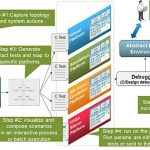
Although semiconductor community has ushered into the era of SoCs, the verification of SoCs is still broken. There is no single methodology or engine to verify a complete SoC; this results in duplication of efforts and resources for test creation and verification at multiple stages in the SoC development, albeit with different… Read More
If your team is building large, complex designs that require millions of clock cycles to fully verify, you need both simulation and emulation.
Using emulation with simulation accelerates performance for dramatically reduced run times.… Read More
UVM has become a preferred environment for functional verification. Fundamentally, it is a host based software simulation. Is there a way to capture the benefits of UVM with hardware acceleration on an FPGA-based prototyping system? In an upcoming webinar, Doulos CTO John Aynsley answers this with a resounding yes.… Read More
With verification consuming more and more of the design cycle and the increasingly complex industry standard interfaces that are now common place, Verification IP (VIP) is again a trending topic. Back in my IP days the age old question was: Is it better to use VIP from the IP vendor? Because you know it will work, right? Or is it better… Read More
For the latest incremental improvements to its Riviera-PRO functional verification platform, Aldec has turned to streamlining random constraint performance. The new Riviera-PRO 2016.02 release also is now fully supported on Windows 10 and adds a new debugger tool.… Read More
Some time ago I wrote a DeepChip viewpoint on DVCON 2014 in which I praised a Mentor paper “Of Camels and Committees”. The authors argued that while the UVM standards committee had a done a great job in the early releases, the 1.2 release was overloaded with nice-to-have features with questionable value for a standard, particularly… Read More
In the first part of this article I wrote about four types of costs which must be considered when an IP goes through design differentiation, customization, characterization, and selection and evaluation for acquisition. In this part of the article, I will discuss about the other five types of costs which must be considered to enhance… Read More
Verification complexity and volume has always been on the rise, taking significant amount of time, human, and compute resources. There are multiple techniques such as simulation, emulation, FPGA prototyping, formal verification, post-silicon testing, and so on which gain prominence in different situations and at different… Read More
When it comes to debugging a design testbench organized in object-oriented style with objects, component hierarchies, macros, transactions and so on, it becomes an onerous, tasteless, and thankless task for RTL verification engineers who generally lag in software expertise. Moreover, class-based debugging tools have lagged… Read More