




If you remember, when TI decided to exit the booming wireless segment in 2012, the company decided to re-focus their application processor product line (OMAP) initially developed for smartphone “to a broader market including industrial clients like carmakers”. Being a TI employee in the 90’s in south of France, where TI has started… Read More

Tag: iso 26262
Chips on the road to deep learning
CES has been morphing into an automotive show for several years now. Chipmakers were pitching control solutions, infotainment solutions, then connectivity solutions. Phone makers pitched device integration. Automotive electronics suppliers pitched MEMS sensors and cameras. Now, with a lot of pieces in place, the story … Read More
Simulating to a fault in automotive and more
We’re putting the finishing touches on Chapter 9 of our upcoming book on ARM processors in mobile, this chapter looking at the evolution of Qualcomm. One of the things that made Qualcomm go was their innovative use of digital simulation. First, simulation proved out the Viterbi decoder (which Viterbi wasn’t convinced had a lot … Read More
Why Automotive IP Portfolio is not just IP

Synopsys is launching a broad IP portfolio to support SoC development dedicated to emerging automotive complexes functions, like Driver Assistance (ADAS), Driver Information, Vehicle Network or Infotainment. I was never involved into IC design for Automotive, but I have designed ASIC for avionics (CFM56 motor control) or… Read More
Virtual HIL and the 100M LOC car
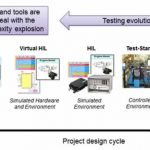
Aerospace and defense applications have traditionally leveraged hardware-in-the-loop (HIL) testing to overcome several issues. A big one is how expensive the physical system is. Even breaking down the system into subsystems for test can still be too expensive when fielding more than a couple test stations. Modeling elements… Read More
Safety Dominates Agenda in DAC’s Automotive Track
The connected car movement is in full bloom, making headlines in the trade media on how the cutting-edge electronics will transform the twenty-first century driving experience. However, a closer look at the Internet of cars juggernaut shows that safety and security of the networked vehicle are still a major stumbling block.… Read More
Arteris Sees Consolidation Amid ADAS Gold Rush
The sensor fusion in vehicles is leading to a new era of information sharing from almost all components of a car, including chassis, suspension and rapidly taking off Advanced Driver Assistance Systems (ADAS). According to network-on-chip (NoC) interconnect IP solution provider Arteris Inc., as more cameras and sensors are… Read More
Arteris Adds Functional Safety to NoC
Arteris Inc.has joined hands with Yogitech S.p.A. to help automotive system-on-chip (SoC) designers meet the required functional safety metrics and obtain the ISO 26262 certification for automotive safety integrity levels (ASIL) in the least possible time.
Arteris—which provides network-on-chip (NoC) interconnect IP… Read More
Ensuring Safety Distinctive Design & Verification
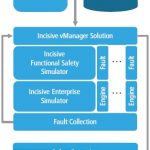
In today’s world where every device functions intelligently, it automatically becomes active on any kind of stimulus. The problem with such intelligence is that it can function unfavorably on any kind of bad stimulus. As the devices are complex enough in the form of SoCs (which at advanced process nodes are more susceptible to … Read More
Semiconductor Safety

Semiconductors and automotive are now like peanut butter and jelly. Certainly you can have one without the other but why would you? I remember when a car first talked to me telling me that the door was ajar. It sounded more like, “the door is a jar” but I got the point. Now my car tells me just about everything including what is wrong with… Read More