You are currently viewing SemiWiki as a guest which gives you limited access to the site. To view blog comments and experience other SemiWiki features you must be a registered member. Registration is fast, simple, and absolutely free so please,
join our community today!
Pure digital routers for IC designs have an easier task than mixed-signal routers, because mixed-signal routers have more constraints like:
- Shielded buses
- Differential pairs
- Twisted pairs
- Matched RC routing
- 20nm technology rules
- Double Patterning Technology (DPT)
…
Read More
Samsung’s aggressive marketing is starting to hit the fabless semiconductor ecosystem so we had all better be prepared. Samsung’s 2012 marketing budget exceeded $400M which probably beats the marketing budget of the entire fabless ecosystem! The question is, will the fabless semiconductor industry be easily swayed by Samsung’s… Read More
These days when we talk of SoC verification, what comes to our mind immediately is VirtualPlatform. Of course with the increasing size, complexity and different styles of designs, it is very much a need.
However, that is supported by actual verification engines and methodologies which are varying considerable with digital, … Read More
When Semiwiki readers see the name Forte Design Systems, they may think of the live bagpipers’ performance that closes the yearly Design Automation Conference. Forte has been the sponsor of this moving end to DAC since 2001. Step with me behind the plaid kilts for a good look at this remarkable company headquartered in San Jose, … Read More
Back when I was a programmer at VLSI Technology in the mid-1980s, I was responsible for all the data management in the VLSI Design Tools. By responsible for, I mean that I designed the whole system and wrote all the code. Prior to the 5th release of our product, there was no data management, designers simply used filenames and it was … Read More
Many engineers dream about starting their own company some day, and today I talked with an engineer that has gone beyond the dreaming stage to actually start an EDA company and then get that company acquired. His name is Brad Quinton and the start-up was called Veridae Systems, now part of Tektronix.
Brad Quinton… Read More
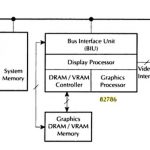
My last chip design at Intel was a GPU called the 82786and the architects of the chip wrote a virtual prototype using the MAINSAIL language. By using a virtual prototype they were able to:
- Simulate bus traffic, video display and video RAM
- Determine throughput
- Measure latency
- Verify that bus priorities were working
- Optimize the
…
Read More
This year’s Mentor Graphics user group meeting, User2User, will be held at the DoubleTree by Hilton in San Jose, California on April 25, 2013. The featured keynote presenters include…
- Dr. Walden C. Rhines, CEO and Chairman of Mentor Graphics, talking about “Organizing by Design”
- Victor Peng, Senior VP, Xilinx presenting on “The
…
Read More
The cell phone phenomena has catalyzed the technology growth and coaxed the hardware and software to work more closely. The Apple effect further directed this technology growth to focus on enhanced user experience. The emphasis has been primarily on the display and touch aspects of the designs with limited adoption on other areas.… Read More
I was at the EDAC CEO forecast meeting last week and one of the questions that was asked of EDAC members was “which is the hottest EDA startup?” The one with the most nominations was Oasys. So Oasys is hot.
But register retiming is hotter.
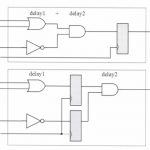
The latest announcement from Oasys this morning is that register retiming is now … Read More