





Recent independent teardown and technical analyses have confirmed that the 5G mmWave antenna module powering Apple’s latest iPhone 17 lineup relies on advanced SOITEC based Fully Depleted Silicon-On-Insulator (FD-SOI) substrate technology. The discovery highlights a significant architectural shift in high-frequency RF integration for flagship smartphones.
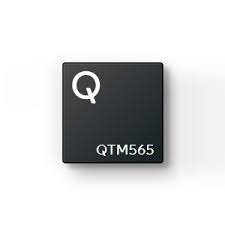
Industry intelligence firms Yole Group and TechInsights recently conducted detailed teardowns of the Qualcomm QTM565, the mmWave integrated antenna-in-package (AiP) module used in the iPhone 17, iPhone 17 Pro, and iPhone 17 Pro Max. According to TechInsights’ study, Qualcomm HG11-34443-2 (QTM565) FR2 Tx/Rx Front End Die RFIC Process Analysis by Sharath Poikayil Satheesh, and corroborated by Yole Group’s component analysis, the Qualcomm QTM565 module utilizes GlobalFoundries’ 22FDX RF process. This process is fundamentally built upon advanced FD-SOI substrates supplied by Soitec.
The same RF die has been embedded in the AiP mmWave solution within the iPhone 17 series, highlighting the growing use of FD-SOI substrates in mmWave RFIC design for premium smartphones. This marks one of the most visible commercial validations of FD-SOI for high-volume consumer 5G mmWave applications.
Daniel Nenni, founder of SemiWiki, commented: “The findings highlight a major industry shift toward highly integrated 5G mmWave Systems-on-Chip (SoCs), where phased array element spacing and area constraints are highly critical.” As antenna arrays move to higher frequencies in the FR2 mmWave spectrum, the physical spacing between elements becomes increasingly constrained, demanding exceptional integration density and signal integrity at the silicon level.
TechInsights’ executive summary notes that FD-SOI devices are uniquely engineered to operate effectively into the mmWave band, making monolithic and highly integrated phased-array transmit and receive SoCs feasible for top-tier consumer electronics. Unlike traditional bulk CMOS approaches, FD-SOI leverages a thin buried oxide layer that reduces parasitic capacitance, enhances electrostatic control, and improves RF isolation—critical attributes for mmWave performance.
The FD-SOI Advantage in the iPhone 17
By serving as the foundational substrate for the Qualcomm QTM565 module, FD-SOI technology enables fully integrated 5G mmWave SoCs. For manufacturers like Apple and Qualcomm, this platform delivers several strategic advantages:
Miniaturization and Footprint Optimization
FD-SOI provides significant logic scaling benefits while maintaining strong RF characteristics. Designers can integrate baseband functions, beamforming control logic, power management, and RF front-end components onto a single die. This high level of monolithic integration reduces the Bill of Materials (BOM), minimizes PCB footprint, and lowers interconnect losses between discrete components. In space-constrained smartphones, these savings directly translate into slimmer form factors or additional room for battery capacity and thermal management.
Best-in-Class Power Efficiency
Operating at low voltages, FD-SOI enables dynamic body biasing and precise threshold control, optimizing performance per watt. The inherent low-noise analog devices and excellent device matching support stable beamforming and signal integrity without excessive power draw. For end users, this means sustained 5G mmWave throughput without disproportionately draining battery life—a critical factor as carriers continue expanding high-band spectrum deployments.
Unmatched RF Performance
As demonstrated by silicon mmWave prototypes cited in the TechInsights analysis, FD-SOI provides the device-level precision necessary for high-frequency operation across both sub-6 GHz and FR2 mmWave bands. Improved isolation and reduced variability enhance linearity and gain control in phased-array architectures, directly impacting range, data rate stability, and thermal performance.
Strategic Implications for the Semiconductor Ecosystem
The integration of FD-SOI technology into Apple’s flagship iPhone 17 series underscores the substrate’s expanding role in next-generation RF system design. It also reflects a broader industry trend: convergence of digital logic and high-frequency RF on a single optimized platform.
As 5G evolves and early 6G research accelerates, the demand for compact, power-efficient, and highly integrated mmWave solutions will intensify. FD-SOI’s combination of RF excellence, power efficiency, and scalability positions it as a compelling enabler for future mobile connectivity platforms.
Bottom line: With independent validation from Yole Group and TechInsights, and commercial deployment in one of the world’s highest-volume premium smartphones, Soitec’s FD-SOI substrate technology has secured a visible and strategic foothold in the mmWave era, driving miniaturization, extending battery life, and redefining what is possible in integrated RF design.
Also Read:
Podcast EP331: Soitec’s Broad Impact on Quantum Computing and More with Dr. Christophe Maleville
FD-SOI: A Cyber-Resilient Substrate for Secure Automotive Electronics
Share this post via:




Comments
There are no comments yet.
You must register or log in to view/post comments.