You are currently viewing SemiWiki as a guest which gives you limited access to the site. To view blog comments and experience other SemiWiki features you must be a registered member. Registration is fast, simple, and absolutely free so please,
join our community today!
Search Results for "iso 26262"
The automotive semiconductor industry is undergoing a major architectural transition as vehicles evolve into centralized, software-defined computing platforms capable of supporting advanced driver assistance systems (ADAS), autonomous driving, and AI-enabled cockpit applications. This shift is driving demand for… Read More
At the 2026 VLSI Symposium, Intel Foundry provided a detailed update on its process technology roadmap, highlighting the continued maturation of Intel 18A, the introduction of Intel 18A-P, and several advanced research initiatives that extend beyond current gate-all-around (GAA) transistor architectures. The presentation… Read More
IPLM is not always prominent, nevertheless it is a very necessary aspect of semiconductor (and systems) design. Modern designs build on a wide range of IPs and subsystems, each evolving through multiple variants and versions, each with different PPA characteristics and recommended use-cases, many from different suppliers… Read More
Processor IP garners the most attention in SoC design, but it’s not the only IP category begging for smart choices. Every processor core needs to be fed with data; however, frequent off-chip DRAM access incurs a large clock-cycle penalty each time. Architects now want SRAM blocks distributed throughout an SoC, putting data close… Read More
Power-SOI technology is rapidly emerging as a foundational platform for next-generation functional safety integrated circuits used in autonomous vehicles, industrial automation, humanoid robotics, and other mission-critical systems. The growing convergence of high-voltage power management and low-voltage digital… Read More
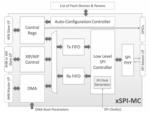
SPI, invented some four decades ago, is so successful as a low-pin-count interface for microcontrollers and processor cores that it spurred memory makers to incorporate both the physical signaling interface and advanced memory command protocols into serial flash and serial pseudo-SRAM (PSRAM) devices. Those protocols, … Read More
How Time-Based Scheduling
Reclaims Silicon Wasted by Speculative Execution
By: Dr. Thang Tran, Founder and CTO, Simplex Micro
I have spent my career designing processor architectures, and I have reached an uncomfortable conclusion: a substantial fraction of the silicon area and power in modern high-performance processors… Read More
IoT permeates every aspect of our lives, in payment systems, access authorization, vehicles, utilities, factories, hospitals, and in so many other fields. Which makes these systems attractive targets for hacking and social disruption while also challenging to protect given the highly constrained resources that many such… Read More
The increasing complexity of advanced driver assistance systems (ADAS) and automated driving architectures has driven a transition from traditional bus-based interconnects to scalable Network-on-Chip (NoC) fabrics. Renesas’ next-generation R-Car automotive SoC platforms adopt Arteris FlexNoC interconnect intellectual… Read More
I’m Steve Kim, the CEO of Chips&Media. I’ve been immersed in the multimedia imaging industry for approximately two decades. Prior to joining Chips&Media, I spent over five years working within handset manufacturing companies. Following more than ten years here at Chips&Media in roles spanning Marketing, Sales,… Read More



















Available Is Not In Control: Balancing Output, Quality, and Risk in High-Volume Fabs