You are currently viewing SemiWiki as a guest which gives you limited access to the site. To view blog comments and experience other SemiWiki features you must be a registered member. Registration is fast, simple, and absolutely free so please,
join our community today!
WP_Term Object
(
    [term_id] => 50
    [name] => Events
    [slug] => events
    [term_group] => 0
    [term_taxonomy_id] => 50
    [taxonomy] => category
    [description] =>
    [parent] => 0
    [count] => 1615
    [filter] => raw
    [cat_ID] => 50
    [category_count] => 1615
    [category_description] =>
    [cat_name] => Events
    [category_nicename] => events
    [category_parent] => 0
    [is_post] =>
)
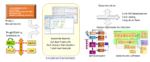
Defacto SoC Compiler whose 9.0 release was announced recently automates the SoC design creation from the first project specifications. It covers register handling, IP and connectivity insertion at RTL, UPF and SDC file generation right to logic synthesis. As part of the generation process of RTL and design collaterals, basic… Read More
The above title refers to a webinar that was hosted by Altair on April 28th. Chip design in the cloud is not a new idea. So, what is the big deal with the above title. Sometimes titles don’t reveal the full story. Annapurna Labs happens to be an Amazon company. It used to be an independent semiconductor company that was acquired by Amazon… Read More
A great deal has been written of late about the demise of Moore’s Law. The increase in field-effect transistor density with successive process nodes has slowed from the 2X every 2 1/2 years pace of earlier generations. The economic nature of Moore’s comments 50 years ago has also been scrutinized – the reduction in cost per transistor… Read More
When we think about Compute and AI SoCs, we often focus on the huge numbers of calculations being carried out every second, and the ingenious IPs that are able to reach such high levels of performance. However, there also exists a significant challenge in keeping the vast quantities of data flowing around the chip which is solved … Read More
This topic is inspired by a presentation at last year’s DAC presented by Methodics, now part of Perforce. The issues raised by the original presentation are still quite relevant in the current business climate. IP leakage is something everyone should consider as part of their normal business operations. Your design IP really … Read More
Engineers love to optimize their designs, but that implies that there are models and stimulus to automate the process. Process engineers have TCAD tools, circuit designers have SPICE for circuit simulation, logic designers have gate-level simulators, RTL designers use logic simulation, but what is there for the system architects… Read More
The Signal Integrity Journal recently held a half day Electronic Systems SI/PI Forum that included presentations from industry leaders covering key design topics for signal integrity and power integrity engineers. The event was sponsored by Cadence. The keynote for the event was presented by Istvan Novak, principal signal… Read More
A vexing chip design issue is how to achieve (or improve) performance and power dissipation targets, allowing for a wide range of manufacturing process variation (P) and dynamic operation voltage and temperature fluctuations (VT). One design method is to analyze the operation across a set of PVT corners, and ensure sufficient… Read More
In early April, Gabriele Saucier kicked off Design & Reuse’s IPSoC Silicon Valley 2021 Conference. IPSoC conference as the name suggests is dedicated to semiconductor intellectual property (IP) and IP-based electronic systems. There were a number of excellent presentations at the conference. The presentations had been… Read More
We were all pleasantly surprised when TSMC increased 2021 Capex to a record $28 billion. To me this validated the talk inside the ecosystem that Intel would be coming to TSMC at 3nm. We were again surprised when TSMC announced a $100B investment over the next three years which belittled Intel’s announcement that they would spend … Read More











ChipAgent Raises $134Million and Why it Matters