You are currently viewing SemiWiki as a guest which gives you limited access to the site. To view blog comments and experience other SemiWiki features you must be a registered member. Registration is fast, simple, and absolutely free so please,
join our community today!
WP_Term Object
(
    [term_id] => 157
    [name] => EDA
    [slug] => eda
    [term_group] => 0
    [term_taxonomy_id] => 157
    [taxonomy] => category
    [description] => Electronic Design Automation
    [parent] => 0
    [count] => 4360
    [filter] => raw
    [cat_ID] => 157
    [category_count] => 4360
    [category_description] => Electronic Design Automation
    [cat_name] => EDA
    [category_nicename] => eda
    [category_parent] => 0
    [is_post] =>
)
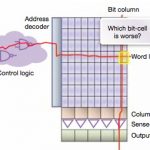
Modern SoC (System On Chip) designs contain a larger number of RAM (Random Access Memory) instances, so how do you know what the speed, timing and power are for any instance? There are a couple of approaches:
[LIST=1]
Trust the IP supplier to give you models that use polynomial equations to curve-fit the performance numbers based…
Read More
As George E.P. Box said, “essentially all models are wrong but some are useful.” That is certainly the case with Carbon’s models. For processors they have two models, one that is fast (but not timing-accurate) and one that is accurate (but not fast). But both are useful.
Carbon attended the ARM TechCon in Santa… Read More
At ICCAD earlier this week, CEDA sponsored a talk by Alberto Sangiovanni-Vincentelli looking back over the last 30 years (it is the 30th anniversary of ICCAD) and looking to the future. As is always the case in these sorts of presentations, the retrospective contained a lot more detail than the going forward part. Clayton Christensen… Read More
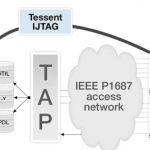
Test is the Rodney Dangerfield of EDA, it doesn’t get any respect. All designs need to be tested but somehow synthesis, routing, analog layout and the rest are the sexy areas. In my spoof all purpose EDA keynote address I even dissed it:You are short on time so slip in a quick mention of manufacturing test. Who knows anything … Read More
More than one year old now, TSMC’s soft IP quality assessment program is a joint effort between TSMC and Atrenta to deploy a series of SpyGlass checks that create detailed reports of the completeness and robustness of soft IP. This soft IP quality program has been the first to be initiated by a Silicon foundry on other than “Hard IP”,… Read More
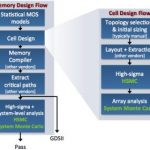
Solido Design Automation and TSMC recently published an article in EE Times describing how Solido’s High-Sigma Monte Carlo tool is used with TSMC PDK’s to achieve high-yield, high-performance memory design. This project has been a big part of my life for the past three years and it is time for a victory lap!
In TSMC 28nm, 20nm and … Read More
As RTL designs in FPGA-based ASIC prototypes get bigger and bigger, the visibility into what is happening inside the IP is dropping at a frightening rate. Where designers once had several hundred observation probes per million gates, those same several hundred probes – or fewer if deeper signal captures are needed – are now spread… Read More
A Most Significant Manby Beth Martin on 11-06-2012 at 8:10 pmCategories: EDA, Siemens EDA
Most of us live perfectly good lives without distinction, fame, or note. Others rack up the honors, filling their walls and resumes with recognition of their brilliance. Like Dr. Janusz Rajski.
Rajski is the director of engineering for the test products at Mentor Graphics, an IEEE Fellow, and the inventor of embedded deterministic… Read More
At the keynote for ICCAD this morning, John Gustafson of AMD (where he is Chief Graphics Product Architect as well as a Fellow) talked about parallel algorithms. Like Gene Amdahl, whose law states that parallel algorithms are limited by the part that cannot be parallelized (if 10% is serial, then even if the other part takes place… Read More
Our EDA industry loves three letter acronyms so credit the same industry for creating a five letter acronym CoWoS. Two weeks ago TSMC announced tape-out of their first CoWoS test chip integrating with JEDEC Wide I/O mobile DRAM interface, making me interested enough to read more about it. At the recent TSMC Open Innovation Platform… Read More









Quantum Computing Technologies and Challenges