You are currently viewing SemiWiki as a guest which gives you limited access to the site. To view blog comments and experience other SemiWiki features you must be a registered member. Registration is fast, simple, and absolutely free so please,
join our community today!
WP_Term Object
(
    [term_id] => 157
    [name] => EDA
    [slug] => eda
    [term_group] => 0
    [term_taxonomy_id] => 157
    [taxonomy] => category
    [description] => Electronic Design Automation
    [parent] => 0
    [count] => 4380
    [filter] => raw
    [cat_ID] => 157
    [category_count] => 4380
    [category_description] => Electronic Design Automation
    [cat_name] => EDA
    [category_nicename] => eda
    [category_parent] => 0
    [is_post] =>
)
An incredibly pervasive trend at last year’s ARM TechCon was the IoT, and I expect this year to bring even more of the same, but with a twist. Where last year was mostly focused on ultra-low power edge devices and the mbed ecosystem, this year is likely to show a better balance of ideas across all three IoT tiers. I also expect a slew of … Read More
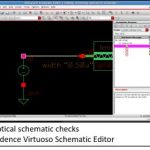
I’ve been following Cadence Design Systems ever since it was formed in 1988 by the merger of SDA Systems and ECAD, Inc. At that time I was working at Silicon Compiler Systems, soon to be acquired by Mentor Graphics. ClioSoft is another company that I’ve known about for several years now, mostly for their design management… Read More
It has been interesting to watch Methodics transform from an EDA company with their VersIC design management product to Life Cycle Management with ProjectIC, and now a Systems Company with WarpStor. Methodics was founded in 2006 by 2 ex-Cadence experts in the Custom IC design tools space, Simon Butler and Fergus Slorach. Today… Read More
This week Cadence Design, Lumerical Solutions and PhoeniX Software hosted a two-day photonic summit and workshop. The first day had nearly 100 registered participants and featured industry leaders from Global Foundries, UCSB, MIT, Hewlett Packard Enterprise, General Electric, Boeing, Rockley Photonics, and Juniper Networks… Read More
Standard cell and memory IP are key enablers for new process node availability. These two items must be in place early and be completely ready for a process node to scale to volume. Development of both leaves no room for error and they require the highest performance possible. Foundries are extremely focused on this and spend a lot… Read More
In August I wrote an article proclaiming Score 1 for IDMs vs Fabless and discussedIntel’sannouncement of volume production of their 100G PSM4 and 100G CWDM4 transceiver products.
This week the Fabless Empire strikes back.Daniel Nenni and I attended a two-day Photonic Summit and workshop hosted by Cadence Design, PhoeniX Software… Read More
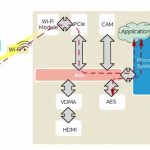
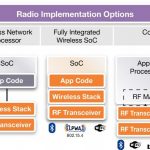
Did you know that, in over 800 teardowns of mobile and wearable products from 2012 to 2015, wireless chips outnumbered the actual number of products, indicating multiple wireless ICs in some designs ([SUP]1[/SUP])? It could be interesting to look at the advantages of integrating wireless technology such as Bluetooth low energy… Read More
Next week is ARM TechCon and I’m extra excited about this one because of the SoftBank acquisition. In fact, the opening keynote says it all. ARM CEO Simon Segar and SoftBank CEO Masayoshi Son will discuss the next chapter in the book of ARM. To better prepare for this keynote you should probably read our book “Mobile Unleashed: The … Read More
From a consumer viewpoint I want the longest battery life from my electronic devices: iPad tablet, Galaxy Note 4 smart phone, Garmin Edge 820 bike computer, and Amazon Kindle book reader. In September I blogged about RTL Design Restructuring and how it could help achieve lower power, and this month I’m looking forward to … Read More
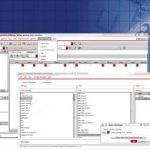
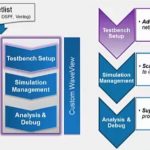
One of the things that I miss most about attending trade shows like DAC in the old days was that you actually got to see EDA tools being demonstrated live in the exhibit area. You could see what the GUI looked like, how the dialogs worked, and learn what kind of control you could have during analysis. Most of what you see today at DAC in the… Read More









Musk’s Orbital Compute Vision: TERAFAB and the End of the Terrestrial Data Center