You are currently viewing SemiWiki as a guest which gives you limited access to the site. To view blog comments and experience other SemiWiki features you must be a registered member. Registration is fast, simple, and absolutely free so please,
join our community today!
WP_Term Object
(
    [term_id] => 157
    [name] => EDA
    [slug] => eda
    [term_group] => 0
    [term_taxonomy_id] => 157
    [taxonomy] => category
    [description] => Electronic Design Automation
    [parent] => 0
    [count] => 4439
    [filter] => raw
    [cat_ID] => 157
    [category_count] => 4439
    [category_description] => Electronic Design Automation
    [cat_name] => EDA
    [category_nicename] => eda
    [category_parent] => 0
    [is_post] =>
)
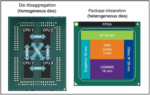
Synopsys has released a Technical Bulletin entitled “Parallel-Based PHY IP for Die-to-Die Connectivity”. The piece is authored by Manuel Mota, senior product marketing manager, staff at Synopsys. Manuel has worked at Synopsys for 11 years in the IP area. Prior to that, he worked at MIPS Technologies, Chipidea (acquired… Read More
Cadence has clearly found its groove with Intelligent System Design, something that Lip-Bu reinforced in the CadenceLIVE kickoff keynote on Tuesday, August 11th. Anirudh Devgan, president of Cadence, continued to discuss the theme in his keynote on Wednesday, August 12th with his equally consistent subtitle—”Strength… Read More
There’s a lot to keep you awake at night these days. If you live in California, it’s wildfires and unbreathable air. If you live on planet Earth, it’s COVID-19. And if you’re part of the value chain for IoT, it’s the security and robustness of the silicon and software fabric that connects our world. This fabric connects everything,… Read More
Pengwei Qian is the founder and CEO of SkillCAD, a grassroots EDA company that has amassed the most impressive customer list (60+ companies) I have experienced for a company of this size, absolutely.
Pengwei has a Bachelor’s degree in Physics and a Masters in Material Science from Fudan University and a Masters in Electronic Engineering… Read More
Last month, I discussed a webinar about HCL VersionVault – HCL VersionVault Delivers Version Control and More. This webinar introduced the HCL VersionVault product. This post will discuss a new video entitled “How HCL VersionVault Works – Directory Versioning.”
To recap, VersionVault delivers a lot of … Read More
It’s no secret that innovation in AI chip architectures is on a tear. When you put together the spatial complexity of highly parallelized algorithms with the need to localize memory accesses on-chip to the greatest extent possible, we’re seeing a proliferation of all kinds of domain-specific architectures. Which in the normal… Read More
Innovative Designs Enabled by Ansys Semiconductor
I’m excited to announce that general registration is now open for the new Ansys IDEAS Digital Forum! IDEAS, hosted by Ansys Semiconductor, is a virtual gathering of top industry executives, thought leaders, and designers from some of the biggest IP, chip design, semiconductor… Read More
Lip-Bu (Cadence CEO) sure knows how to draw a crowd. For the opening keynote in CadenceLIVE (Americas) this year, he reprised his data-centric revolution pitch, followed by a talk from a VP at AWS on bending the curve in chip development. And that was followed by a talk by a Facebook director of strategy and technology on aspects of… Read More
After spending a significant amount of my career in the IP library business it was an easy transition to Solido Design. I spent 10+ years traveling the world with CEO Amit Gupta working with the foundries and their top customers. In fact, the top 40 semiconductor companies use Solido. IP companies are also big Solido users including… Read More
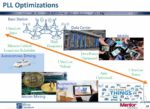
TSMC’s Open Innovation Platform’s main objective is to create and promote partnership for producing chips. This year’s OIP event included a presentation on the joint efforts of Silicon Creations, Mentor, a Siemens business and TSMC to produce essential PLL IP for 5nm and 3nm designs. The relentless push for smaller geometries… Read More













Silicon Insurance: Why eFPGA is Cheaper Than a Respin — and Why It Matters in the Intel 18A Era