You are currently viewing SemiWiki as a guest which gives you limited access to the site. To view blog comments and experience other SemiWiki features you must be a registered member. Registration is fast, simple, and absolutely free so please,
join our community today!
WP_Term Object
(
    [term_id] => 157
    [name] => EDA
    [slug] => eda
    [term_group] => 0
    [term_taxonomy_id] => 157
    [taxonomy] => category
    [description] => Electronic Design Automation
    [parent] => 0
    [count] => 4439
    [filter] => raw
    [cat_ID] => 157
    [category_count] => 4439
    [category_description] => Electronic Design Automation
    [cat_name] => EDA
    [category_nicename] => eda
    [category_parent] => 0
    [is_post] =>
)
Compute environments have advanced significantly over the past several years. Microprocessors have gotten faster by including more cores, available RAM has increased significantly, and the cloud has made massive distributed computing more easily and cheaply available.
HFSS has evolved to take advantage of these new capabilities,… Read More
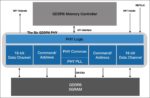
When I think about servers and data centers, I think about multiple-core/high-power CPUs, Intel’s domination over the years and GPUs coming on strong in recent years. I think about very fast digital interfaces, such as PCI Express connections and the latest DDR memory interface. Precision analog isn’t something that first comes… Read More
In 2020 Perforce acquired Methodics, a provider of IP Lifecycle Management (IPLM) tools, and Daniel Nenni blogged about that in July 2020, but a lot has happened since Perforce was founded in 1995. In the beginning Christopher Seiwald founded Perforce in his Alameda basement based on his background as a software developer, and… Read More
UPF was created to go beyond what HDL can do for managing on-chip power. HDLs are agnostic when it comes to dealing with supply & ground connections, power domains, level shifters, retention and other power management related elements of SoCs. UPF fills the breach allowing designers to specify in detail what parts of the design… Read More
Several months ago, I interviewed Anupam Bakshi, the CEO and founder of Agnisys. I wanted to learn more about the company, so I listened to a webinar that covered their latest products and how they fit together into an automated flow. I posted my thoughts and then I became curious about their customers, so I asked Anupam to arrange … Read More
By now we’re pretty familiar with the requirements ISO 26262 places on development for automotive safety. The process, procedures and metrics you will apply to meet various automotive safety integrity levels (ASIL). You need to train organizations. In fact you should establish a safety culture across the whole company or line… Read More
With the increasing density of electronics in product enclosures, combined with a broad range of operating frequencies, designers must be cognizant of the issues associated with the radiation and coupling of electromagnetic energy. The interference between different elements of the design may result in coupling noise-induced… Read More
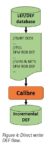
GDS and LEF/DEF each came about to support data exchange in different types of design flows, custom layout and place & route respectively. GDS (or stream format) was first created in the late 1970s to support the first generation of custom IC layout tools, such as Calma’s GDSII system. Of course, the GDS format has been updated… Read More
Last August I detailed a webinar about HCL Compass, a tool that provides low-code/no-code change management capability for enterprise scaling, process customization and control to accelerate project delivery and increase developer productivity. There is a lot of activity these days to migrate various enterprise applications… Read More









Silicon Insurance: Why eFPGA is Cheaper Than a Respin — and Why It Matters in the Intel 18A Era