You are currently viewing SemiWiki as a guest which gives you limited access to the site. To view blog comments and experience other SemiWiki features you must be a registered member. Registration is fast, simple, and absolutely free so please,
join our community today!
Audits. The mere mention of the word keeps project managers up at night and sends most designers running. However, in the case of FPGA designs seeking DO-254 compliance, the product doesn’t ship until the audit is complete – there is no avoiding it, or skating around it.… Read More
Some people say that everything in our lives happens for a reason. As we wrote Part I of “Mobile Unleashed”, the origin story of ARM architecture and its main progenitors Steve Furber and Sophie Wilson, we found what seemed like an obvious technological breakthrough was far from an overnight success – and it led to fascinating twists… Read More
CES has been morphing into an automotive show for several years now. Chipmakers were pitching control solutions, infotainment solutions, then connectivity solutions. Phone makers pitched device integration. Automotive electronics suppliers pitched MEMS sensors and cameras. Now, with a lot of pieces in place, the story … Read More
It has been almost five years since Marc Andreessen wrote the words, “Software is eating the world.” The premise of his essay in the Wall Street Journal in 2011 was pretty simple: the technology world has seen its intrinsic value shift from hardware to software. New all-software names have appeared on the list of high flying companies,… Read More
Kids have a tendency to put things in their mouths. Any parent can relate to the statement, “Put that down! You don’t know where it’s been!” After the first child, concern usually relaxes quite a bit. People joke about a 5-second rule on the premise if an object was just dropped on the floor, it may not be contaminated yet.… Read More
When Gary Shapiro introduced Brian Krzanich for Intel’s keynote at #CES2016, he just possibly may have been the last person to say “Moore’s Law” outside of a museum ever again. Krzanich was about to take Intel into new territory, where “Copy Exactly” and tick-tock also don’t matter.… Read More
In the days of bit banging and single-threaded loops, programming a microcontroller meant grabbing a C compiler (or even before that, an assembler) and some libraries and writing bare metal code. High performance networking and multi-tasking was usually the purview of heavier real-time operating systems (RTOS) or, if an MMU… Read More
For decades, tracing back to the days of Deming, the way to tackle complex engineering problems has been the pareto chart. Charting conditions and their contribution to the problem leads to mitigation priorities.
In the case of SoC power management, the old school pareto chart said the processor core was the biggest power hog and… Read More
Google’s Project Tango is a prime example of a sophisticated application pushing the boundaries of what is possible within the power envelope of a mobile device. Its objective is to combine 3D motion tracking with depth sensing to understand how a device is moving and gauge its surroundings precisely.… Read More
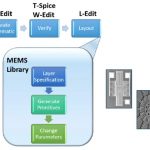
With the industry abuzz about the Apple purchase of a Maxim Integrated fab as a potential R&D facility for MEMS design, it begs the question: is creating a MEMS device that easy?
MEMS technology is approaching the same fork in the road where digital design encountered LSI four decades earlier. … Read More














The Invisible Bottleneck Is Costing You Time You Can’t Get Back