You are currently viewing SemiWiki as a guest which gives you limited access to the site. To view blog comments and experience other SemiWiki features you must be a registered member. Registration is fast, simple, and absolutely free so please,
join our community today!
IC designers contemplating the transition to 16nm FinFET technology for their next SoC need to be informed about design flow and IP changes, so TSMC teamed up with Cadence Design Systems today to present a webinar on that topic. I attended the webinar and will summarize my findings.
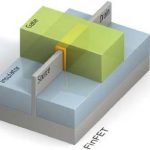
Shown below is a 3D layout concept of an ideal FinFET… Read More
Digital verification of SoCs is a well-understood topic and there’s a complete methodology to support it, along with many EDA vendor tools. On the AMS (Analog Mixed-Signal) side of the design world life is not so easy, mostly because there are no clear standards to follow.
To gain some clarity into AMS verification I spoke… Read More
The Seattle Seahawks had an awesome victory in the SuperBowl against the Denver Broncos, so folks living here in the Pacific Northwest are feeling proud and optimistic. The recent DesignConconference and exhibit ended 10 days ago and there were also victors announced in terms of the annual DesignVision awards that have three … Read More
Verification technologist Hemendra Talesaraattended a conference in Austin and asked me to post this article on verification execution for him as a blog. I first met Hemendra when he worked at XtremeEDA, and now he works at Synapse Design Automation – a design services company.
“In theory there is no difference between … Read More
Verification technologist Hemendra Talesaraattended a conference in Austin and asked me to post this article on verification execution for him as a blog. I first met Hemendra when he worked at XtremeEDA, and now he works at Synapse Design Automation – a design services company.
“In theory there is no difference between … Read More
Did you know that an S-class Mercedes Benz can use 100 microprocessor-based electronic control units (ECUs) networking throughout the vehicle that run 20-100 million lines of code (Source: IEEE)?
2014 Mercedes-Benz CLA
Here’s a quick list of all the places that you will find software controlling hardware in an automobile:… Read More
When I started my IC design career back in 1978 all IC routing was done manually, today however we have many automated approaches to IC routing that save time and do a more thorough job than manual routing. To get an update on space-based routers for IC design I connected with Yuval Shay at Cadence today. The basic idea behind a spaced-based… Read More
In January 2001 we had a new American president, George W. Bush, I was working at Mentor Graphics, and Apple introduced an MP3 player called the iPod with a hard drive capable of holding 1,000 songs. In the previous decades we enjoyed portable music from tape-based, CD, or mini-CD devices like the Sony Walkman. The first several generations… Read More
I’ve been using SPICE circuit simulators since 1978, both internally and commercially developed, and a lot has changed since the early days where netlists were simulated in batch mode on time-share mainframes. We used to wait overnight for our simulations to complete, and in the morning had to pickup our output results … Read More
SoC designers can code RTL, run logic synthesis, perform place and route, extract the interconnect, then simulate to measure power values. Though this approach is very accurate, it’s also very late in the implementation flow to start thinking about how to actually optimize a design for the lowest power while meeting all… Read More

















Why ASML Is Racing to Build 110 EUV Machines