You are currently viewing SemiWiki as a guest which gives you limited access to the site. To view blog comments and experience other SemiWiki features you must be a registered member. Registration is fast, simple, and absolutely free so please,
join our community today!
I often blog about a specific EDA tool, or an IP block, but the way that SoC design teams approach their designs and then use tools and IP can either be a manual, ad-hoc process, or part of something that is well-documented, following a design methodology. Back in the 1980’s while at Intel our team first created a design methodology… Read More
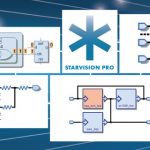
Debugging an IC is never much fun because of all the file formats used, the levels of hierarchy and just the sheer design size, so when an EDA tool comes around that allows me to get my debugging done quicker, then I take notice and give it a look. I was already familiar with debugging SPICE netlists using a tool called SPICEVision Pro,… Read More
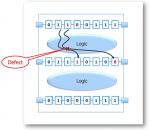
The cost of an IC depends on many factors like: NRE, masks, fabrication, testing, packaging. Product engineers are tasked with testing each part and understanding what exactly is limiting the yields. Every company has a methodology for Physical Failure Analysis (PFA), and the challenge is to make this process as quick as possible,… Read More
My first IC design back in 1978 was a DRAM and it ran on 12V, 5V and -5V, but then my second DRAM was using only a 5V supply. Today we see SOCs running under a 1V supply voltage, but there is a totally different market for power devices that are at the other end of the voltage spectrum and they handle switching ranges from 12V – 250V. … Read More
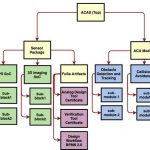
Functional safety (FuSa) is a big deal, especially when driving a car. My beloved 1998 Acura RL recently exhibited a strange behavior at 239K miles, after making a turn the steering wheel would stay tilted in the direction of the last turn instead of straightening out. The auto mechanic pinpointed the failure to the ball joints, … Read More
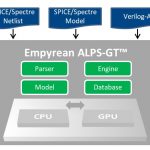
The old adage that “Time is Money” certainly rings true in the semiconductor world where IC designers are being challenged with getting their new designs to market quickly, and correctly in the first spin of silicon. Circuit designers work at the transistor-level, and circuit simulation is one of the most time-consuming… Read More
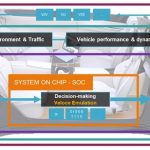
I love reading about the amazing progress of autonomous vehicles, like when Audi and their A8 model sedan was the first to reach Level 3 autonomy, closely followed by Tesla at Level 2, although Tesla gets way more media attention here in the US. A friend of mine bought his wife a car that offers adaptive cruise control with auto-braking,… Read More
In SoC design it’s all about managing complexity through modeling, and the models that make up IC designs come in a wide range of file formats like:
- Transistor-level , SPICE
- Interconnect parasitics, SPEF
- Gate and RTL, Verilog, VHDL
Even with standard file formats, designers still have to traverse the hierarchy to find out… Read More
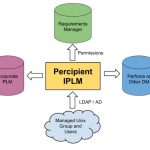
My first professional experience with computers and file permissions was at Intel in the late 1970s, where we used big iron IBM mainframes located far away in another state, and each user could edit their own files along with browse shared files from co-workers in the same department. I saw this same file permission concept when … Read More
It was the final day of DAC56 and my head was already spinning from information overload after meeting so many people and hearing so many presentations, but I knew that IC functional verification was a huge topic and looming bottleneck for many SoC design teams, so I made a last-minute email request to attend a luncheon panel discussion… Read More
















Why ASML Is Racing to Build 110 EUV Machines