





This article concludes the three-part series examining key methodologies required for successful multi-die design. The first article [hyperlink to SemiWiki first article] focused on feasibility exploration and early architectural validation, while the second article [hyperlink to SemiWiki second article] discussed bump and TSV planning as the foundation for physical interconnect infrastructure. With these elements established, the next critical step is routing high-speed die-to-die interfaces.
As multi-die systems adopt advanced interconnect standards such as High-Bandwidth Memory (HBM) and Universal Chiplet Interconnect Express (UCIe), routing complexity has increased dramatically. These standards require extremely dense interconnect fabrics while maintaining strict signal integrity and performance requirements. Automated routing methodologies have therefore become essential for achieving scalable and reliable implementation.
The Rise of High-Speed Chiplet Interconnect Standards
High-speed interconnect standards are driving innovation in multi-die architectures by enabling efficient communication between heterogeneous chiplets. High-Bandwidth Memory provides exceptional data transfer rates through wide I/O interfaces and vertically stacked memory dies interconnected through TSVs. Universal Chiplet Interconnect Express enables standardized die-to-die communication across vendors, supporting scalable system integration and design reuse.
Both standards rely on extremely dense bump maps and fine interconnect pitches, placing significant demands on routing methodologies and signal integrity control.
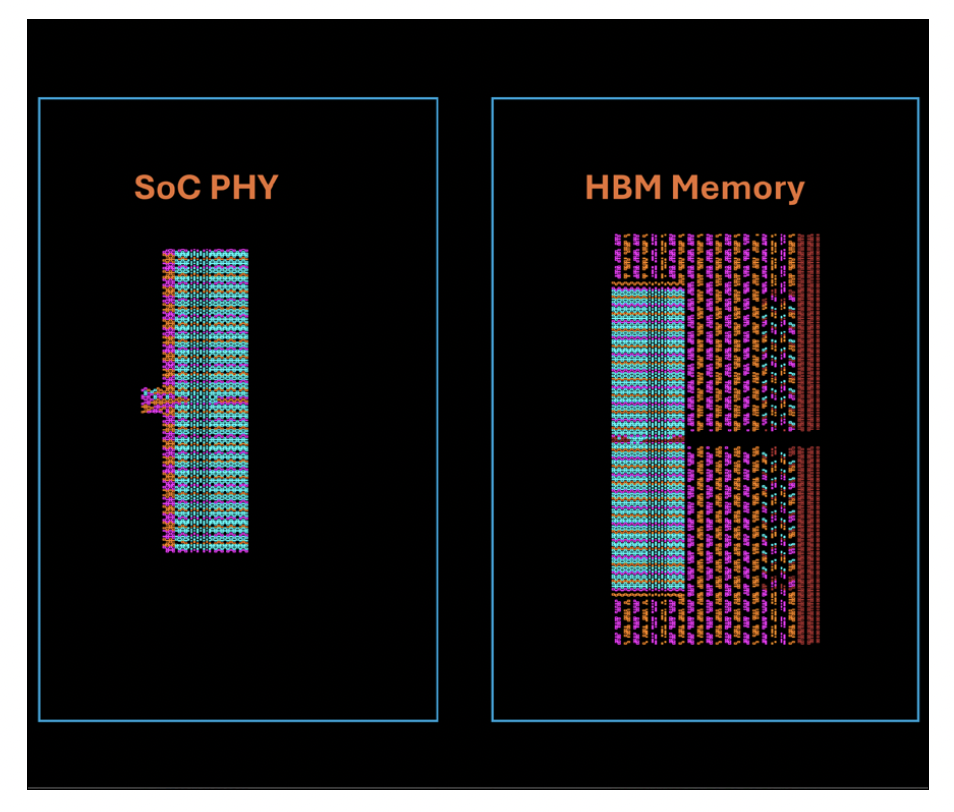
Bump Maps for HBM PHY and HBM Memory
Routing Challenges in Multi-Die Interfaces
Routing high-speed signals across multi-die systems introduces numerous competing constraints. Dense bump arrays create severe routing congestion, while limited routing layers must be shared with power delivery and shielding structures. Signal integrity concerns such as crosstalk, reflection, attenuation, and skew must be carefully controlled to ensure reliable data transmission.
Die placement and interface alignment further complicate routing implementation. PHY placements not perfectly lined up with each other often require complex routing geometries and multi-stage routing paths. As signal counts scale into the thousands across multiple dies, traditional manual routing approaches become increasingly impractical.
Early Routing Feasibility Analysis
Effective routing implementation begins with early feasibility analysis that evaluates routing pitch, channel spacing, shielding strategies, and technology limitations. Integrating routing feasibility into earlier design stages (Bump and TSV planning) allows designers to identify routing constraints before physical implementation begins, reducing design iterations and improving overall predictability.
Automated Routing Methodologies
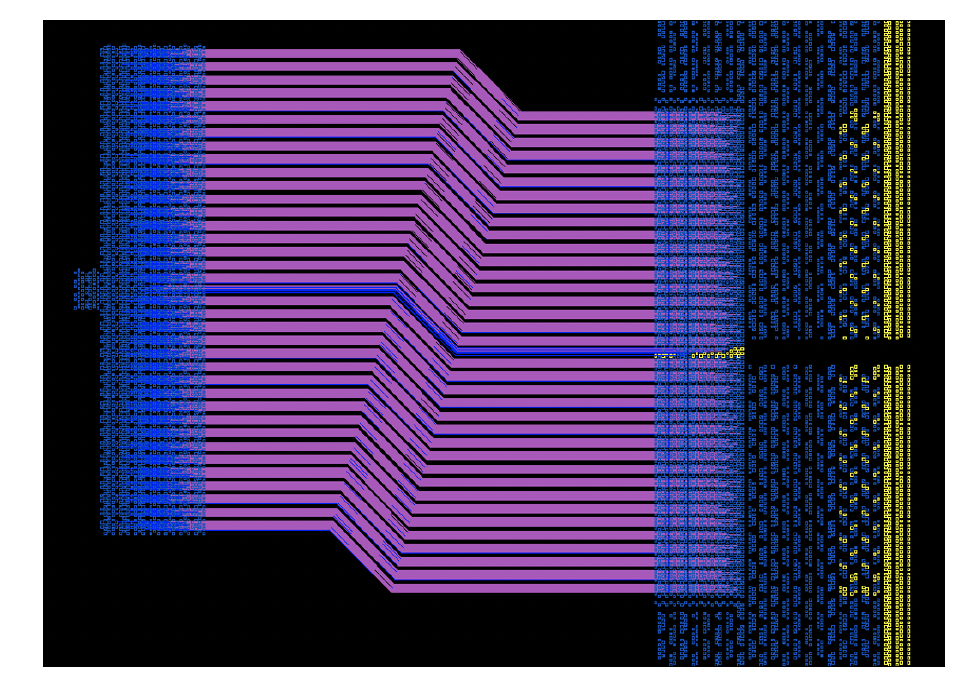
Automated routing solutions use specialized algorithms to implement high-bandwidth bump-to-bump interconnects efficiently. These solutions analyze interface topology, partition signal channels, generate routing tracks, and create optimized routing guides. By automating escape via creation and routing path generation, automated routers significantly reduce manual effort while improving routing quality.
Bump-to-bump 2-layer, 45-degree HBM routing from PHY to Memory on a silicon interposer
Signal Integrity-Driven Routing Optimization
Achieving connectivity alone is insufficient for high-speed interfaces. Automated routing engines must also optimize electrical performance. Advanced routing strategies ensure consistent trace geometry, flexible shielding implementation, and accurate differential pair routing. Additional techniques, such as return-path via placement and routing accommodations for decoupling capacitors, further improve signal integrity and system reliability.
Automated Verification and Reporting
Automated routing platforms provide comprehensive reporting capabilities that allow designers to evaluate routing performance and completeness. These reports include routing success metrics, congestion analysis, connectivity verification, and signal length statistics. Such visibility allows design teams to identify optimization opportunities and validate routing quality early in implementation.
Synopsys 3DIC Compiler Platform for Scalable Multi-Die Integration
As multi-die systems continue to grow in complexity and performance requirements, automated routing solutions are becoming indispensable. Synopsys 3DIC Compiler platform fulfills this requirement with an integrated, automated routing solution purpose-built for high-bandwidth die-to-die interconnects. The platform supports specialized capabilities for HBM and UCIe, enabling fast and reliable routing with minimal manual intervention. It combines routing automation with integrated multiphysics analysis, allowing designs to maintain signal integrity while accelerating implementation timelines and reducing design risk.
Learn more by accessing the whitepaper from here.
Summary: A Unified Multi-Die Design Methodology
Multi-die design success depends on a coordinated workflow that integrates feasibility exploration, interconnect planning, and automated routing implementation. Each stage builds upon the previous one, enabling design teams to progressively refine architectural concepts into manufacturable, high-performance systems. Together, these methodologies provide a scalable framework for developing next-generation heterogeneous multi-die semiconductor solutions capable of meeting the demands of emerging computing applications.
Share this post via:




Comments
There are no comments yet.
You must register or log in to view/post comments.