RVN! 26 Banner revised (800 x 100 px) (600 x 100 px)

TSMC Financial Update Q4 2012!

TSMC Financial Update Q4 2012!
by Daniel Nenni on 11-11-2012 at 4:00 pm

The weather in Taiwan last week was very nice, not too hot but certainly not cold. The same could be said for the TSM stock which broke $16 after the October financial report where TSMC reported a sales increase of 15% over September. Revenues for this year thus far increased 19% over last year so why isn’t TSM stock at $20 like I predicted earlier this year?

I blame the Q4 and Q1 Fear, Uncertainty, and Doubt (FUD) everyone is talking about. I blame the “US Fiscal Cliff” everyone is writing about, it even has a wiki page! I was asked by politicians if my family was better off now versus four years ago and the answer is YES, absolutely! Why? Because money is cheap, the interest rate on my debt is less than half, and because I continue to invest in the future.

TSMC has done the same thing. TSMC has spent a record amount this year on CAPEX and R&D and it shows. 28-nanometer revenue and shipments more than doubled during Q3 2012 and total 28nm wafer revenue increased from 7% in Q2 to 13%. Expect 28nm revenue to exceed 20% of total wafer revenue in Q4 and will be more than 10% for the whole year.

TSMC 28nm capacity increased 5% to 3.8 million wafers in Q3 and was fully utilized. As Co-Chief Operating Officer Dr. Shang-Yi Chiang said at ARM TechCon last month, “The biggest 28nm challenge was forecasting with demand for 28nm this year being 2-3x of what was forecast.”

Congratulations to everyone on the success of 28nm TSMC. Teamwork, patience, and investment wins again! Let us not forget the “28nm does not work” FUD at the beginning of the year. As I predicted 28nm will be the best process node we will see for years to come, believe it. Since the other foundries are still struggling with it, I predict 28nm will be the most successful node in the history of TSMC. 28nm may even get a chapter in the book Paul McLellan and I are writing, if not a full chapter, certainly an honorable mention.

Back to the fiscal cliff – what will I do in the next four years? I will continue to invest but also pay down my debt. I did support President Obama for a second term and I strongly suggest he do the same, invest and pay down the National Debt. I offer the same advice to TSMC, continue to invest and the fabless semiconductor ecosystem will have another great four years!

Last quarter TSMC invested $1B in ASML for EUV and 450mm technology. TSMC also bought 35 acres of land in Zuhan (near Hsinchu Science Park) for another GigaFab research and manufacturing facility that will produce 450mm wafers starting at 7nm. TSMC 2013 CAPEX and R&D is expected to be “in the same ball park” as 2012, of course that all depends on 20nm and 16nm FinFETS and how accurate the 2013 forecast is. My guess is that TSMC 2013 revenue will beat 2012 by single digits and, due to the cost of 20nm and 16nm, CAPEX and R&D will also grow by single digits.

Remember, I’m not an analyst, journalist, or financial expert, I’m just a blogger who drives a Porsche.


Smartphone Market Share

Smartphone Market Share
by Paul McLellan on 11-09-2012 at 12:47 pm

The numbers for smartphone sales in Q3 are starting to roll in. These are in units and not yet revenue (let alone profit) numbers although everyone down to Sony is for sure profitable. Samsung is running away with the volume, selling more than Apple, Huawei and Sony put together. One name that is missing is Motorola (Google) which has dropped out of the top 10, and one name that is almost missing is Nokia which is now in tenth place (they were 3rd last quarter so it is a big fall). Whether Google has the stomach to keep Motorola going and whether Microsoft has the stomach to keep Nokia going (or buy them) are interesting questions to watch.

Everyone except Apple, Nokia and RIM are based in Asia. I’ll be surprised if Nokia makes it into the top 10 in Q4, and I wouldn’t even be surprised if RIM (Blackberry) fell out too. That would make it the battle of the As: Apple and Asia. For the time being, Apple’s position as a premium supplier at the top of the market is probably secure, but the more mature the smartphone market becomes the harder it is to differentiate and thus demand a premium price. So far, by building their own chips, they have kept their performance edge. It will be interesting to see if Huawei, which has rocketed up the chart from 8th to 3rd, can continue and overtake Apple in volume (although for sure not in revenue or profitability).

Another interesting thing to watch will be 20nm application processors. These probably won’t come until late 2013 or early 2014, but while they may bring better power and performance numbers they make come at a price. For the high end of smartphones, retailing at several hundred dollars (with no contract) this is probably a non-issue. But smartphones go all the way down to BoM prices in the $50 range with retail prices around $75. There is not much room in there for increasing costs. I still think the implications of 20nm manufacturing costs haven’t been completely absorbed. Historically the main driver of Moore’s law has been economics not technology.
Rank (previous) . . Manufacturer . . . Sales in Q3
1 (1) . . . . . . . . . . Samsung . . . . . 56.2 Million
2 (2) . . . . . . . . . . Apple . . . . . . . . 26.9 Million
3 (8) . . . . . . . . . . Huawei . . . . . . . 16.0 Million
4 (7) . . . . . . . . . . Sony . . . . . . . . . 8.8 Million
5 (5) . . . . . . . . . . ZTE . . . . . . . . . . 8.0 Million
6 (4) . . . . . . . . . . HTC . . . . . . . . . . 7.8 Million
7 (6) . . . . . . . . . . RIM . . . . . . . . . . 7.4 Million
8 (9) . . . . . . . . . . LG . . . . . . . . . . . 7.2 Million
9 (11) . . . . . . . . . Lenovo . . . . . . . . 7.0 Milllion
10 (3) . . . . . . . . . Nokia . . . . . . . . . 6.3 Million

Source: TomiAhonen Analysis from vendor and market data


Carbon has Six Weeks of ARM, not to Mention Imagination and MIPS

Carbon has Six Weeks of ARM, not to Mention Imagination and MIPS
by Paul McLellan on 11-09-2012 at 12:18 pm

As George E.P. Box said, “essentially all models are wrong but some are useful.” That is certainly the case with Carbon’s models. For processors they have two models, one that is fast (but not timing-accurate) and one that is accurate (but not fast). But both are useful.

Carbon attended the ARM TechCon in Santa Clara a couple of weeks ago, as I did myself. I wasn’t able to make it to their presentation which was about how you can have both high performance and cycle accuracy. The challenge is how to deliver this. Historically the approach was to compromise a bit, give up a bit of accuracy and a bit of speed. But this often ends up with a model that satisfies nobody. It is too slow for the software developers to run full software loads (like booting Android) and it is not accurate enough for the hardware developers who need to be able to examine every signal transition to zoom in on the root cause of a bug.

The Carbon approach is different. It uses two models, one that is fast and one that is accurate. The fast model has just enough detail to be able to run software binaries unchanged (for example running ARM code even though the server is x86). The more detail that can be lost, the faster the model will run. For ARM processors, the fast models come from ARM and are the ones they use internally.

The accurate model is constructed automatically from the RTL for the processor so that it is completely accurate. However, detail can’t be thrown away fast enough to end up with a model that has good enough performance that the fast model can be discarded. Again, for ARM processors, the models are generated from ARM’s code using Carbon’s technology and then made available through the IP Exchange portal.

The trick is making it possible to switch from one model to the other. Well, actually only from the fast model to the accurate one. So, for example, to develop a device driver, the operating system is booted using the fast model and the system is brought up. Then the switch is made to the timing-accurate model and the device driver can be stepped through in detail. Or perhaps the fast model continues to be used until a known problem point with the device driver where the user can zoom in and see exactly what is happening. Problems on the edge of hardware/software such as device drivers are some of the hardest to debug since neither software tools (debuggers, breakpoints etc) nor hardware approaches (dumping signal traces) is enough on its own.

For more details see Bill’s blog on his ARM presentation here.

Carbon will also participate during November in ARM’s Technical Symposia Program throughout Asia:

  • Seoul, Korea November 20
  • Taipei, Taiwan November 22
  • Hsinchu, Taiwan November 23
  • Shanghai, China November 26
  • Beijing, China, November 28
  • Shenzhen, China November 30
  • Tokyo, Japan, December 6
  • And finally that famous Asian city, Paris France December 13.

One topic that will probably not get talked about at the ARM Symposia is Imagination’s acquisition of MIPS. Presumably one outcome that is likely is that there may be more designs done involving MIPS CPUs with Imagination GPUs. But Carbon is ready since they already have model partnerships with both companies and their models are made available on the IP exchange portal. And for a complex system, that might involve multi-core CPUs and multi-core GPUs, virtual prototypes are the perfect approach for software bringup.


ICCAD at 30: Alberto Looks Back and Forward

ICCAD at 30: Alberto Looks Back and Forward
by Paul McLellan on 11-08-2012 at 8:10 pm

At ICCAD earlier this week, CEDA sponsored a talk by Alberto Sangiovanni-Vincentelli looking back over the last 30 years (it is the 30th anniversary of ICCAD) and looking to the future. As is always the case in these sorts of presentations, the retrospective contained a lot more detail than the going forward part. Clayton Christensen had an editorial in the New York Times just the weekend before looking at the different types of innovation. And, by the way, if you have never read Christensen’s The Innovator’s Dilemma then you absolutely should.


Christensen identifies three types of innovation and Alberto picked up on these in the context of EDA. First is empowering innovation. This transforms complicated products available only to a few into simpler products available to many. For example, the Ford Model T or Sony’s first transistor radio. This type of innovation creates jobs since more people are required to create and sell the new products. They also use capital to expand capacity.

Next is sustaining innovations. These replace old products with new models. But they replace them. Hybrid cars such as my Camry replace non-hybrid cars. It’s not as if I kept my old car too, never mind bought a second new one. In terms of dollars this is probably the biggest part of innovation but it has a neutral effect on economic activity and capital. It’s more of a zero-sum game.

Then there are efficiency innovations. These reduce the cost and disrupt existing products: steel minimills, or the PC for example. They streamline processes and actually reduce employment and often (but not always) require less capital.


Alberto reviewed EDA as going through phases. In 2005, if you looket at the most cited papers in computer science–all of it, not just EDA–then the top 3 were all in EDA. The best minds in algorithms were working in EDA (if you are intereseted, the top 3 were Kirkpatrick et al’s paper on simulated annealing, Randy Bryant’s paper on BDDs and Harel’s paper on state-charts).

Today, EDA is more of a mature industry. While there is some innovation going on, of course, a lot is more like the efficiency innovation, making the algorithms that we already have work on larger designs.

One thing Alberto pointed out is that we have an incredible body of smart engineers working in EDA. We understand how to handle unimaginably complex data with incredibly efficient algorithms. We know how to abstract, simplify and generally manage enormous complexity. For example, if you look at the state of the art in mechanical CAD it is primitive compared to what is required to design an IC. Alberto reckons that if EDA is going to grow then we have to re-define EDA to include more stuff and then we can deploy our engineering skills more widely. One place that EDA missed was a lot of the system design stuff. Although they are private so nobody knows the exact numbers, The Mathworks’ Matlab and Simulink are a billion dollar business, in a space just adjacent to EDA.


IJTAG, Testing Large SoCs

IJTAG, Testing Large SoCs
by Paul McLellan on 11-08-2012 at 5:57 pm

Test is the Rodney Dangerfield of EDA, it doesn’t get any respect. All designs need to be tested but somehow synthesis, routing, analog layout and the rest are the sexy areas. In my spoof all purpose EDA keynote address I even dissed it:You are short on time so slip in a quick mention of manufacturing test. Who knows anything about it? But chips have to be tested so talk about scan. Or BIST. Or ScanBIST.

It is about a $120M business with Mentor being a little over half of it. But test is getting more important driven by two things. Firstly, chips are huge and consist of many IP blocks that were not designed and are barely understood by the SoC design team. Another big driver is 3D ICs (probably even more in the future). Testing a stack of die when only the lowest one is accessible to the tester creates its own set of challenges. But what is called the “known good die” problem is another driver. In a conventional (non 3D) IC, if a bad die makes it through to final test then a package needs to be discarded along with a die that was bad in any case. But in a 3D IC stack, if a bad die makes it all the way to final test, not only is the package and a bad die discarded, but several good die too. So wafer sort for 3D IC is much more important than before.


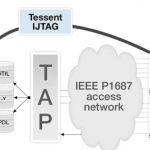
Mentor has just announced an IJTAG solution that addresses both these drivers, that chips increasingly consist of IP blocks which the designers do not fully understand and that 3D just adds another layer of complexity. It supports the catchily-named IEEE P1687 standard (IJTAG) and allows designers to easily reuse test, monitoring and debugging logic embedded in the IP blocks. It generates an integrated hierarchical contro9l and data network with a single top-level interface for the whole SoC. Any embedded instrumentation that is P1687 compliant can be used. It is especially valuable where pin count is limited or access is difficult (as in the 3D stacked die configurations).

The new IEEE P1687 standard creates an environment for plug-and-play integration of IP instrumentation, including control of boundary scan, built-in self-test (BIST), internal scan chains, and debug and monitoring features in IP blocks. The standard defines hardware rules related to instrumentation interfaces and connectivity between these interfaces, a language to describe these interfaces and connectivity, and a language to define operations to be applied to individual IP blocks. IJTAG replaces proprietary and incompatible IP interfaces from multiple suppliers with a standardized interface mechanism that enables plug-and-play integration of IP test and instrumentation facilities.

Mentor’s Tessent IJTAG solution provides automated support for the IJTAG standard, substantially reducing the time and effort required to assemble large SoC designs from reusable IP blocks. The new product includes all the facilities needed to efficiently integrate IEEE P1687-compliant IP into a design:

  • Automatic verification that a given IP block is compliant to the P1687 standard
  • Verification that P1687-compliant IP blocks are properly connected within a P1687-compliant access network
  • Automatic creation of a P1687-compliant access network connecting IP to the top level instrument interface
  • Retargeting and merging of local IP instrumentation patterns through the P1687 network, allowing IP specific sequences to be applied from chip pins or from anywhere higher up in the system hierarchy

The white paper on Tessent IJTAG is here.


ARM adopting SpyGlass IP Kit, joining TSMC’s soft IP9000 Quality Assessment Program

ARM adopting SpyGlass IP Kit, joining TSMC’s soft IP9000 Quality Assessment Program
by Eric Esteve on 11-07-2012 at 12:17 pm

More than one year old now, TSMC’s soft IP quality assessment program is a joint effort between TSMC and Atrenta to deploy a series of SpyGlass checks that create detailed reports of the completeness and robustness of soft IP. This soft IP quality program has been the first to be initiated by a Silicon foundry on other than “Hard IP”, and is demonstrating how IP support, whether hard or soft, is important in TSMC strategy to best support their customers and shorten the design to Silicon delay and reduce the TTM. Currently, over 15 soft IP suppliers have been qualified through the program, including ARM, as recently announced by TSMC at ARM TechCon.

How does the flow works? Atrenta’s SpyGlass® platform provides a powerful combination of proven design analysis tools with broad applicability throughout the SoC flow. The SpyGlass platform includes a tool suite for linting, CDC verification, DFT, constraints analysis, routing congestion analysis and power management applicable at RTL as well as the gate level. Providing visibility to design risks early and at high design abstractions, SpyGlass enables Early Design Closure® –During the course of chip development, design goals evolve and get refined from the initial RTL development phase to the final SoC implementation phase. The SpyGlass platform offers a consistent solution that can be used effectively at each stage of the design process to achieve the respective design goals. The use of the right SpyGlass tools at the right stage of design development helps design teams achieve a predictable repeatable methodology.

The list of design goals addressed by GuideWare, a set of pre-packaged methodologies for SpyGlass, show that the risk of failure is early addressed, and can be minimized:

  • Will the design simulate correctly?
  • Are clocks and resets defined correctly?
  • Will the design synthesize correctly? Are there unintended latches or combo loops?
  • Will gate simulations match RTL simulations?
  • What will the test coverage be?
  • What is the power consumption of a given block?
  • What is the profile of this IP? (For example, gates, flops, latches, RAMS/ROMS, I/Os, tristates, clocks)
  • Are there any inherent risks or non-standard design practices used in this IP?
  • Are there any adaptation issues in the target SoC, such as power, routability or congestion?
  • Are all the incoming blocks truly ready for integration? Are they clean in terms of clocks/resets and constraints?
  • What are possible inter-block issues? (For example, are block-level constraints complete and coherent with target SoC constraints?)
  • What are “common-plane” issues among heterogeneous blocks? (For example, scan chain management and test blockages at the SoC level)
  • Can I leverage my block-level work (waivers, constraints) at the SoC level?

Coming back to TSMC soft IP quality assessment program, we can see that the list of IP partners is a who’s who including from Network-on-Chip IP vendor Arteris, DSP IP core supplier CEVA, PCI Express IP core (PLDA), configurable CPU IP core (Tensilica) to GPU and CPU IP core vendors with ARM Ltd. and Imagination Technologies, Video and Display IP (Chips and Media), and scanning also Dolphin Integration, Cosmic Circuits or GlobalUniChip, provider of mixed-signal IP. That’s really make sense that ARM, the #1 IP vendor, join this program, as well as it would really makes sense that at least two of the top 3 EDA & IP vendor, Cadence and Synopsys, would join the program, sooner or later…

Eric Esteve from IPNEST


Solido and TSMC for 6-Sigma Memory Design

Solido and TSMC for 6-Sigma Memory Design
by Daniel Nenni on 11-06-2012 at 8:30 pm

Solido Design Automation and TSMC recently published an article in EE Times describing how Solido’s High-Sigma Monte Carlo tool is used with TSMC PDK’s to achieve high-yield, high-performance memory design. This project has been a big part of my life for the past three years and it is time for a victory lap!

In TSMC 28nm, 20nm and smaller process nodes, achieving target yields is extremely challenging. Nowhere is this truer than for memory circuits, which aggressively adopt next bleeding-edge process nodes to help meet increasingly tighter performance specifications and higher levels of integration.

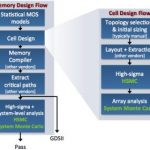
The article reviews the challenges raised by process variation, and in particular for memory with its high-sigma components. The article then discusses an approach to address variation with accurate statistical MOS modeling, plus the ability to analyze billions of Monte Carlo samples in minutes. This solution is now in place and rapidly gaining adoption.

The core reason for poor yield in memory is due to advanced process variations. The chips that roll out of manufacturing do not perform to the ideal, nominal simulated versions in design. If they do not meet parametric yield, they can’t be used. Process variation comes in many forms such as random dopant fluctuations, variations in gate oxide thickness, line edge and roughness. But their effect is the same: these random physical variations translate to variations in electrical device performances such as threshold voltage and transconductance. In turn, the device performance variations translate to variations in circuit performance such as power consumption, read current in a bitcell, or voltage offset in a sense amp. In turn, circuit performance variation means chip performance variation, causing yield loss.

The reason that variation is such an issue at 28nm and below is that the device sizes are getting within the same order of magnitude as the size of atoms themselves. We used to have Avogadro-size counts for the number of atoms in a device; but now those counts are in the thousands. The oxide layer on gates is down to just a few atoms thick, so even one or a few atoms out of place can cause performance variation of 20% to 50% or more.

The first case study in the article is a 6 transistor bitcell, using statistical device models from the TSMC 28nm PDK. With 6 devices, it has 60 local process variables. The second case in the article is a sense amp delay, having 15 devices and 150 process variables, also using statistical device models from the TSMC 28nm PDK.See the full articleHERE.

Also see:

EDA Tools to Optimize Memory Design, Size Standard Cells, Verify Low-Power Design, Center Analog Designs

TSMC Theater Presentation: Solido Design Automation!

Solido Design Automation Update 2012


High Yield and Performance – How to Assure?


A Survey of High-Sigma Monte Carlo Analysis Approaches


High-efficiency PVT and Monte Carlo analysis in the TSMC AMS Reference Flow for optimal yield in memory, analog and digital design!


Solido & TSMC Variation Webinar for Optimal Yield in Memory, Analog, Custom Digital Design


PVT and Statistical Design in Nanometer Process Geometries


Semiconductor Yield @ 28nm HKMG!


Solido – Variation Analysis and Design Software for Custom ICs


Variation Analysis


Variation-aware Design Survey


Moore’s Law and 28nm Yield


Embedding 100K probes in FPGA-based prototypes

Embedding 100K probes in FPGA-based prototypes
by Don Dingee on 11-06-2012 at 8:15 pm

As RTL designs in FPGA-based ASIC prototypes get bigger and bigger, the visibility into what is happening inside the IP is dropping at a frightening rate. Where designers once had several hundred observation probes per million gates, those same several hundred probes – or fewer if deeper signal captures are needed – are now spread across 10M gates or more.

That sparseness causes choices, and if through divine inspiration probes are placed where the problem is, there is some debug visibility to help solve issues. Most engineers aren’t that fortunate, especially with unfamiliar third party IP, and debugging is trial-and-more-error. While probes can be moved around in an FPGA-based prototype until the problem is isolated, re-synthesis is a process that takes hours, usually reserved for overnight runs.

Daniel Payne gives us an introduction to Brad Quinton, creator of the technology inside the Tektronix Certus 2.0 FPGA-based prototyping debug solution. I’d first heard about Brad’s approach in 2010, prior to his company Veridae Systems being acquired by Tektronix. He used the following chart from ITRS to illustrate the problem:

While the escape rate of bugs per 100K lines of code (LOCs) improves, it is outstripped by the growth in RTL LOCs for bigger designs, and the result is an out-of-control increase in escapes. The issue Brad has been after is how to add more probes to an RTL design without chewing up major resources in an FPGA.

There are several key technologies in play in Certus:

Efficient embedded instrumentation: A small block of RTL comprising a probe can be placed on just about anything in the FPGA, connected to an infrastructure with a multi-stage concentrator using fewer LUTs than traditional probes in FPGAs. These placements are done automatically using the Implementor tool in any FPGA EDA flow, and it allows control over how many LUTs are allocated to the debug infrastructure. Using OptiRank, design RTL is analyzed, and signals are ranked producing recommendations for the best coverage.

Longer debug traces: Traditional FPGA probing can capture limited amounts of data, usually a few seconds, at-speed. However, to see problems develop, often more than a few seconds of data is needed, a difficult task for on-chip resources with limited RAM. External analyzers can be used but they have to be synchronized carefully. In Certus, capture data from each probe is compressed in a lossless algorithm which takes advantage of repeated patterns common in traces, resulting in extended trace depths. These figures aren’t typical but represent what is possible in trace depths:

Time-correlation analysis:Certus collects time-correlated data system wide from all the probes at full speed of the FPGA-prototyping system, and presents it on a single JTAG interface. Using the Analyzer tool, designers can zoom in and create complex triggers on the data of interest. Instead of re-instrumenting and re-synthesizing the FPGA, designers can just run scenarios and go to the data. Another benefit of this is unique to FPGA-based prototyping systems: since the data collected from multiple FPGAs is time-correlated, partitioning problems and issues with multiple clock domains can be identified quickly and easily.

In significantly less time than it would take a designer to place 1K probes using traditional tools, up to 100K probes can be placed using Certus. Once that placement is synthesized in, designers can concentrate on running scenarios and analyzing and fixing design RTL instead of recompiling instrumentation just to identify the issues.

The Tektronix approach in Certus brings instrumentation to any FPGA-based prototyping system, creating the opportunity for much deeper visibility similar to an RTL simulator or emulator, but with much faster speeds of operation. See the Tektronix White Papers Wiki for a white paper describing bottlenecks Certus addresses, and a case study from the Dini Group on Certus use.


A Most Significant Man

A Most Significant Man
by Beth Martin on 11-06-2012 at 8:10 pm

Most of us live perfectly good lives without distinction, fame, or note. Others rack up the honors, filling their walls and resumes with recognition of their brilliance. Like Dr. Janusz Rajski.

Rajski is the director of engineering for the test products at Mentor Graphics, an IEEE Fellow, and the inventor of embedded deterministic test technology that is the core of Mentor’s TestKompress product. He has collected a whole stable of best paper awards, and today he picked up another at the ITC (International Test Conference). The Most Significant Paper award recognizes a paper from 10 years ago that has had lasting impact and significance.

Rajski was the lead author on “Embedded Deterministic Test for Low-Cost Manufacturing test,” published at ITC in 2002. The paper introduced embedded deterministic test technology (EDT), which was a breakthrough technology and is now absolutely indispensable to the testing of today’s ICs. The paper was highly significant at the time of publication and had a big impact on further research and technology. Not only that, but it is still relevant to R&D and industrial practice.

I mentioned that Rajski is impressive, right? Here’s what I mean: 69 U.S. patents (and 70 more pending) in the field of logic synthesis and silicon test, IEEE Donald O. Pederson Award, eleven IEEE best Paper Awards or honorable mentions (not counting the Most Significant ITC paper award), Stephen Swerling Innovation Award, 200 IEEE technical publications, 65 papers in other scientific journals, and 135 papers in conference proceedings. Just listing all that made me tired. But Rajski, he’s still at the top of his game.