





webinar IPXACT banner

Design & EDA Collaboration Advances Mixed-Signal Verification through VCS AMS

Design & EDA Collaboration Advances Mixed-Signal Verification through VCS AMS
by Pawan Fangaria on 09-07-2014 at 8:00 pm

Last week it was a rare opportunity for me to attend a webinar where an SoC design house, a leading IP provider and a leading EDA tool provider joined together to present on how the tool capabilities are being used for advanced mixed-signal simulation of large designs, faster with accuracy. It’s always been a struggle to combine design and simulation of analog and digital together for complex SoCs and several techniques are being adopted – AoT (Analog-on-Top), DoT (Digital-on-Top) and MSoT (Mixed-Signal-on-Top) topologies, analog and mixed-signal language support such as Verilog-A, Verilog-AMS and others, mixed-signal simulators and unified testbenches. This webinar provided a real insight into how the mixed-signal verification issues are being tackled by utilizing advanced features of VCS AMS.

It was awesome to know about the advances taking place in semiconductor design space at ever shrinking nodes of fabrication and how EDA tools are enabling those design and verification needs with everything being together on a single chip.

ARM, the top IP provider with significant investment in their physical IP portfolio, is providing great leadership in advancing process technology through accelerated adoption of lower process nodes with complex technologies such as FinFET. ARM provides complete library of GPIO (General Purpose I/O) cells with fully programmable bi-directional IO cells, complete I/O system with I/O ring and ESD protection and physically optimized for single and multiple rows and other requirements with multiple cell views, extensively validated to provide high quality IPs.

ARM’s significant challenges for keeping functional equivalence between Verilog and Spice were calibration of Verilog view against Spice netlist, allowing digital testbench and assertions to check for equivalence for corresponding Spice netlist, passing ‘X’ and ‘Z’ states to Spice netlist and bringing back I/O response in Verilog, and power-aware functionality validation. They have been able to successfully address these challenges and gain high productivity by using advanced features of VCS AMS such as ease of toggling between Verilog, Spice and Verilog-AMS views for the same cell without modifying the original netlist, automatic insertion and optimization of interface elements (A/D, D/A), improved functional coverage and robust simulation reliability. An enhanced debugging environment with provisions for combining or separating outputs of analog and digital waveform files, taking signals from I/O blocks to Verilog and comparing against expected output and propagating ‘Z’ state from I/O cells to Verilog provides great ease in debugging, thus adding further into verification productivity.

With the seamless execution, support of power-aware Verilog model validation, first-time pass without any convergence issue and predictable A/D and D/A conversions in VCS AMS, ARM has been able to successfully deploy their design project on FinFET process. Venkatesh B K from ARM spoke in great detail about their technologies and methods to counter the challenges of mixed-signal verification and future expectations.

Pierluigi Daglio from ST Microelectronicstalked at length about their methodology to accelerate mixed-signal verification through the use of Assertions and Save-and-Restore features of VCS AMS. Before I go into the details of ST stuff, let me talk about VCS AMS which was introduced by Helene Thibieroz from Synopsys.

VCS AMS combines VCS and CustomSim to provide one of the fastest mixed-signal verification solutions with multi-core support (5x performance gain at transistor level accuracy with 16 cores for RF, RX design with 300K transistors) and Save-and-Restore features. It supports all types of topologies and configurations and various languages at analog (Spice, Verilog-A and others), digital (Verilog, VHDL, SystemVerilog, SystemC, Matlab) and mixed-signal (Verilog-AMS, Real Number Model, SystemVerilog Nettype) levels supporting complex integration schemes. It has an excellent netlist driven debug environment ensuring the design not to fail during simulation; because A/D interface elements (a major cause of failures) are inserted automatically with proper mapping of ports and directions, correct positioning and optimization for speed and accuracy. The testbench utilizes UVM methodology by extending it for analog that enables digital testbench technology for mixed-signal and accelerates development with lower risk. With the support of AMS assertions, constrained-random stimulus and checkers, it excellently fits into metric-driven verification methodology and coverage driven verification planning. Advanced low power verification capability has been added into VCS AMS by leveraging VCS native low power technologyand support of UPF formatfor mixed-signal. It also provides static checking with Circuit Check (CCK) to detect problems such as missing level shifter, stacking MOSFET between rails, and leakage path induced by gated power. Thus VCS AMS provides a very comprehensive verification solution for large mixed-signal designs constituting complex SoCs.

Coming to back to ST, it uses VCS AMS Assertions and Save-and-Restore features very excellently to gain superior productivity in simulation and verification of their large IPs, macro cells and AMS systems. They verify complex designs with the mix of netlist configurations for digital (Verilog/VHDL post synthesis) and analog (pre-layout, post-layout), operating conditions for digital (min/max delay) and analog (TYP, SSA, FFA) and different modes (user mode, test mode) of operation.

ST in this application used embedded memory with digital and analog circuitry together for verification. It used AoT topology and digital testbench. A ROM was inserted for comparing the memory content with the content in ROM for automatic score boarding.

For automatic score boarding, automatic checks on memory content are done through assertions and any failing match can be clearly seen in simulation results report and waveform.

The Save-and-Restore is an excellent feature which allows running a simulation, saving result, changing something (netlist or setup) and running another simulation with different scope. This technique is typically used for running multiple functional simulations on the same design after the power up and saving significant amount of simulation time. Multiple modes of simulation can be alternated at successive steps of simulation as needed. In real applications, for example memory, operations such as ‘read’, ‘program’ and ‘erase’ can be repeated in succession.

Multiple simulation runs can be executed by forcing a test selector variable via UCLI. In the above picture, the blue waveform is for boot operation, green for test1 and red for test4.

Interested designers and verification engineers can attend the webinarto gain detailed insight into actual operations through several examples, simulation results and waveforms. It’s a full 53 minutes webinar with interesting Q/A at the end. To mention a few; in the face of wide variety of process technologies (including IoT) and challenge for Spice simulation to keep pace with them, expectations from EDA vendors is to provide all Spice simulators integrated across process technologies without any problems of interfaces and providing predictable and reliable results; it’s expected that more advanced A/D interface support with increased coverage and maximum level of UPF support to manage power intent becomes available. There were other challenges, solutions and expectations which can be heard in the webinar. It’s a very interesting and useful webinar for SoC verification professionals.
More Articles by Pawan Fangaria…..


EDA Plus ARM Equals Big Views!

EDA Plus ARM Equals Big Views!
by Daniel Nenni on 09-07-2014 at 9:00 am

In looking at the SemiWiki analytics, one of the top search terms that brings traffic to our site is ARM, just about anything ARM. In fact, that’s what the next SemiWiki book will be about. Yes, ARM is that interesting. While EDA is also one of our top search terms, EDA+ARM will get the most views, absolutely. And let’s face it, bloggers are all about the views. A good example of EDA+ARM=Big Views is Carbon Design Systems:

About Carbon Design Systems
Carbon Design Systems solutions enable virtual prototype productivity within minutes of download. Carbon virtual prototypes can execute at hundreds of MIPS and with 100% accuracy to enable software optimization and performance analysis as well as firmware and driver development. Carbon’s customers are systems, semiconductor, and IP companies that focus on wireless, networking, and consumer electronics. Carbon investors include Samsung Venture Investment Corporation and ARM Holdings. Website: www.carbondesignsystems.com

Another nice thing about Carbon is the blogging cofounder and CTO Bill Neifert:

Mr. Neifert, a Carbon cofounder, has over 20 years of electronics engineering experience with 18 years in EDA including C-Level Design and Quickturn Systems. Mr. Neifert has designed high performance verification and system integration solutions for many companies. He also developed an architecture and coding style for high performance RTL simulation in C/C++. Mr. Neifert has extensive engineering management experience, including many complex technical projects. Bill has a BS and MS in Computer Engineering from Boston University.

Here is Bill’s latest blog in which he discusses an upcoming webinar where Bill himself is one of the speakers:

ARM/Carbon Webinar on Optimization of Systems Containing the NIC-400

The processors from ARM® get all of the attention. After all, ARM partners have shipped over 50 billion ARM processors so far. 10 billion of those in 2013 alone. With so many processors shipping, you would think that this would be reflected on Carbon’s IP Exchange web portal and ARM’s processors would be the most popular IP models created and downloaded.

In truth, it’s pretty rare that any of ARM’s processors top the list of the most popular models generated on Carbon’s IP portal. That title consistently goes to one of ARM’s CoreLink interconnect offerings. Month in and month out, one of the NIC-400, NIC-301 and PL301 interconnect models top the list. The comparison is a bit unfair since the typical architect will try out only a handful of different processor configurations but it’s not at all uncommon for a single user to create dozens of various configurations for the system interconnect. It does reflect though the importance that users place on having accurate models for the components in their system that have the greatest impact on overall performance. (Not surprisingly, the next most commonly created type of component on our portal is a memory controller)……

Sign up for the Pre-silicon Optimization of System Designs using the ARM® CoreLink™ NIC-400 Interconnect webinar.

This webinar is a good lead into #ARMTechCon which is right around the corner. I hope to see you there:

About ARM TechCon

Ranked one of the top three must-attend events in the embedded industry, ARM(R) TechCon(TM) is more than a conference. ARM TechCon’s unique 360-degree interactive training ground is seeded to connect, instruct, advise, and enable the world of electronic and ARM-based computer design, and provide attendees with a comprehensive understanding of ARM-based technology.


TSMC OIP: Registration Open

TSMC OIP: Registration Open
by Paul McLellan on 09-06-2014 at 9:00 am

It’s that time of year again! The 4th TSMC Open Innovation Platform Ecosystem Forum is coming up on September 30th. As usual it is in the San Jose conference center. The TSMC OIP Ecosystem Forum brings together TSMC’s design ecosystem companies and their customers to share real case solutions to today’s design challenges. Success stories that illustrate best practice in TSMC’s design ecosystem will highlight the event. More than 90% of last year’s attendees last year said that the Forum helped them “better understand TSMC’s Open Innovation Platform” and that “they found it effective to hear directly from TSMC OIP member companies.”

Registration is now open.

The schedule is as follows:

  • 8.00: registration opens
  • 9.00: welcome remarks
  • 9.20: industry overview and corporate updates
  • 9.50: TSMC and the ecosystem for innovation
  • 10.15: feature talk with ARM
  • 10.45: coffee break

Then at 11am the forum splits into 3 parallel tracks: an EDA track, an IP track and an EDA/IP/services track. There will be a break for lunch from 12pm to 1pm. Many of the presentations feature both a design partner of TSMC and an EDA or IP partner. Several of the presentations are on 16FF and 10FF, so this is an opportunity to hear about the experience of TSMC’s partners on the most advanced nodes. In particular, from 4pm until the end of the afternoon on the EDA track Cadence will be talking about various aspects of 16FF and 10FF design. Synopsys and Mentor are also presenting on aspects of 16FF.

The EDA track features presentations from:

  • AMCC/Cadence
  • Synopsys (several)
  • Qualcomm/Mentor
  • Cadence (several)
  • Mentor/TSMC
  • Mediatek/Synopsys

The IP track features presentations from:

  • Semtech/Snowbush
  • GUC
  • ARM
  • Kilopass
  • Cadence
  • CEVA
  • ARM (several)
  • Imagination
  • Synopsys

The EDA/IP/services track features presentations from:

  • GUC
  • Lorentz/Altera
  • eSilicon
  • Synopsys
  • Uniquify
  • Oracle/Mentor
  • ANSYS (Apache)
  • Analog bits
  • M31 Technology
  • Microchip SSTI

The day concludes with a social hour from 5.30pm to 6.30pm.

If you are doing design with TSMC (and its almost a case of who isn’t?), and especially if you are about to start on a 16FF design, then you should definitely plan to attend. I think the agenda contains a wealth of interesting sounding experience from design groups working right on the bleeding edge.

Full details of the agenda are here. Registration is here.

More articles by Paul McLellan…


Kilimanjaro

Kilimanjaro
by Paul McLellan on 09-05-2014 at 7:01 am

For several weeks I have been trying to put out one blog per day rather than being like London buses where there are none for ages and then three come along at once. Or SFMuni buses for that matter. This week has been more of the same. Well, OK, I skipped labor day because…labor day. All you IC types will be busy eating chips not designing chips.

But actually I’ve been in Africa all week with three friends. My first time here unless you could Tunisia and Morocco which are technically Africa but not really. I am in Tanzania. It is easier to get here than you might expect. Fly direct to Amsterdam and there is a direct flight from Amsterdam to Mount Kilimanjaro airport and Dar-Es Salaam.

The connection was riskily tight so we spent a day in Amsterdam. The new Rijksmuseum is incredible if you find yourself there. I haven’t been since I was about 20 going around Europe on Interail. It was closed for a ten-year refurbishment and re-opened last year. Also, if you find yourself in the Netherlands, make sure to go to an Indonesian restaurant that serves rijstaffel (rice table). Indonesia was a Dutch colony so in the same way that Britain has incredible Indian food, and France has great Moroccan food, the Netherlands has great Indonesian food. Rijstaffel consists of many small dishes and some rice. It is best with a lot of people. In the Cadence days I often had to visit Philips in Eindhoven since I was their executive partner and the local sales team would always take me out for it.

We arrived in Mount Kilimanjaro airport last night late. I don’t think I’ve ever been on a 9 hour flight before where you end up pretty much in the same time zone as you started (one hour difference). I’m more used to flying to Europe or Asia from San Francisco with 8 or 9 hour time differences. The plan is to go on a safari for a couple of days and then on Friday we start our assault on Kilimanjaro. It starts in the heat at about 6000′ and ends up in sub-zero temperatures and snow on the summit which is nearly 20,000′ (19,341′ if you want the exact number). The lack of oxygen on the final day is apparently a challenge. I hope we all manage to make it. It is a lot higher than Mount Whitney, my previous highest ascent.

More news and photos later.


More articles by Paul McLellan…


SmartScan Addresses Test Challenges of SoCs

SmartScan Addresses Test Challenges of SoCs
by Pawan Fangaria on 09-04-2014 at 4:00 pm

With advancement of semiconductor technologies, ever increasing sizes of SoCs bank on higher densities of design rather than giving any leeway towards increasing chip area and package sizes; a phenomenon often overlooked. The result is – larger designs with lesser number of pins bonded out of ever shrinking package sizes; the design size per pin count keeps increasing. This is a challenge, test engineers take silently, but how to keep the test cost down without diluting the test reliability? The test vectors to test the increased functionality on chip will increase and not decrease. So, smart techniques are needed in test engineering too to test larger designs with same or lesser number of pins at the same or lesser cost of testing.

Reducing ATPG patterns test time and test data volume, which can be achieved by scan test compression specific DFT (Design for Testability) architecture, can significantly contain the overall test cost. The compression structure which uses a broadcast/XOR network of scan-input pins, XOR/MISR (Multi Input Shift Register) logic on the scan-output pins and a number of scan channels (stumps) connected to compression logic. When the scan chains are properly balanced then they can provide test time and test data volume reduction close to the target compression ratio (i.e. the ratio of number of scan channels to the external full-scan chains). A compression efficiency of 100-200X has been observed provided the scan data pin pairs remain high. The moment scan data pin pairs are reduced to five or lesser, the compression efficiency and fault coverage go down drastically; at the scan input data correlation increases and at the scan output data aliasing increases, resulting into failures being masked out, thus affecting the reliability of test. So, what’s the alternative given that LPCT (Low Pin Count Test) designs are the way of life in the SoC world of testing?

I was pleased to know about Cadence’sEncounter Test SmartScan technology that offers a robust, highly efficient and reliable scan compression solution for LPCT designs.

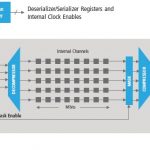
It utilizes two N-Bit shift registers for de-serializing and serializing the compressed data, thus requiring a single pair of scan-in and scan-out pins. After fully loading the input shift register with the compressed data (which takes N cycles for a single bit-slice of the scan channels), the scan clocks are fired and data is transferred into the internal scan channels. The output shift register captures the response data in parallel from the internal scan channels and shifts it out serially.

The test patterns are generated using N-bit parallel scan interface by bypassing the de/serializer registers. These patterns are re-targeted to the Encounter Test SmartScan serial interface by translating each scan cycle of the parallel interface pattern into loading and unloading the de/serializer registers. The parallel interface pattern can also be directly applied at the automated test equipment (ATE) provided the chip package has those pins for test purposes. The test control signals required to switch between parallel and serial interfaces can be internally decoded from on-chip test logic.

This arrangement reduces scan data correlation to large extent which is not possible with only a few pins driving the compression logic directly. The pattern quality is consistent requiring a single-pass ATPG run, because the internal scan configuration is identical between the serial and parallel interfaces. Debugging and diagnosis is easy to isolate tester failures.

The Encounter Test SmartScan logic is verified in the context of post-ATPG pattern retargeting which avoids any re-iteration of DFT verification and ATPG flows (due to any error in its implementation) which could be expensive.

Above are the results of fault coverage and test time on an automotive design. It can be clearly seen that SmartScan methodology provides quality close to full-scan (i.e. with single scan chain) at a much lower test time compared to full-scan. The quality of conventional XOR compression is drastically lower and unreliable.

The Encounter RC cockpit provides a seamless environment for insertion of SmartScan logic into the front-end design netlist. A single logic-synthesis and DFT-insertion run script is used to achieve the best area, power, timing, and test coverage. The RTL Compiler also generates all downstream run scripts to verify design equivalence with Cadence Conformal LEC, generate parallel interface patterns and retarget them for Encounter Test SmartScan interface, and provide fault coverage metrics with Encounter Test True-Time ATPG.

The Encounter Test SmartScan methodology provides the much needed solution for LPCT designs in automotive, MCU and mixed-signal applications at significantly reduced test cost and high quality of test and fault coverage. A further detailed description can be obtained from a whitepaperwritten by Pradeep Nagaraj at Cadence.

More Articles by Pawan Fangaria…..


Synopsys VC VIP for Memory

Synopsys VC VIP for Memory
by Paul McLellan on 09-04-2014 at 7:01 am

Synopsys have been gradually broadening their portfolio of verification IP (VIP). It is 100% native SystemVerilog with native debug using Verdi (that was acquired from SpringSoft last year, now fully integrated into Verification Compiler). It has native performance with VCS. Going forward there are source code test suites.

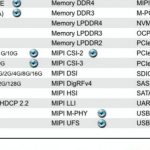
Most of Synopsys IP has been focused on buses and interfaces such as AMBA, PCI, ethernet and so on. See the table below. In a major change they have a growing portfolio of VIP for memories. This is a market that has historically been dominated by another company (famous for parties at DAC in case you need a hint).


As Synopsys pulls all their verification together in a much more seamless environment under the name Verification Compiler, making everything run seamlessly together has become increasingly important. The initial focus has been on DDR3/4 and LPDDR2/3/4. They are not making any more announcements at the moment but for sure they are working on continuing to broaden the portfolio to cover things like flash.


The picture above shows how all the moving parts go together. The primary differentiators of the Synopsys approach are:

  • Based on proven SystemVerilog VIP technology and base class library

    • Simplified use-model and ease-of-use for UVM testbenches
    • Strong foundation of proven base classes
    • Integrated with Protocol Analyzer
  • Configures to Specific Components

    • Vendor memories
    • Includes DIMM, RDIMM, LRDIMM, UDIMM
    • DIMM logic + buffers
  • Validated against internal SNPS memory controllers and customer designs

The memory VIP has the features you would expect such as being able to bypass memory initialization to reduce simulation time, direct access to the memory to examine or alter contents, error injection and exception testing, skew injection, protocol and timing check. The functional coverage is fully integrated into the VIP and protocol verification plan.

As an example, here are the DDR3/4 VIP features. Not being a in-depth memory expert there are one or two things that I am not sure what they are, such as fly by delay. It think it is the tuning needed at these high speeds but it also sounds like being 8th in line for takeoff at SFO.

More details on all Synopsys VIP is here, including datasheets for the memory VIP.


More articles by Paul McLellan…


A couple of misconceptions about FD-SOI

A couple of misconceptions about FD-SOI
by Eric Esteve on 09-03-2014 at 9:59 am

We have extensively discussed in Semiwiki about FD-SOI technology, explaining the main advantages (Faster, Cooler, Simpler), sometimes leading to very deep technical discussions, thanks to Semiwiki readers and their posts. I have recently found an article “Samsung & ST Team Up on 28nm FD-SOI. This article includes many quotes from so-called “analysts” or experts, that I will share and comment with you in a minute. Why taking the time to do so? Because some of these quotes are just simply wrong!

First Quote (in theory)
Also part of the enticement to designers wanting to dive into FD-SOI is that staying with 28nm mode means, in theory, no new non-recurring engineering costs. In other words, the 28nm masked set transfers to the 28nm FD-SOI and no $50-million-plus redesign needs to happen as you would see with a jump to new process node.

If you read and trust this assertion, you may jump to one of the ASIC supplier, ST or Samsung, supporting FD-SOI technology, bring your existing SoC mask set in 28nm bulk and be quite frustrated. At first, the design rules may not be compatible at all: FD-SOI is derived from 28nm HKMG gate-first process, when most of the 28nm bulk ASIC technologies are based on gate last (TSMC for example). Even if the existing design targets 28nm HKMG gate-first process, a new layout would be required to be adapted to some FD-SOI specificities like wells configuration and polarization. Porting an existing design from 28nm Bulk to FD-SOI with no layout modification is not realistic, furthermore it would be a mistake! If you want to take full benefit of the various FD-SOI advantages, you certainly don’t want to miss the capability of using the Forward Body Bias (FBB) effect. With no layout modification, you could not implement the polarization scheme and not benefit from FBB.

Just take a look at the above table. Applying FBB allow reducing maximum power consumption (dynamic + leakage), up to 31% for the same technology node (14FD-SOI) and slow conditions… and up to more than twice power consumption for the device in 28HPM with ASV. This power consumption reduction is almost magic, but it is unrealistic to think you can blind port a bulk design to FD-SOI, you will need a new mask set.

The latest point about porting an existing design: ASIC supplier like ST has automated the porting, creating scripts which translate schematics and automatically modify layouts. Thus the automated migration path allows porting an existing IP in ½ (half) to 1/3 (one third) of the time it would have required to port the IP in a new technology. Finally, the design must be tuned-up in order to have correct electrical behavior.

To summarize: for an existing design on bulk, if you want to benefit from the better power consumption (or better performance) linked to Forward Body Bias capability on FD-SOI, you will have to modify the existing layout, thus create a new mask set. The porting can be automated and the result must be tuned-up to have correct electrical behavior.

Second quote (you don’t get the strength)
Kevin Krewell of Tirias Research told EE Times. “FD-SOI offers power benefits but you don’t get the strength.” He explained that the process does work well for wearables where the idle power is most important. FD-SOI gives just enough performance to handle a wearable’s work and small display but it reduces the power to extend the battery life (…)

I love the second quote: it’s a mix of true fact (FD-SOI offers power benefits) and completely wrong interpretation (FD-SOI gives just enough performance to handle a wearable’s work and small display) of this fact. We have written a blog to address such interpretation, If you think that FD-SOI is for low performance only, but it could be wise to address this point again. At first, we have mentioned in Semiwiki some ASIC designed on 28nm FD-SOI targeting performance hungry networking application and you can check in this recent blog for the mention of ST design-win of a communication infrastructure ASIC in 14nm FD-SOI… not really a wearable device!

Yes, you can get the strength with FD-SOI technology. Moreover, you can compensate the slow process corners and avoid doing binning (binning from Wikipedia: “by reducing the clock frequency or disabling non-critical parts that are defective, the parts can be sold at a lower price, fulfilling the needs of lower-end market segments”), improving the SoC profitability. Eliminating “Slow” process corner device is possible, but extremely costly as a chip maker pays for the complete wafer. Using adaptive supply voltage (ASV) is a way to keep high performance at the same level for any chips, even coming from a slow process corner. Using forward body bias (FBB) can be a way to reduce the SoC power consumption, or to increase performance, at your choice.

In fact, using FD-SOI technology to design for wearable devices, or for smartphone is certainly a good option, thanks to the performance efficiency offered by the technology. But that doesn’t mean that an ASIC built in FD-SOI technology “don’t get the strength” and is limited to low power/low performance system. Speaking about an existing ASIC in bulk technology, you will benefit from FD-SOI advantages without doing a full redesign, by doing a simple porting. The effort is comparable to this done in the past to shrink a SoC, requiring a new mask set, like for a shrink…This effort will be largely paid by the power AND performances benefits given by FBB, unique to FD-SOI.

The quoted article can be found here

From Eric Esteve from IPNEST


Quicklogic Delivers First Wearable Sensor Hub with Under 150uW Standby

Quicklogic Delivers First Wearable Sensor Hub with Under 150uW Standby
by Paul McLellan on 09-03-2014 at 9:00 am

I have talked before about how the Internet of Things (IoT) doesn’t require enormous power-hungry SoCs. We all accept, or at least put up with, having to recharge our phones daily. But smart pedometers (or whatever a good name for Fitbit-like products are) had better last for a week or two between charges.

Today, Quicklogic announced the ArcticLink 3 S2 platform, which is the second customer-specific standard product (CSSP) on its sensor hub roadmap. Of course as you would expect it is better. It has four times the computational performance, four times the on-board algorithm capacity and eight times the buffer storage of the previous generation, while consuming over 1/3 less power. The standby power at 1.2V operation is a miserly 150uW. With those specs it has capacity to store 3 weeks of data. It is completely pin-compatible and software-compatible with the previous generation.

The part falls into the sweet spot between the application processor approach, using entirely software, which is much too power hungry. On the other hand, a fixed function ASSP doesn’t always have enough flexibility to adapt sensor hub algorithms for emerging applications. The new part is both adaptable by changing the hardware (it is a programmable device in the FPGA sense) or the software (it is also a programmable device in the microprocessor sense).

The ArcticLink 3 S2 is available in CSSP and Catalog CSSP variants. The CSSP variant allows OEMs the chance to develop customized versions of the S2, and choose from QuickLogic-developed, 3[SUP]rd[/SUP] party, and/or OEM-developed sensor algorithms to address specific end product requirements for best-in-class performance. The first Catalog CSSP variant, called the ArcticLink 3 S2 Gesture and Context Catalog CSSP, provides out-of-the-box support for gestures such as tap-to-wake and rotate-to-wake, along with providing enhanced context and significant motion detection, sensor calibration functions, and enhanced pedometer (including differentiation and step counts of running, jogging, and walking.)

Instead of giving you all the detailed specs (which are on the datasheet, see below), here are the algorithms that are supported out of the box:

  • Device Motion: Shake, Rotate, Translate
  • Device Carry: On Person, Not on Person, In Hand Front, In Hand Side, In Pocket
  • User Activity: Sitting, Standing, Cycling, Walking, Jogging, Running (including individual step counts)
  • Transport Contexts: In Car, In Elevator, On Stairs, On Bike
  • Gestures: Tap-to-Wake, Rotate-to-Wake, Lift-to-Wake, Optical Gesture
  • 9-axis Sensor Fusion: On device or shared with AP/MCU
  • Heart Rate Monitor: Support for PPG-based sensors, including Beats Per Minute (BPM) and Interbeat Interval (IBI)

Historically Quicklogic have been working with Sensor Platforms and other partners. With the acquisition of Sensor Platforms by Audience Semiconductor, Quicklogic have decided to become more self-sufficient. In addition to continuing to work with partners, Quicklogic have built up a team to do algorithm development internally. There is a sort of cottage industry of small algorithm companies so consolidation and acquisition looks like the order of business going forward for now.

The name is not public, but Quicklogic have been working with a top ten smartphone supplier during Q1 for a wearable product. This is a particularly exciting design win. This customer has high brand recognition and all of the algorithms used in the design were developed by QuickLogic.

More details, including a datasheet, are available here.


More articles by Paul McLellan…


Momentum Builds For 64-bit ARMv8-A

Momentum Builds For 64-bit ARMv8-A
by Eric Esteve on 09-03-2014 at 2:55 am

No doubt about it, the summer break has ended, it’s time for releasing big announcement, like this one from ARM “Momentum Builds For the Next Generation of ARM Processors”. In fact, the key information is about ARMv8-A market adoption. A total of 27 companies have signed agreements for the company’s ARMv8-A technology as industry momentum builds for greater compute capability across a wide range of applications. The ARMv8-A silicon partners include:

  • All of the top 10 companies who sell application processors for smartphones
  • 9 of the top 10 application processor companies for tablets
  • 4 of the top 5 companies that provide chips for consumer electronics (including DTV and STB)
  • 4 of the top 5 companies that provide chips for enterprise networking and servers
  • 8 silicon vendors from Greater China

If ARMv8-A architecture is still compatible with 32-bit, this momentum demonstrates the continuing strength in demand for 64-bit-capable ARM Cortex®-A50 processor family and ARMv8 architecture licenses. If we look back in October 2013, one comment related to the launch of Apple 64-bit A7, from Qualcomm executive “”I know there’s a lot of noise because Apple did [64-bit]on their A7. I think they are doing a marketing gimmick. There’s zero benefit a consumer gets from that,” has shacked the mobile semiconductor market for some time… until Qualcomm put out a statement in which it walked back Chandrasekher’s comment and called it “inaccurate.” Moreover Qualcomm has quickly announced in 2014 the launch of 64-bit Snapdragon application processor. According with Anandtech, “Like the previous 64-bit announcements (Snapdragon 410, 610 and 615), the 808 and 810 leverage ARM’s own CPU IP in lieu of a Qualcomm designed microarchitecture. We’ll finally hear about Qualcomm’s own custom 64-bit architecture later this year, but it’s clear that all 64-bit Snapdragon SoCs shipping in 2014 (and early 2015) will use ARM CPU IP”.

Two facts here: Qualcomm is using ARM CPU IP and a 64-bit architecture! In fact, we don’t really know if the smartphones sold today, build around a 64-bit application processor, will take full advantage of the 64-bit architecture. As all the existing software has been designed for 32-bit, it may take some time to develop for 64-bit architecture. But it would certainly be a strong marketing mistake to develop an application processor based on a 32-bit architecture only to target smartphone or tablet…

ARM’s market share in mobile is incredibly high with 95%, and this is a well-known fact. More surprising is ARM penetration of the consumer electronic and enterprise networking market segments. From the top picture, we see that ARM has licensed the 64-bit ARMv8-A to 4 out of 5 market leaders, in both segments. Historically, ARM was not so strong in the consumer electronic application like Digital TV and Set-Top-Box (STB). The green and orange circles (above picture) illustrate the growing penetration in DTV and STB applications. When a customer makes the decision to buy an ARM license is just the starting point of a rather long process: SoC design, prototyping, S/W development, system validation, production ramp-up… The overall process can take anytime between 18 months to several years, and the royalty part of the revenue is linked to SoC devices shipment. In the market segments where ARM is growing penetration, like DTV, STB or enterprise networking, the license design-win show that there is room for market share growth for royalties linked to production shipment.

Another specific information should be highlighted: 8 silicon vendors from Greater China are ARMv8 partners. At first, this is one of the various illustrations showing that silicon vendors from Greater China are quickly closing the gap with their competitor from the rest of the world. As of today, the application processor chip maker from Greater China ship production IC in 40nm node, being one technology node late compared with their competition. But they are moving to 28nm for the new developments. They represent a large growth potential for production volume based royalties for ARM. And the adoption of 64-bit ARMv8 architecture will allow these silicon vendors to target various computing intensive market segment on top of the mobile phone only, like mobile computers, DTV, STB, servers or networking.

Eric Esteve from IPNEST

More Articles by Eric Esteve…..


Google Glass with purpose, not just another smart wear

Google Glass with purpose, not just another smart wear
by Pawan Fangaria on 09-02-2014 at 4:00 pm

Last year or earlier (when it was in the making), when I first heard of Google Glass, I was of the opinion that it’s yet another device with a screen in front of your eyes, with wearable glasses through which you can see the virtual extension of reality you are interacting with (here is a demo); a technology called Augmented Reality (AR) which also allows to see through any object and collect more information about it; for example features of a car you liked, information about a book or food in a restaurant, it can also provide you the meaning of difficult words scanned (through an in-built scanner) from a newspaper or magazine, or you might have an intension of spying on something. I guess most of us have seen the popular Sixth Sense videoon technology developed at MIT Media Labbased on AR, it’s amazing. So, well, my perception was that it’s better and more exciting than other wearable devices.

But when I looked at this technology from Googlemore closely, I realized it’s not just a smart wear, it’s with some real, real, valuable purposes in human life. Again by connecting the dots in Google technologies, the way they are organized and may be added further in future, one can easily make out that Google Glass has been conceived with real good purposes with a long term view.

Before getting into how best it can be used, let me quickly recap about what’s there inside it. Of course sensor enabled touchpad on the side of the Google Glass which controls its activation and screening of the events, Wi-Fi or Bluetooth, a camera, speakers, microphone, an advanced LED illuminated display, a voice synthesizer and controller which enables the device to operate on voice commands and a transducer near the ear to receive voice response from other sources. The device can also be activated by tilting your head 30[SUP]0[/SUP] upward (detected by a gyroscope inside) and say “O.K. Glass”. Then there are interesting apps with Google Glass such as Google+, Gmail, Google Maps and Google Now which provide it ultimate power of navigation and information exchange. Also, there are many 3[SUP]rd[/SUP] party apps which are active on Google Glass. Google with its Mirror API and Glass Development Kit has left the ground open for developers to innovate and build apps for different purposes such as exercise, cooking, sharing on social networks, face recognition, photo manipulation, travel, text translation etc.

Now talking about the usages of Google Glass, rather than its conventional usages (e.g. on the move hands-free voice command to take a picture, record an event, chat on video, attend a conference using Google Hangout,or even compose an e-mail by dictating the content, adding attachments and send automatically through the smartphone in your pocket) I would like to talk about the real value added services it can provide to our society. Imagine how prudent Google was to come up with the ergonomics of this hands-free device to be put on your temple like a spectacle. Your face with vital sense organs is the most powerful part of your body to make intelligent moves to operate a device like Google Glass hands-free. Now think of the operations or situations in which your hands are tied-up elsewhere and you need this device to work intelligently on your voice commands and your head movement. Here are some of those which are already being practiced and some which we can anticipate –

A surgeon while doing surgery can just ask for vital information from patient’s data stored in a computer, CT scan, cardiograph or ultrasound images, displayed on her screen. The live surgery procedure can be relayed to other specialist doctors at their desk for on-line review and quick suggestions. Of course live video recording and photographs of internal parts of organs (which is otherwise not possible) can be taken and specific information embedded with them for record purposes and further teaching to medical students.

It can provide much needed independence to disabled. The Google Glass can provide direction, guidance, information to a person on wheelchair without needing another person’s help. She can just put on her Google Glass and be on the move to explore the world at her own will and commands and not depend on anyone. It’s her world with Google Glass as a lifetime companion. Google Now has predictive software that can provide live information to her about the traffic and weather conditions of the place she wants to visit. If it’s a baseball game somewhere and traffic is bad, Google Now can provide the latest updates and scores about that to her at home.

A recent app added on Google Glass is SMARTSign which helps parents communicate with their hearing impaired children in great way through sign language. Of course, this technology can also be used to teach sign language to normal children.

Further, I guess, the Google Glass can also be of great help to blinds in guiding their way. She can just provide voice command for her destination and the Google Glass can keep guiding her through the way by conveying the messages into her ears through the transducers.

Although there has been criticism about the possibility of privacy invasion by Google Glass, for which I guess some solution should emerge, it’s a greatly convenient device for security, police and secret services personnel. A security officer can scan through a large crowd and pin point suspected culprits or terrorists at particular functions with such gatherings. A detective agent can investigate a crime spot which may be inside a building, a metro rail station, a hotel or hospital, from a distance. She can spot unusual activities at important places, such as airports, embassies etc.

Business personnel or state representatives while visiting different countries using different languages (spoken and written) can make great use of Google Glass. It can record the speech in different language, translate it into English within moments and flash on the screen for its wearer to understand the message and respond appropriately. The same process can repeat in the Google Glass of the other party, thus making communication easy and fast. Similarly the Google Glass can help in scanning and translating road signs, messages displayed in common areas such as airport and hotel and deciphering any alert signal.

Although you may never get lost with a GPS chip and Google Maps in your Google Glass, the Google Glass can help you in great way when you are in distress. Imagine you fell from a height while on an adventure trip or met with an accident, and you are not able to move your arms or legs, there is high probability that your tiny Google Glass is intact (it’s made with a strong frame). You can ask your Google Glass to record your location and voice message for help and send to police and friends.

I could go on writing more, but would like to stop here and leave it for the audience to guess and comment on more usage. After all, Google during its debut introduction of the Glass, asked from consumers about how they would use it. So, there could be more surprises in store!

More Articles by Pawan Fangaria…..