You are currently viewing SemiWiki as a guest which gives you limited access to the site. To view blog comments and experience other SemiWiki features you must be a registered member. Registration is fast, simple, and absolutely free so please,
join our community today!
By Mauli Shah, Product Engineer, Siemens
Analog and mixed-signal design teams face a persistent challenge that directly impacts tape-out schedules and project predictability: symmetry violations discovered at signoff trigger expensive respins, delay schedules and create unpredictable iteration cycles. Despite symmetry… Read More
These are stressful times in functional verification. We are being pushed to more aggressively embrace AI-based automation, knowing we will continue to be held accountable for quality of results. Verification misses could upend careers, maybe enterprises. It is tempting to believe that sanity will prevail and we will ultimately… Read More
Axiomise has recently launched a new verification tool called nocProve which will transform how Network-on-Chip designs are validated in modern hardware development, absolutely.
The tool is designed to be the first configurable formal verification application specifically created for NoC implementations. It addresses… Read More
SoC projects are running behind schedule as design and verification complexity has increased dramatically, so just adding more engineers, more tests and more compute aren’t the answer. The time is ripe to consider smarter ways to improve verification efficiency. The added complexity of multiple embedded processors, multiple… Read More
Bug localization continues to be a challenge for both bug triage and root-cause analysis. Agentic approaches suggest a way forward. Paul Cunningham (GM, Verification at Cadence), Raúl Camposano (Silicon Catalyst, entrepreneur, former Synopsys CTO and lecturer at Stanford, EE292A) and I continue our series on research ideas.… Read More
In the race to deliver ever-larger SoCs under shrinking schedules, simulation is becoming a bottleneck. With debug cycles constrained by long iteration times—even for minor code changes—teams are finding traditional flows too rigid and slow. The problem is further magnified in continuous integration and continuous deployment… Read More
I mentioned in an earlier blog that multiple presentations at DVCon 2025 went all-in on AI-assisted design and verification. The presentation was one such example, looking very much at top-down AI-expert application of agentic flows to design and verification. AlphaDesign is a new startup out of UC Santa Barbara headed by William… Read More
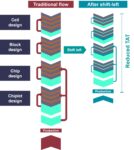
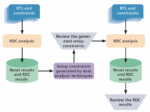
The complexity of System-on-Chip (SoC) designs continues to rise at an accelerated rate, with design complexity doubling approximately every two years. This increasing complexity makes verification a more difficult and time-consuming task for design engineers. Among the key verification challenges is managing reset domain… Read More
At the recent User2user conference, Amit Kumar, Principal Hardware Engineer, Microsoft, shared the company’s experience from building a 3DIC SoC and highlighted Siemens EDA tools that were used. The following is a synthesis of core aspects of that talk.
3DIC Challenges
Despite the numerous advantages of 3DIC technology, its… Read More
The Universal Verification Methodology (UVM) is a popular way to help verify SystemVerilog designs, and it includes a configuration system that unfortunately has some speed and usage issues. Rich Edelman from Siemens EDA wrote a detailed 20-page paper on the topic of how to avoid these issues, and I’ve gone through it to… Read More