By Bhanu Pandey
The semiconductor industry is currently facing a significant challenge in functional verification. According to the most recent Wilson Research Group / Siemens EDA Functional Verification Study, first-silicon success rates have hit a historic low, with nearly 68% of designs requiring two or more spins. While… Read More
*Work Email Required for Registration*
For packaging, thermal, and mechanical engineers who need trusted warpage insight before stackup, material, and package architecture decisions are locked — and want to see what becomes possible when a full design study fits in an afternoon.
In advanced packaging, warpage is rarely a modeling… Read More
Featured Speakers:
- Madhumita Sanyal, Sr. Director of Technical Product Management, Synopsys
- Varun Agrawal, Director of Product Management, Synopsys
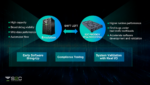
As SoC complexity climbs, traditional verification can’t keep pace — and system-level bugs surface late, when they’re hardest to fix. By pairing Hardware-Assisted… Read More
For modern SoC teams, “shift left” no longer means finding a few more RTL bugs before tape-out. It means moving meaningful system validation earlier—far enough left that firmware, operating systems, drivers, applications, and external interfaces can be exercised before first silicon arrives. This change is essential as software… Read More
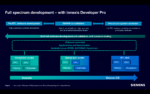
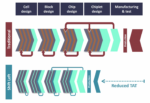
At the heart of the shift-left strategy is the goal of moving traditionally late-stage tasks—such as software development, validation, and optimization—earlier in the design process. This proactive approach allows teams to identify and resolve issues before they escalate, reducing costly rework and shortening the overall… Read More
In today’s rapidly evolving semiconductor industry, the design and integration of intellectual property (IP) play a pivotal role in achieving competitive advantage and market success. Whether sourced from commercial IP providers or developed in-house, ensuring that IP designs are compliant with signoff requirements… Read More
According to McKinsey & Company, a digital twin is a digital representation of a physical object, person, or process, contextualized in a digital version of its environment. Digital twins can help an organization simulate real situations and their outcomes, ultimately allowing it to make better decisions. Anyone… Read More
Advanced process nodes create challenges for EDA both in handling ever larger designs and increasing design process complexity.
Shift-left design methodologies for design cycle time compression are one response to this. And this has also forced some rethinking about how to build and optimize design tools and flows.
SemiWiki… Read More
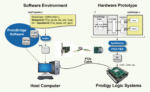
When discussing FPGA-based prototyping, we often focus on how to pour IP from a formative SoC design into one or more FPGAs so it can be explored and verified before heading off to a foundry where design mistakes get expensive. There’s also the software development use case, jumpstarting coding for the SoC before silicon … Read More
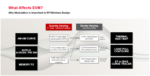
Everyone saw Shift Left, the EDA blockbuster. Digital logic design, with perfect 1s and 0s simulated through perfect switches, shifted into a higher gear. But the dark arts – RF systems, power supplies, and high-speed digital – didn’t shift smoothly. What do these practitioners need in EDA to see more benefits from shift left? … Read More