You are currently viewing SemiWiki as a guest which gives you limited access to the site. To view blog comments and experience other SemiWiki features you must be a registered member. Registration is fast, simple, and absolutely free so please,
join our community today!
You may not know Tensilica DSP IP core, but you probably use Tensilica DSP powered systems in your day to day life. Every year, over 2 billion DSP cores equip IC in thousands of designs supporting IoT, Mobile Phones, Storage/SSD, Networking, Video, Security, Cameras… and more. Why DSP processing, the foundation of all Tensilica… Read More
Processors Rule the Dayby Tom Simon on 10-09-2015 at 7:00 pmCategories: IP
It used to be that if you went to a processor conference, you could expect to spend hours listening to talks about pipelining, cache schemes and processor architecture. Well, I went to the Linley Processor Conference this week in Santa Clara and found the topics pretty compelling. Processors are in just about everything. It is easier… Read More
In more than 30 years of semiconductors, we have seen many technology-induced disruptions in our ecosystem, be it healthcare, consumer, mobile, aerospace, or any other field for that matter. To name a few are portable healthcare devices at much lower prices, video conferencing over internet that reduced the need of physical … Read More
As the number of CPU, GPU, and IP is growing in an SoC, power management is becoming more and more a complex task in itself. A single tool or methodology may not be enough for complete power management and verification of an SoC. In an SoC, there can be multiple modes of operations involving hardware and software interactions, different… Read More
You should be happy to listen that Intel will buy Altera FPGA challenger, if you expect always more power to be consumed in datacenter! In 2013 the power consumption linked with the Servers and Storage IC activity, plus the electricity consumed in the systems cooling these high performance chips has reached 91 BILLION KWh (or the… Read More
If we look back in the last century, performance and area were two main criteria for semiconductor chip design. All design tools and flows were concentrated towards optimizing those two aspects. As a result, density of chips started increasing and power became a critical factor. Now, Power, Performance and Area (PPA) are looked… Read More
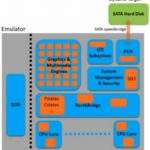
We have been hearing for some time about the Synopsys HAPS-70 and how they have co-created the hardware and software architecture for FPGA-based prototyping with their customers. Now, we see details published by Synopsys on how they collaborated with Imagination on the design of the PowerVR Series6XT GPU.
The first thing to come… Read More
4K UHD TVs were all dressed up at CES 2014 with no content to show. The good news for the 2014 holiday season is the industry has converged on one set of standards for display, interfacing, and encoding, so consumers should not be left marooned in an instant replay of the 3DTV hype-crash cycle. It may be a bit longer before everyone can… Read More
We all know benchmarks, but do we really understand benchmark results? Benchmark users should always look beyond the simple score when making in-depth technical analysis and request to see all the facts. There are many graphics benchmarks to choose from but let’s name today these three below:
3DMark Ice Stormfrom Futuremark… Read More
Atmel (and ARM) announced yesterday that Atmel has licensed a portfolio of ARM IP for devices that require video, image and display capabilities. This portfolio includes Cortex-A7 (a 32-bit core), Mali-V500 (a video accelerator), Mali-DP500 (a display processor) and TrustZone technology (security technology). These can… Read More