You are currently viewing SemiWiki as a guest which gives you limited access to the site. To view blog comments and experience other SemiWiki features you must be a registered member. Registration is fast, simple, and absolutely free so please,
join our community today!
If you are a Mentor user, U2U, the Mentor User group is coming up on April 10th. This is an all day event at the DoubleTree. The event is free. Registration starts at 8am and the agenda itself starts at 9am. There is a reception from 5-6pm in the evening.
There are three keynotes. At 9am: Wally Rhines, CEO of Mentor. The Big Squeeze. For … Read More
The biggest market for semiconductors is mobile and an ARM processor is the center of the axle around which it revolves. So everyone in the mobile ecosystem needs to work closely with ARM. At CDNLive earlier this week Cadence and ARM announced that they are deepening their partnership. Most of what they announced makes it a lot easier… Read More
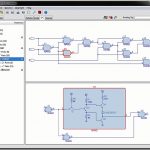
A very popular acronym is ‘WYSIWYG’ – What You See Is What You Get! This is very true and is important to visualize things to make it better in various aspects such as aesthetics, compactness, organization, structure, understandable for correction and so on; the most important, in case of semiconductor design, is being able to identify… Read More
At DVCon today I talked to Sanjiv Kaul, the CEO of Calypto. Just as a reminder, Calypto have 3 products, SLEC (sequential logical equivalence checking, also called sequential formal verification), PowerPro (sequential RTL level power reduction) and Catapult High Level Synthesis (that they took over from Mentor in 2011 in a complicated… Read More
I started using internal EDA tools at Intel beginning in 1978 and have worked in the commercial EDA industry since 1986, so it was a delight to read a chapter about EDA in Nenni and McLellan’s newest book: Fabless – The Transformation of the Semiconductor Industry. Starting in the 1970’s the authors talk about… Read More
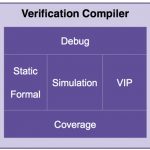
Integration is often an underrated attribute of good tools, compared to raw performance and technology. But these days integration is differentiation (try telling that to your calculus teacher). Today at DVCon Synopsys announced Verification Compiler which integrates pretty much all of Synopsys’s verification technologies… Read More
Since Synopsys acquired Eve over a year ago, they haven’t announced anything new in the ZeBu product line. Emulators are not like software where you expect incremental releases a couple of times per year, each new “release” is a complete re-design using new hardware fabric in a new process technology. Earlier… Read More
Yesterday evening was EDAC’s first mixer. I assume the first of a regular event. It was held in Mountain View in the old train station which is now the Savvy Cellar wine bar. I had a nice glass of rosé from Provence that reminded me of the years that I lived in the south of France. Some of the money we spent went to charity, to the Mountain… Read More
Mounir Hahad Rejoins Silvacoby admin on 02-20-2014 at 4:16 pmCategories: EDA
Mounir Hahad just joined Silvaco as VP engineering. And when I say joined I really mean rejoined. I had a call with him to find out how that happened.
Mounir studied in France for a PhD in computer science on numerical computing. In 1995 the then-director of TCAD at Silvaco called him up having read some of his published papers. Silvaco… Read More
I’ve run SPICE circuit simulators since the 1970’s and they use transistor models where the device parameters are provided by the foundry. These transistor and interconnect parameters come from an engineer at the foundry who has characterized silicon with actual measurements or by running a TCAD (Technology CAD)… Read More