You are currently viewing SemiWiki as a guest which gives you limited access to the site. To view blog comments and experience other SemiWiki features you must be a registered member. Registration is fast, simple, and absolutely free so please,
join our community today!
The 21[SUP]st[/SUP] IP-SoC Days conference will be held in Grenoble, France, on December 5-6, 2018. IP-SoC is now the unique IP centric conference, with presentations reflecting the complete IP ecosystem: IP suppliers and foundries, external IP or internal reuse managers. Look at the program, you will see the hot topics covered… Read More
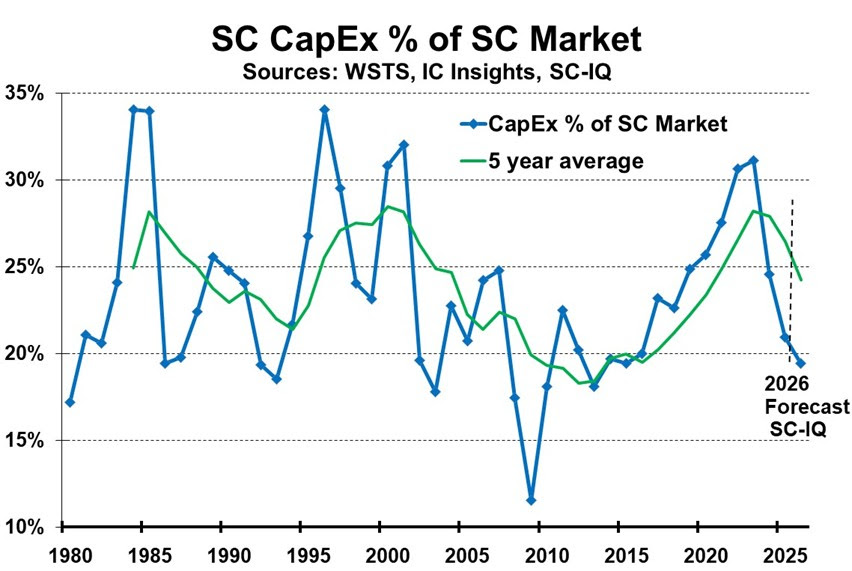
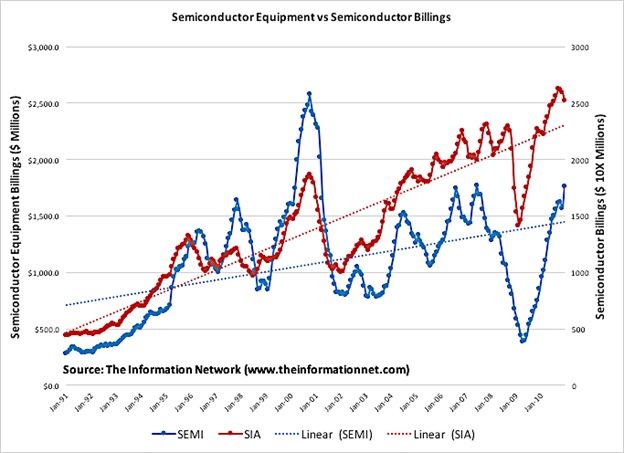
Historically, the semiconductor and semiconductor equipment industry were inextricably linked due to the cyclical nature of the chip industry. An increase in semiconductor revenues was followed within a short period with an increase in equipment revenues, as semiconductor companies purchased equipment to make more chips… Read More
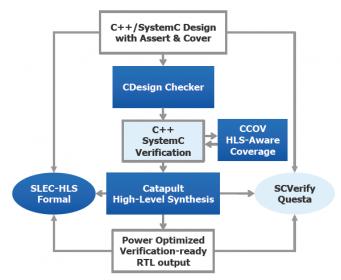
In a recent whitepaper Gagandeep Singh, Director of Engineering at Mentor, a Siemens Business outlines a flow using Catapult Design Checker that helps in early detection of coding errors as many companies are turning to High-Level Synthesis (HLS) methodology. This requires that high -level C++ models are correct, that ambiguities… Read More
Succeeding at managing cybersecurity risks is tremendously difficult even for seasoned professionals. To make situations worse, poorly suited people are often chosen to lead security organizations, bringing about disastrous results. This has contributed to weaker risk postures for organizations and the rapid turnover… Read More
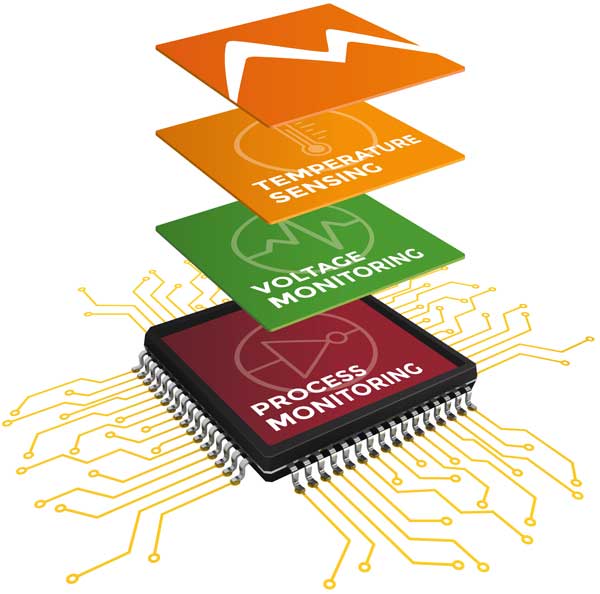
PVT – depending on what field you are in those three letters may mean totally different things. In my undergraduate field of study, chemistry, PVT meant Pressure, Volume & Temperature. Many of you probably remember PV=nRT, the dreaded ideal gas law. However, anybody working in semiconductors knows that PVT stands … Read More
General Motors has two media magnets in CEO Mary Barra and Cruise Automation founder Kyle Vogt. Barra is praised for boosting GM profitability while streamlining operations and making strategic investments. Vogt, the beneficiary of one of those investments – in his autonomous vehicle technology company – embodies GM’s aspirations… Read More
No doubt many who read this article have heard the expression “You can’t get there from here…” It’s most often attributed to New Englanders – primarily residents of Maine – to describe a route to a destination that is so circuitous and complex that one needn’t bother embarking on the journey.
In the context of the business world, the… Read More
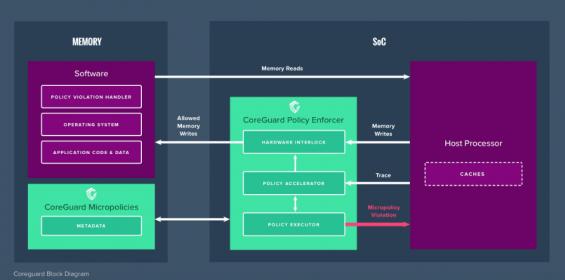
One of the companies I met at ARM TechCon was Dover Microsystems who offer a product in embedded security. You might ask why we need yet another security solution. Surely we’re overloaded with security options from ARM and many others in the forms of TEEs, secure boots, secure enclaves and so on? Why do we need more? Because defending… Read More
Digital technology continues to connect and enrich the lives of people all over the globe and is transforming the tools of everyday life, but there are risks accompanying the tremendous benefits. Entire markets are committed and reliant on digital tools. The entertainment, communications, socialization, and many others sectors… Read More
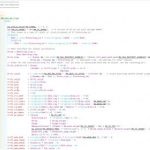
This is it! This is the single page of code that Ákos Hadnagy wrote this summer to formally verify WARP-V, an open-source RISC-V CPU core.… Read More







Musk’s Orbital Compute Vision: TERAFAB and the End of the Terrestrial Data Center