You are currently viewing SemiWiki as a guest which gives you limited access to the site. To view blog comments and experience other SemiWiki features you must be a registered member. Registration is fast, simple, and absolutely free so please, join our community today!
There’s a lot to be said for staying power. I’ve met many people in my career who simply resonate with a company – their products, culture, and direction. People like this build an organic knowledge of the company’s products and its customers. They contribute to a culture that helps enable great companies. Keith Guetig is one such… Read More
Sondrel just released a position paper on how to model and design a complex ASIC. We have been following Sondrel for the past year and I have found their collateral to be excellent. Here is the position paper overview, a description of the new Sondrel modeling tool, the 10 steps, and of course a link to download the paper:
For 20 years the concept of emergency response has been one of the most tired, uninteresting sectors of the automotive industry. General Motors introduced OnStar automatic crash notification 26 years ago and that application has long been considered the end of the story.
The shutoff of 3G wireless networks and the resulting … Read More
I can remember back in the 1980s how Apollo workstations were quite popular, because they accelerated the graphics display time for EDA tools much better than competitive hardware. Fast forward to 2022 and we have the same promise of speeding up EDA tools like PCB layout editing by using a GPU. At the 58th DAC there was a session called,… Read More
Among the multiple technologies that are poised to deliver substantial value in the future, Artificial Intelligence (AI) tops the list. An IEEE survey showed that AI will drive the majority of innovation across almost every industry sector in the next one to five years.
As a result, the AI revolution is motivating the need for … Read More
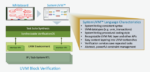
Sometimes we miss the forest for the trees, and I’m as guilty as anyone else. When we think testbenches, we rightly turn to UVM because that’s the agreed standard, and everyone has been investing their energy in learning UVM. UVM is fine, so why do we need to talk about anything different? That’s the forest and trees thing. We don’t … Read More
The much anticipated (virtual) DVCON 2022 is happening this week and functional verification plus UVM is a very hot topic. Functional Verification Engineers using UVM can enjoy a large number of benefits by synthesizing test content for their testbenches. Abstract, easily composable models, coverage-driven content, deep… Read More
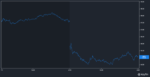
Intel’s big investor day was anything but big. The stock reacted poorly, down 5% on a day that was a widespread sell-off anyways.
I want to briefly summarize what matters for the stock. There was very little incremental news to the technology roadmap, and the financial outlook was underwhelming, to say the least.
Dan is joined by John East, the former CEO of Actel. In the sixth episode of Semiconductor Insiders John explained the beginnings of Fairchild Semiconductor and the significance of the Traitorous Eight.
In this follow-up discussion, John recounts the rise and fall of Fairchild Semiconductor. This is a turbulent and significant … Read More
Why does the industry need another register management tool? This is a question that Tamas Olaszi, the founder of Jade Design Automation hears from time to time since Jade-DA brought Register Manager, their EDA tool, to market. So why?
There is a genuine answer to this question but first let me use this interview to give some helpful… Read More












Available Is Not In Control: Balancing Output, Quality, and Risk in High-Volume Fabs