




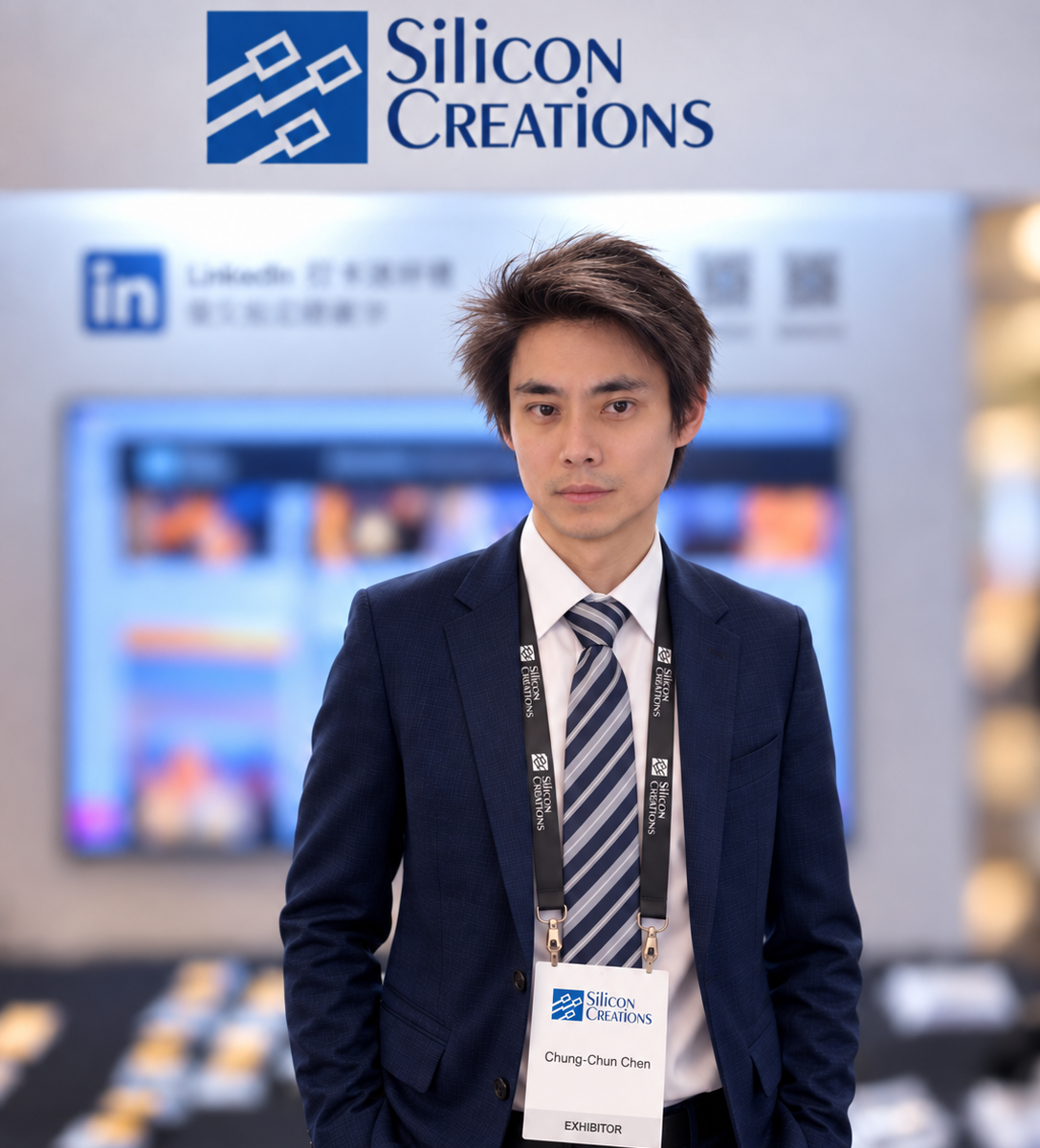


When I interviewed with Silicon Creations 15 years ago, I met directly with the company’s two founders, Jeff Galloway and Randy Caplan. I joined in 2011 as a circuit designer, and the three of us were the entire company. Today, Silicon Creations has grown to nearly 200 employees across multiple locations and serves almost 600 customers worldwide, including companies developing some of the industry’s most advanced chips. Having been part of that growth is something I’m incredibly proud of.
My own career has evolved along with the company. I started as a circuit designer, spent some time in Silicon Valley, and ultimately chose to come back to Silicon Creations. Today, I still design circuits, but I also mentor engineers, lecture at universities and work directly with customers. What stands out to me after 15 years is how much the company has grown without losing the culture that attracted me in the first place. It is still open and collaborative, engineers have opportunities to work directly with customers and take on new challenges, and people are encouraged to grow their careers in different directions. That culture is a big part of why I came back — and why I’ve stayed.
Joining in 2011, I had just left Samsung, where I was a principal engineer, and my Ph.D. background was in RF circuit design. Jeff and Randy wanted to expand the company’s SerDes capabilities, which gave me an opportunity to work in an area that was relatively new to me professionally. In some ways, during those first years, I felt like I was doing another Ph.D.
I spent a lot of time reading papers and textbooks, researching architectures and developing circuits from scratch. There was tremendous freedom to explore different ideas and determine the best architecture for a particular building block. What made the experience different, however, was that I wasn’t doing that exploration alone.
The Freedom to Ask, Explore (and Sometimes Be Wrong)
One thing I appreciated from the beginning was how much time Jeff and Randy were willing to spend discussing ideas with me.
At other companies, a manager may tell an engineer what needs to be delivered but not necessarily have the time to sit down and explore how to solve the problem, even if it needed to start over from scratch. At Silicon Creations, we would discuss ideas together. Sometimes I would come up with an idea that seemed promising and after talking it through, we would realize there was a problem with it. Then we would move quickly to another approach.
I never felt that proposing an idea that didn’t work was a failure. It was simply part of finding the right answer. That collaboration made me feel supported and gave me the freedom to keep exploring. And that is one of the things I still enjoy most about engineering.
There is a special feeling when you find a solution to a problem that hasn’t been explored before. First, you prove the concept through simulation. Then the customer builds a test chip. Eventually, you measure the silicon and discover that it actually works. It is no longer just an idea on paper. You have physical measurements that prove the concept. For me, that is still one of the most exciting parts of being a circuit designer.
Leaving and Choosing to Come Back
In 2018, I was presented with an opportunity that was difficult to turn down.
A company in Silicon Valley had hired Prof. Behzad Razavi of UCLA, a very well-known circuit design professor whose work I had admired for years. I had read his papers and textbooks, and I wanted the experience of working with him. I had also never worked in Silicon Valley and thought it was something I should experience at least once in my career. Nothing was pushing me away from Silicon Creations — it was still a great place to work, and I had experienced the great culture for years. This was simply a chance I had to take. So, I left.
It was a very good professional experience in Silicon Valley. I had the opportunity to work closely with someone whose research and publications I had respected for many years, and to develop novel ideas in areas that were not being researched at Silicon Creations at that moment. For example, PAM4 SerDes and full-duplex Ethernet echo cancellation. But there was a problem: my wife and children did not want to move.
For about a year, every two weeks, I traveled back and forth from Silicon Valley to home in Atlanta. Eventually, I realized that wasn’t sustainable. I contacted Jeff and Randy and simply asked whether there might be an opportunity for me to return. Their answer was essentially: of course! Your cube is still waiting for you!
What I did not expect was that returning would open an entirely new phase of my career.
From Designing Circuits to Developing Engineers
While I was gone, other engineers had taken ownership of many of the circuit blocks I had previously worked on. So, when I returned, I didn’t simply go back to doing exactly what I had done before. My role had evolved.
I began spending more time reviewing other designers’ work and explaining why particular architectures had originally been chosen, what tradeoffs we had considered and what could happen if a designer took a different approach.
That eventually led to internal lectures and training sessions. I also began working with universities, giving lectures, and developing relationships with professors and students. Those programs have helped us introduce young engineers to the kind of work we do and attract talented people to Silicon Creations.
For me, it has been rewarding to move from developing circuits to helping develop engineers.
Getting Out of the Office Changed My Perspective
My role also began to include something I had done relatively little of during my first years at Silicon Creations: meeting directly with customers. Today I may work with customers during the planning stage of a new product, standing at a whiteboard and discussing their architecture and what they are trying to accomplish and where our IP might fit. I may also be in their lab helping investigate a problem after silicon comes back. That interaction has made me a better engineer.
When you spend most of your time designing circuits, you naturally think about whether the circuit meets its specifications. A customer may show you conditions you didn’t anticipate – how they ramp the temperature or supply voltage, for example, or how the IP behaves within their particular system. Those experiences come back into our designs. They help us make the IP more robust and useful for the next customer.
I think this is something unusual about working at Silicon Creations. Engineers can have the opportunity to see much more of the complete design cycle: understanding the customer’s requirements, developing the architecture, designing and simulating the circuit, seeing the silicon come back and then supporting the customer as they put that IP into a real product. You are not separated from the people who ultimately use what you design.
Growing Without Losing the Original Culture
Silicon Creations today is very different in size from the company I joined in 2011. We now have nearly 200 people across multiple locations. But I don’t think the fundamental engineering culture has changed very much.
We still work hard, discuss problems openly, and help one another solve them. As the company has grown, I have spent more time with Jeff and Randy thinking about how we hire good people, train them and preserve that environment.
One message I give our engineers is simple: don’t carry every problem alone. Talk to your feedback engineer or CC (me!) and ask for more “negative feedback” to make your design more stable. Even talk to the founders or another engineer. We solve problems together, and when the product succeeds, we share that success together.
That philosophy also extends beyond the individual employee. One of the things I value about Silicon Creations is that the company recognizes that employees have families and lives outside work. I experienced that personally when I returned from Silicon Valley, and it remains important to me today.
World-Class Problems Without a Giant-Company Experience
For an engineer considering Silicon Creations today, I think there is a particularly interesting opportunity here. We are relatively small compared with the semiconductor industry’s largest companies, but that doesn’t mean the engineering problems are small. We work on difficult, “world-class” problems, often for customers developing some of the industry’s most advanced chips. Engineers can be given significant technical freedom, but with that freedom also comes real responsibility. That combination is important.
You can work with experienced engineers, interact directly with customers and participate in more than one stage of the product lifecycle rather than being limited to a very narrow piece of the design.
That is essentially what happened to me. I joined as a circuit designer. Today I still participate in circuit design, but I also mentor engineers, teach, work with universities, visit customers and contribute to discussions about how we continue building the company. I like that because I do not want to do one thing forever and get bored. I want to continue exploring and learning.
What Comes Next
There is plenty to keep us learning. I’m particularly excited about our recent work on a 3nm SerDes, developing a multi-protocol PMA that has required us to solve increasingly complex customer requirements. Those requirements don’t just create challenges; they teach us things that can improve the architecture of our future IP.
At the same time, Silicon Creations is expanding beyond the areas where we were traditionally known. As AI chips become larger and more complex, they require technologies for connectivity, clocking, and monitoring. That creates opportunities across areas such as SerDes, clocking, LC-based PLL technologies, and on-chip voltage & temperature sensors.
For me, that means there are still new problems to solve, even after 15 years.
And perhaps that is the best way to describe my experience at Silicon Creations. The company has grown tremendously since I first sat down with Jeff and Randy as one of three people working together on circuits. My own role has changed just as much. The part I valued at the beginning hasn’t changed: The opportunity to explore difficult technical problems, learn from the people around me, help customers succeed and solve problems together.
That’s why I came back — and why I am still excited about what we can build next.
Also Read:
Silicon Creations at DAC 2026: Solutions for clocking, SerDes, and sensing in 2nm (and beyond)
2026 Outlook with Randy Caplan of Silicon Creations
Silicon Creations Company Update 2025
Share this post via:



Comments
There are no comments yet.
You must register or log in to view/post comments.