




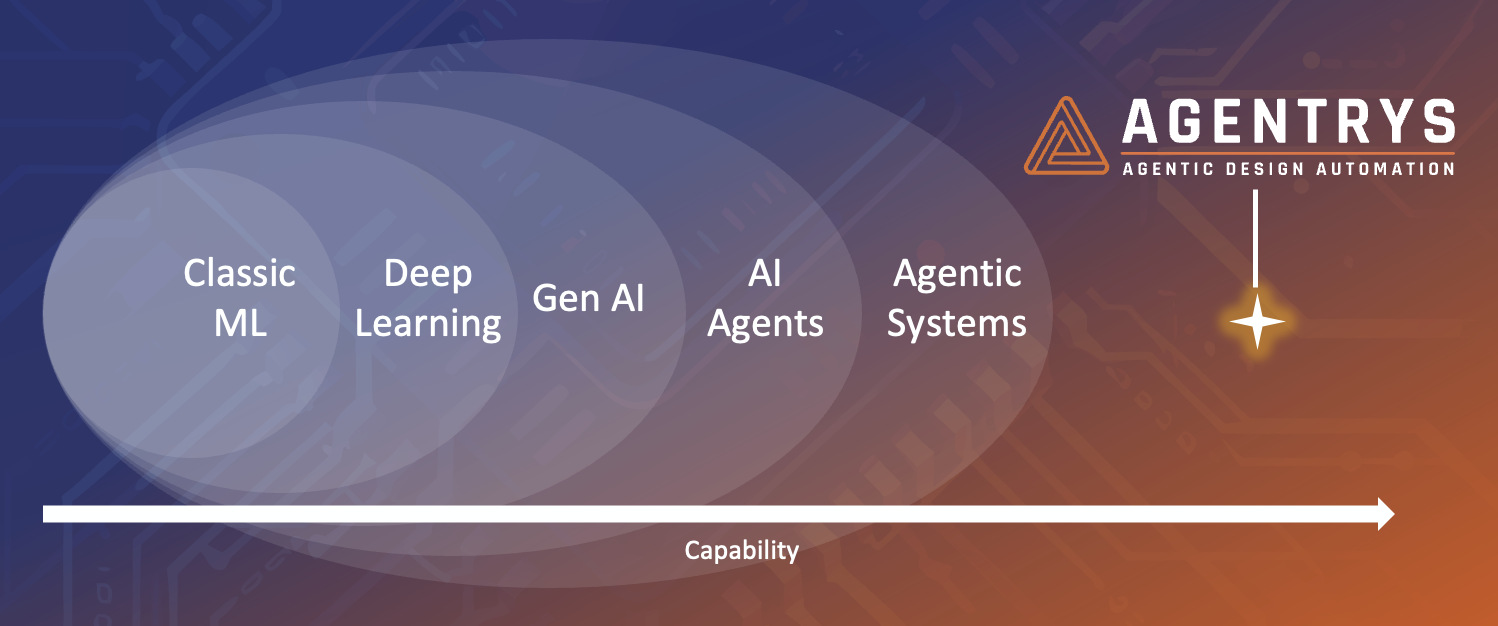
There were many new agentic design flows introduced at DAC this year. Some from mainstream providers and others from new startups. The increased level of activity around this technology was good to see. Most of the approaches presented at the conference were targeting specific parts of the flow. Verification and debug were popular ones, although many other parts of the design flow were addressed as well.
Each of these offerings presented a specific solution. Many supported the addition of customer developed models. How each flow could be extended to other problem domains was also a big topic. One company took a different approach with a platform that allowed the development of any agentic flow, not a specific one. The technology is called Agentic Design Automation, or ADA. Let’s look at how Agentrys launches Agentic Design Automation at DAC 2026.
What Was the Reaction to ADA?
I spent some time with the Agentrys folks in their booth at DAC. Traffic was quite brisk for the entire show, so I probed what kind of reactions were observed. There were two primary reactions:
1) Excitement. “You guys are thinking outside the box. You are focusing on the real problem and not trying to sell me a solution defined by an EDA company.” These are the people who are thinking big about agentic AI.
2) Probing. “Can you deliver a specific flow for me?” These are the people with a specific problem to solve, and they are comparing specific solutions.
The Agentrys folks went on to explain that their ADA solution empowers design teams to build the best agentic flow based on the team’s own data and the team’s specific needs. And then they said:
Agentrys transforms the customer’s workflow into an agentic automated workforce. Every execution makes the next one better.
I probed a bit deeper to understand how they do it.
How it Works
Let’s start at the beginning. Current chip development requires long-running, complex, repeatedly executed engineering workflows that need significant manual effort and engineering judgment. Examples include verification closure, physical implementation, timing closure, analog layout optimization, design-space exploration, and signoff.
Agentrys ADA technology automates these workflows, and it keeps improving them. This process ultimately surpasses expert-level design capability. These results are delivered with a comprehensive platform called Agentrys Studio that includes hierarchical multi-agent orchestration. The approach includes governed iteration loops to ensure convergence, detailed management of design objectives, and a continuously curated design knowledge base that every agent draws on, so each completed design sharpens the next one.
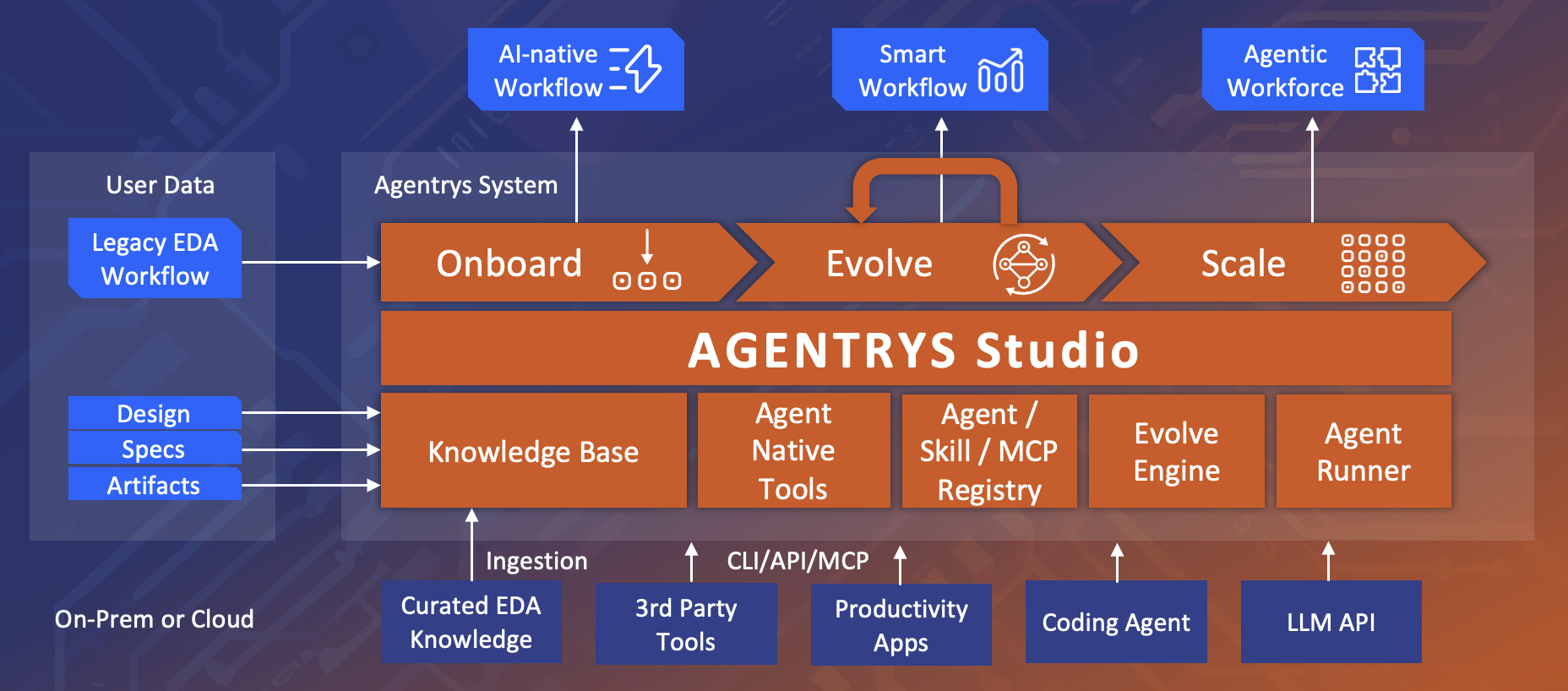
The process to implement an agentic flow with Agentrys Studio has three main parts. The Onboard phase is first, where an AI native version of the customer’s design flow is created. This is followed by the Evolve phase. Here, the Agentrys agents adapt to the design flow and get better based on the customer’s data. There is improvement with every validated round. And finally, there is the Scale phase, where the resultant solution is cataloged and made available across the whole design organization.
The figure below illustrates how the parts of Agentrys Studio fit together with the customer’s environment to create a solution.
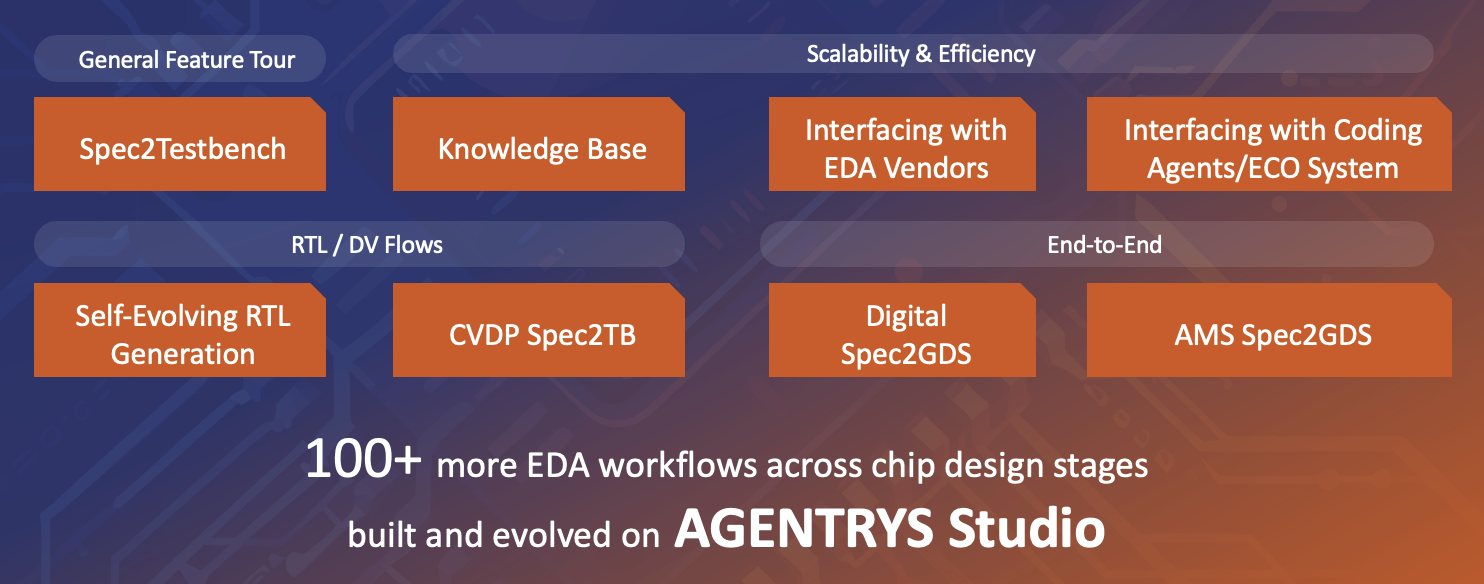
Agentrys has already achieved significant improvements in areas such as design verification, formal verification, RTL coding, PDK validation, waveform analysis, analog layout, and full spec to GDSII implementation. If you’re ready to deploy an agentic flow that targets your specific needs, Agentrys is ready to help.
There are several case studies available from Agentrys. The figure below summarizes these resources and accomplishments.
To Learn More
If you’re ready to move toward an AI fueled agentic design flow, Agentrys Studio can deliver the specific capability you need. You can learn more about this unique new company on SemiWiki here. And you can probe deeper on the Agentrys website and book a demo here. And that’s how Agentrys launches Agentic Design Automation at DAC 2026.
Also Read:
Agentrys Designs a Real Chip with its Multi-Agent Workforce
Agentrys Weighs in on LLM Benchmarking for Chip Design at DAC 2026
Agentrys a New Paradigm for Semiconductor Engineering at 2026 DAC
CEO Interview with Mark Ren of Agentrys
Share this post via:




Comments
There are no comments yet.
You must register or log in to view/post comments.