WP_Term Object
(
    [term_id] => 51
    [name] => RISC-V
    [slug] => risc-v
    [term_group] => 0
    [term_taxonomy_id] => 51
    [taxonomy] => category
    [description] =>
    [parent] => 178
    [count] => 181
    [filter] => raw
    [cat_ID] => 51
    [category_count] => 181
    [category_description] =>
    [cat_name] => RISC-V
    [category_nicename] => risc-v
    [category_parent] => 178
    [is_post] =>
)

WP_Term Object
(
    [term_id] => 51
    [name] => RISC-V
    [slug] => risc-v
    [term_group] => 0
    [term_taxonomy_id] => 51
    [taxonomy] => category
    [description] =>
    [parent] => 178
    [count] => 181
    [filter] => raw
    [cat_ID] => 51
    [category_count] => 181
    [category_description] =>
    [cat_name] => RISC-V
    [category_nicename] => risc-v
    [category_parent] => 178
    [is_post] =>
)
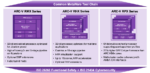
Synopsys has just announced that it has expanded its ARC processor portfolio to include a family of RISC-V processors. These will be branded under the ARC name as ARC-V and are expected to become available in 2024. This is a significant announcement which I attempt to unpack briefly below.
Why add RISC-V to the portfolio and why now?
…
Read More
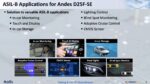
The automotive industry imposes stringent requirements on Functional Safety. For semiconductor companies involved in automotive chips and even further upstream in Silicon Intellectual Property (SIP), obtaining ISO 26262 certification is a fundamental requirement for product penetration into automotive applications.… Read More
Dan is joined by Calista Redmond, CEO of RISC-V International. Prior to RISC-V International, Calista held a variety of roles at IBM, including vice president of IBM Z Ecosystem where she led strategic relationships across software vendors, system integrators, business partners, developer communities, and broader engagement… Read More
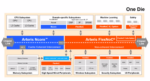
Designers have many paths for differentiating RISC-V solutions. One path launches into various RISC-V core customizations and extensions per the specification. Another focuses on selecting and assembling IP blocks in a complete system-on-chip (SoC) design around one or more RISC-V cores. A third is emerging: interconnecting… Read More
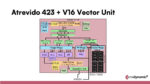
Many modern processor performance benchmarks rely on as many as three levels of cache staying continuously fed. Yet, new data-intensive applications like multithreaded generative AI and 4K image processing often break conventional caching, leaving the expensive execution units behind them stalled. A while back, Semidynamics… Read More
RISC-V have great adoption and momentum. One of the key benefits of RISC-V is the ability for SoC designers to extend its instruction sets to accelerate specific algorithms. Andes’ ACE (Andes Custom Extensions) allow customers to quickly create, prototype, validate and ultimately implement custom memories, dedicated ports… Read More
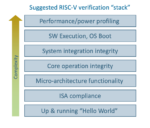
The flexibility of RISC-V processor IP allows much freedom to meet specific requirements – but it also opens the potential for many bugs created during the design process. Advanced processor features are especially prone to errors, increasing the difficulty and time needed for thorough verification. Born out of necessity, … Read More
Modern CPU performance hinges on keeping a processor’s pipeline fed so it executes operations on every tick of the clock, typically using abundant multi-level caching. However, a crop of cache-busting applications is looming, like AI and high-performance computing (HPC) applications running on big data sets. Semidynamics… Read More
The RISC-V open ISA premise was clearly a good bet. It’s taking off everywhere, however verification is still a challenge. As an alternative to Arm, the architecture and functionality from multiple IP providers looks very competitive, but how do RISC-V providers and users ensure the same level of confidence we have in Arm? Arm … Read More
RISC-V is a general-purpose license-free open Instruction Set Architecture [ISA] with multiple extensions. It is an ISA separated into a small base integer ISA, usable as a base for customized accelerators and optional standard extensions to support general-purpose software development. RISC-V supports both 32-bit and … Read More