You are currently viewing SemiWiki as a guest which gives you limited access to the site. To view blog comments and experience other SemiWiki features you must be a registered member. Registration is fast, simple, and absolutely free so please,
join our community today!
WP_Term Object
(
    [term_id] => 157
    [name] => EDA
    [slug] => eda
    [term_group] => 0
    [term_taxonomy_id] => 157
    [taxonomy] => category
    [description] => Electronic Design Automation
    [parent] => 0
    [count] => 4439
    [filter] => raw
    [cat_ID] => 157
    [category_count] => 4439
    [category_description] => Electronic Design Automation
    [cat_name] => EDA
    [category_nicename] => eda
    [category_parent] => 0
    [is_post] =>
)
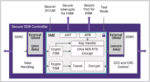
News of hackers breaking into systems is becoming common place these days. While many of the breaches reported to date may have been due to security flaws in software, vulnerabilities exist in hardware too. As a result, the topic of security is getting increased attention within the semiconductor industry around system-on-chip… Read More
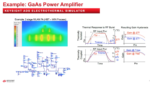
Heat and semiconductor reliability exist in an inversely proportional relationship. Before the breaking point at the thermal junction temperature rating, every 10°C rise in steady-state temperature cuts predicted MOSFET life in half. Yet, heat densities rise as devices plunge into harsher environments like smartphones,… Read More
This is an interesting idea, using hardware-supported speculative parallelism to accelerate simulation, with a twist requiring custom hardware. Paul Cunningham (Senior VP/GM, Verification at Cadence), Raúl Camposano (Silicon Catalyst, entrepreneur, former Synopsys CTO and now Silvaco CTO) and I continue our series on… Read More
My IC design career started out with DRAM design back in 1978, so I’ve kept an eye on the developments in this area of memory design to note the design challenges, process updates and innovations along the way. Synopsys hosted a memory technology symposium in November 2022, and I had a chance to watch a presentation from SK hynix… Read More
Dirk Didascalou, Siemens CTO, gave a keynote at DVCon, raising our perspective on why we do what we do. Yes, our work in semiconductor design enables the cloud and 5G and smart everything, but these technologies push progress for a select few. What about the big global concerns that affect us all: carbon, climate, COVID and conflict?… Read More
Russell Mohnis the Co-Founder and Director of RF/AMS Design at InPlay Inc. and his team has been using WiCkeD from MunEDA for several years. We thought the rest of the world would like to learn about his experiences.
How did you get started in semiconductors and what brought you to InPlay?
I was initially drawn to analog and mixed-signal… Read More
Analog IC designers can spend way too much time and effort re-using old, familiar, manual iteration methods for circuit design, just because that’s the way it’s always been done. Circuit optimization is an EDA approach that can automatically size all the transistors in a cell, by running SPICE simulations across… Read More
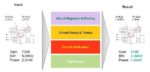
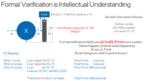
Synopsys has posted on the SolvNet site a fascinating talk given by Dr. Theo Drane of Intel Graphics. The topic is datapath equivalency checking. Might sound like just another Synopsys VC Formal DPV endorsement but you should watch it anyway. This is a mind-expanding discussion on the uses of and considerations in formal which … Read More
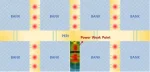
Traditional methods of chip design and packaging are running out of steam to fulfill growing demands for lower power, faster data rates, and higher integration density. Designers across many industries – like 5G, AI/ML, autonomous vehicles, and high-performance computing – are striving to adopt 3D semiconductor… Read More
Zakir Hussain is a co-founder of Infinisim and brings over 25 years of experience in the Electronic Design Automation industry. He was at Simplex Solutions, Inc. (acquired by Cadence) at its inception in 1995 through the end of 2000. He has published numerous papers on verification and simulation and has presented at many industry… Read More










Musk’s Orbital Compute Vision: TERAFAB and the End of the Terrestrial Data Center