




While listening to the Intel and AMD conference calls last week I was reminded of the ATI acquisition by AMD and the painfully long cultural assimilation that ensued. The title of this blog could just as easily have been “Custom vs Synthesizable Design Cultures” or “The Real Reason Why AMD is Fabless” because that is closer to how … Read More

Electronic Design Automation
When is a Million-Year MTBF Too Short?
The reliability metric, Mean Time Between Failures (MTBF), is often misunderstood. Use of an MTBF metric generally assumes a random failure process, one that is very infrequent and has no memory of past failures. Such failure modes can occur in System-on-Chip (SoC) designs and include radiation effects, synchronizer malfunctions… Read More
New Release of Semulator3D at #semiconwest

One of Coventor’s flagship products is SEMulator3D, and at Semicon West they announced a new version, 2014.100.
SEMulator3D is a powerful 3D semiconductor and MEMS process modeling platform. It uses highly efficient physics-driven voxel modeling technology. It models the physical effects of process steps, which is… Read More
Winds of Change in the Custom Chip Market
The most interesting part of the semiconductor market for me has always been the Custom Chip sector – the FPGA, ASIC and SoC companies where I have spent my entire career. These three segments provide an excellent barometer of the overall state of financial health and technological innovation for the entire High Tech industry, … Read More
Palladium’s Little Brother Protium

Today, Cadence announced Protium, a new FPGA prototyping platform for software development. During development of an SoC, the most appropriate methodology changes. In the early days, developing RTL, the primary tool is simulation. Then, as the blocks get bigger or as the whole chip starts to come together, typically simulation… Read More
Catching IC Manufacturing Defects With Slack-Based Transition Delay Testing

Test engineers are often the unsung heroes in the semiconductor world, because they have the tough job of deciding if each IC is good or bad, while taking the least amount of time on a tester and ensuring that the tests are actually finding and uncovering all manufacturing and process variation defects. Simple stuck-at fault models… Read More
Cadence Announces Quantus Next Generation Extraction

Today Cadence announced their next generation extraction solution called Quantus QRC. Actually they are technically announcing it tomorrow, since it is being announced at CDNLive in Korea where it is already Tuesday morning.
As with the other recently announced tools that end in -us, Tempus (timing signoff) and Voltus (power… Read More
Paving the Path for Robust Electronic System Design
In today’s era of low power and high performance components, preferably on a single chip provides impetus to much larger electronic systems packaged into much smaller cases; smartphones are the immediate examples which encapsulate multiple functions other than the intended ones, viz. phone and data communication. As an example,… Read More
EDA Mergers & Acquisitions Wiki Now Includes IP
When I started collecting my list of EDA mergers and acquisitions about 30 years ago, my objective was simply to determine the number of logos each EDA company owns. For that reason, I collected all the fish-eat-fish-eat-fish…. mergers and acquisitions, going way back to the very early days of EDA (even before it was called EDA).… Read More
Modeling and Analysis of Single Event Effects (SEE)
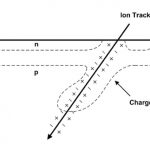
Single Event Effects (SEE) are important because we depend upon our consumer, industrial and aerospace products to work reliably. Protons, electrons, neutrons, or alpha particles may perturb the MOS or bipolar device operation in either a destructive or non-destructive fashion. Galactic cosmic rays are one source of these… Read More
SEMICON West’s Autonomous Fab Vision Needs a Decision-Escalation Design