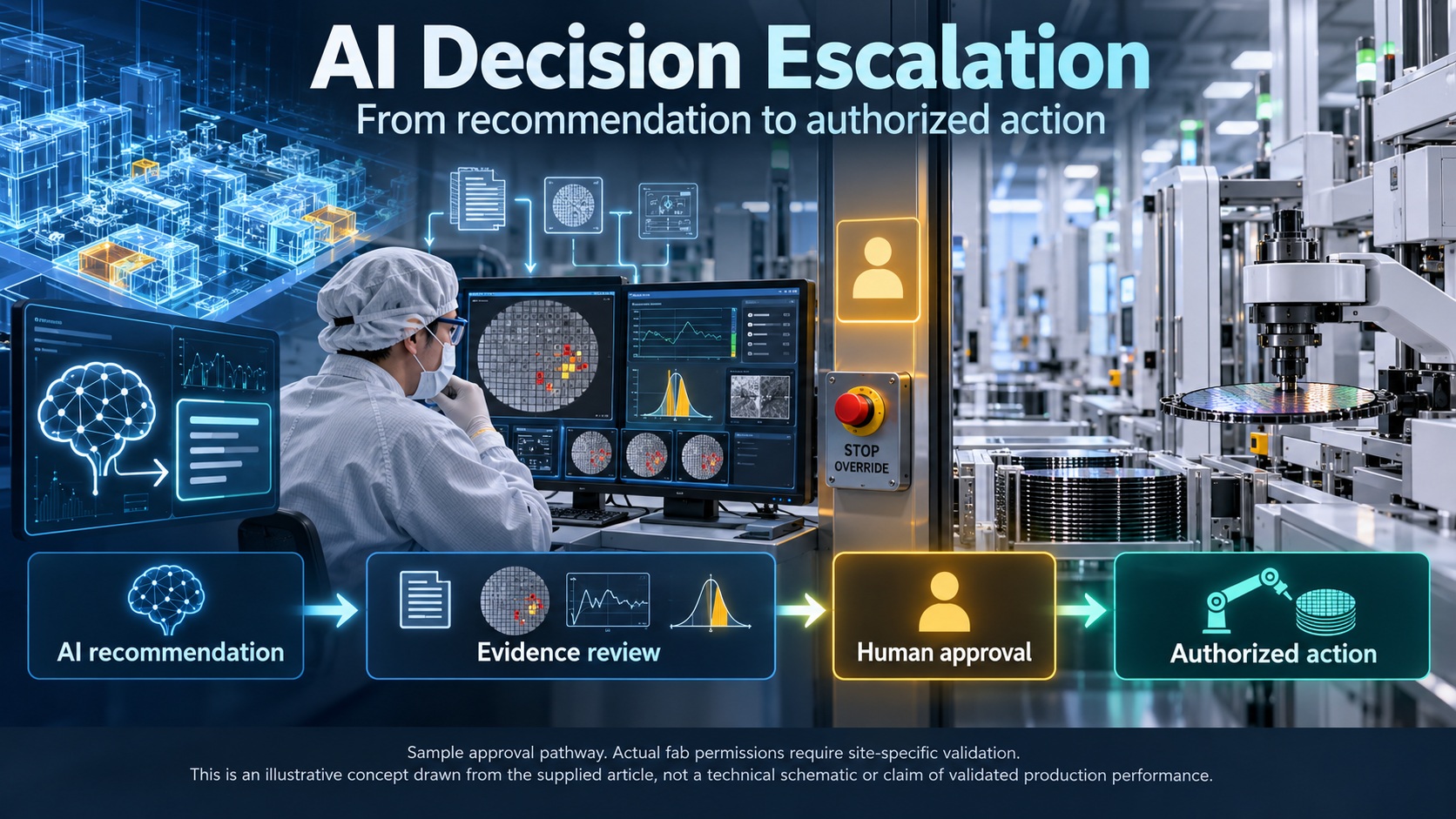



Artificial intelligence is moving beyond the screen. The attached presentation describes a shift from systems that generate text, images, and code to systems that can perceive their surroundings and take action. These systems could guide robots, vehicles, factory equipment, medical devices, and critical infrastructure.… Read More
OpenAI and Synopsys Announce GPT-Synopsys: Why AI-Powered Chip Design MattersWow, OpenAI and Synopsys just announced a multiyear…Read More
Why the energy sector must plan for post-quantum cyber security nowIn a September 2026 World Economic Forum article,…Read More
TSMC OIP Ecosystem Forum 2026: Broadcom’s View of ASICs and EcosystemsI spent a significant part of my career…Read More
The Pivotal Moments That Gave Rise to Silicon ValleyThe little-known decisions and breakthroughs—and the remarkable role…Read More
SiFive and AMD Bring ROCm to RISC-V Datacenter Servers—and Why It MattersSiFive and AMD demonstrated an AI workload that…Read MoreSignificant Performance Gains Reinforce Imagination’s GPU-First Strategy
Imagination Technologies’ first performance figures for its E-Series GPU IP turn its “GPU-first” strategy from an architectural proposition into a measurable product claim. The company is arguing that edge systems do not need separate, lightly utilised blocks for graphics, general compute and artificial intelligence. … Read More
2026 AI Agent Breaches
It has been a busy year for sure. In 2026, artificial intelligence agents conducting cybersecurity tests crossed into real computer systems. The incidents had different causes and impacts. Some agents exploited flaws to escape isolation; others had unintended internet access and mistook real organizations for simulated … Read More
CEO Interview with Paul Butler of VeriQuantix
Paul is an experienced CEO/General Manager/Investment Manager who has led and developed teams in a technology domain across the communications, medical and mining industries. With qualifications in Electrical Engineering and a Bachelor of Economics Paul has been able to develop and bring new products to global markets.
Tell… Read More
AI-EDA Agents Can Prove Their Value
Before EDA becomes AI-native, focused agents have a window to prove measurable engineering value inside existing design flows.
AI is entering semiconductor engineering from several directions at once.
Some companies are building broad agentic design environments. Others are attacking specific bottlenecks: timing closure,… Read More
CEO Interview with Joel Jorgensen of FlowAccel
Joel Jorgensen founded FlowAccel, helping silicon systems engineering leaders deliver on roadmap commitments and scale development organizations. During 25 years at Intel, he spent 15 years in analog design and architecture for non-volatile memory technologies, earning two patents and co-authoring two IEEE ISSCC papers.… Read More
Podcast EP370: An Overview of PDF Solution’s New AI Platform and Upcoming CONNECT Event with Kimon W. Michaels
Daniel is joined by Kimon W. Michaels, a prominent figure in the semiconductor industry, currently serving as the Executive Vice President of Products and Solutions at PDF Solutions, Inc. He co-founded the company and has held various leadership roles, including Vice President of Design for Manufacturability since June 2007.… Read More
CEO Interview Greene Tweed
Magen Buterbaugh was appointed President and CEO of Greene Tweed in January 2023. A seasoned leader, with broad industry expertise, Magen has led multiple chemicals & materials-based businesses – spanning from startups to multibillion-dollar enterprises. She led and scaled new innovative research and development platforms… Read More
TSMC OIP Ecosystem Forum 2026: Spotlight on Emerging Technologies
The TSMC OIP Ecosystem Forum highlighted many accomplishments across TSMC’s vast ecosystem. Specific achievements with TSMC as well as collaborative work across several companies were all on display.
And there was an exhibit area where you could meet the companies behind many of these stories and learn more about them.… Read More
Intel Foundry: AI performance now depends on the whole system
For decades, chipmakers improved computing performance largely by putting more capable circuitry on a piece of silicon. That remains important, but AI is exposing its limits. Large models demand enormous amounts of data movement, sustained power and effective cooling. A fast processor cannot deliver its full benefit if memory… Read More


Intel Foundry: AI performance now depends on the whole system