





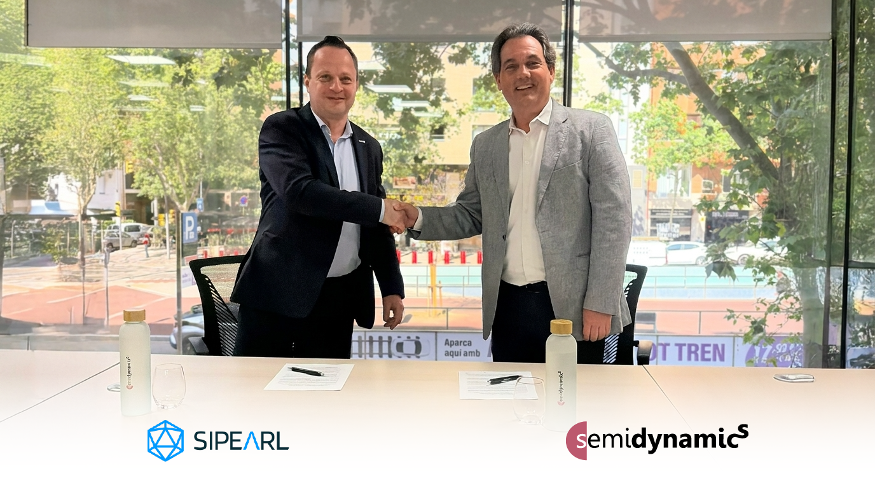
The strategic cooperation between Semidynamics and SiPearl to develop a European sovereign rack-scale AI compute platform is important for reasons that extend far beyond technology. It represents a major step toward Europe gaining greater control over its artificial intelligence infrastructure, reducing dependence on foreign technology providers, and building a competitive position in the rapidly expanding global AI economy.
Today, the AI infrastructure market is dominated by companies based primarily in the United States and increasingly China. Most advanced AI compute systems rely on processors, accelerators, software ecosystems, and cloud infrastructure controlled by non-European companies. This creates strategic vulnerabilities for Europe in areas such as economic competitiveness, national security, supply chain resilience, and digital sovereignty. The Semidynamics-SiPearl collaboration directly addresses these concerns by helping establish a homegrown European AI compute ecosystem.
One of the most significant aspects of this partnership is the concept of “EU-sovereign” AI infrastructure. Sovereignty in computing means that Europe can design, develop, deploy, and operate critical AI systems using technology largely controlled within its own political and regulatory framework. This matters because AI is increasingly becoming foundational infrastructure, similar to energy grids or telecommunications networks. Nations and regions that do not control their AI infrastructure risk losing influence over economic development, industrial innovation, data governance, and security standards.
The partnership also comes at a critical time when demand for AI compute power is exploding. Training and deploying large AI models require enormous amounts of processing capability, memory bandwidth, and energy-efficient architectures. Rack-scale AI systems — where compute, networking, and memory are tightly integrated at the data center rack level — are emerging as the next frontier in high-performance AI infrastructure. By collaborating on this technology now, Semidynamics and SiPearl are positioning Europe to participate competitively in the future of hyperscale AI computing rather than remaining dependent on imported platforms.
Technologically, the cooperation combines complementary strengths. SiPearl has been developing high-performance European processors designed specifically for exascale supercomputing and AI workloads. Semidynamics contributes advanced semiconductor IP and architecture innovation, particularly in areas involving high-performance RISC-V processor technologies. Together, they can create specialized AI compute platforms optimized for European requirements, including performance efficiency, open architectures, and interoperability.
The use of RISC-V technology is especially meaningful. RISC-V is an open instruction set architecture that allows companies and governments to develop processors without relying on proprietary licensing models from dominant foreign suppliers. This reduces technological dependency and provides greater customization flexibility. For Europe, supporting RISC-V-based AI infrastructure aligns with broader goals of technological independence and open innovation.
Another important dimension is economic competitiveness. AI is expected to become one of the defining economic drivers of the next several decades, influencing industries ranging from automotive and healthcare to aerospace, manufacturing, and finance. If Europe lacks indigenous AI compute infrastructure, European companies may face higher costs, reduced access to advanced systems, and strategic disadvantages compared to competitors in the U.S. and Asia. Building sovereign AI platforms helps retain high-value semiconductor expertise, research capability, and manufacturing opportunities within Europe.
The collaboration also strengthens Europe’s semiconductor ecosystem at a time when governments worldwide are investing heavily in chip independence. The United States has launched the CHIPS Act, while China has aggressively pursued semiconductor self-sufficiency. Europe’s own semiconductor ambitions require not only fabrication capacity but also strong processor design companies, IP providers, software ecosystems, and AI infrastructure players. The Semidynamics-SiPearl partnership demonstrates that Europe is developing a more integrated semiconductor strategy rather than focusing solely on manufacturing.
Security and data governance are additional factors driving the importance of this initiative. AI systems increasingly process sensitive government, industrial, healthcare, and defense-related data. European policymakers have become increasingly concerned about relying entirely on foreign-owned infrastructure for mission-critical workloads. A sovereign AI compute platform offers more control over hardware security, data residency, compliance, and operational transparency.
The timing is also significant because Europe has been criticized for lagging behind in AI commercialization despite strong academic research capabilities. Partnerships like this show a shift toward industrial-scale execution. Rather than simply funding research projects, Europe is now supporting infrastructure capable of enabling large-scale AI deployment across commercial and public sectors.
Finally, the cooperation symbolizes Europe’s ambition to shape the future of AI according to its own values and priorities. Europe has emphasized ethical AI, privacy protections, sustainability, and regulatory accountability. To enforce and operationalize those principles effectively, Europe needs its own compute infrastructure foundation. Without sovereign platforms, regulatory influence alone may not translate into practical technological leadership.
Bottom line: The Semidynamics and SiPearl partnership is important because it represents far more than a technical collaboration. It is part of a broader strategic movement toward European AI independence, semiconductor competitiveness, digital sovereignty, and long-term economic resilience in the age of artificial intelligence.
Also Read:
Semidynamics Secures a Strategic Investment to Advance Memory-Centric AI Inference Chips
Semidynamics Unveils 3nm AI Inference Silicon and Full-Stack Systems
2026 Outlook with Volker Politz of Semidynamics
Share this post via:



Comments
There are no comments yet.
You must register or log in to view/post comments.