Bronco Webinar 800x100 1

Fast Monte Carlo and Analog Fast SPICE

Fast Monte Carlo and Analog Fast SPICE
by Daniel Payne on 06-08-2012 at 10:25 am

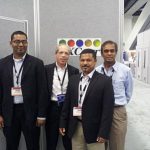
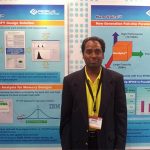
Britto Vincent of ProPlus Design Solutions met with me at DAC on Monday morning to talk about Design For Yield (DFY) and Analog Fast SPICE.

In 2011 ProPlus announced DFY tools where the technology came from IBM, it provides fast Monte Carlo results up to 3 sigma, then added NanoSpice for faster simulation results. Similar in approach to Solido but with our own SPICE tool. High sigma analysis is useful in memory designs. Statistical simulation with yield analysis is accomplished using NanoYield. We had a joint presentation with IBM on Tuesday at DAC, IBM did a paper on Sunday too.

History of where ProPlus cam from – Started out as BTA, then Celestry, Cadence acquired Ultrasim, 2006 spun out from Cadence. We’ve been doing device modeling since 1991 (BTA).

In the Lab we can perform noise analysis.

Our own SPICE tool is called NanoSpice (like FineSim Pro). The simulator is both hierarchical and parallel. You can simulate a DRAM with up to 550M elements, or an SRAM with up to 65M elements.

The customers of NanoSpice cannot be mentioned yet, although we have a memory IDM and a southern CA client.

Device Modeling is done with the BSIMProPlus tool, and it is used by foundries and IDMs to create new models. This has been our core business.

NanoSpice is our Analog Fast SPICE circuit simulator and it can accept Spectre, HSPICE and Eldo format. The output is with FSDB so you can use a standard wave form viewer from companies like SpringSoft (Novas). Foundry qualification is in process now for NanoSpice.

For high sigma analysis our approach has been qualified with IBM (implied qualification with Common Platform).

We have offices in Japan, Shanghai, San Jose, Beijing and Taiwan.

NanoSpice is about 5X to 10X faster than HSPICE, Spectre, FineSim SPICE. Not a FastSPICE simulator and it’s similar to the BDA simulator. We are faster than Cadence APS. Co-simulation not supported yet, just pure SPICE netlist. We do support Verilog A.

We have about 100 people now and are privately funded.

12 months from now we expect more customer adoption in DFY and SPICE simulation.

How many languages an Engineer should speak?

How many languages an Engineer should speak?
by ahmed.shahein on 06-08-2012 at 9:37 am

I speak VHDL and SystemC, others speak Verilog and SystemVerilog … what do you speak?

Before getting into the core of the topic let me give you some round figures, engineers love numbers. Julian Lonsdale “European Sales Manager at Aldec” informed me at the Xfest Munich last month that Aldec carried out a survey to evaluate the usage of VHDL and Verilog among engineers in the States and Europe and the summary of the results is as follow:
Continue reading “How many languages an Engineer should speak?”


President Obama at DAC 2012

President Obama at DAC 2012
by Daniel Nenni on 06-07-2012 at 7:45 pm


Okay, President Obama didn’t actually stop at DAC but he did do a drive by. I happened to be stepping out for some much needed fresh air and there goes his speeding motorcade. It was quite a sight actually, with all of the motorcycles, SUVs, a SWAT vehicle and even a paramedic rig (my son the Fireman drives one of those). The president was in town for dinner with donors at $5,000 per plate. And here I am in the DAC press room eating free food in plastic containers. The exciting life of an internationally recognized industry blogger.


This year DAC was extra special as my beautiful wife joined me for the fun and frolic including VIP tickets to the Denali party. Chatting with Wally Rhines is always fun in addition to the Who’s Who of the semiconductor ecosystem. A great time was had by all, believe it. Lots of interesting stuff is going on which I will blog about later.

Looking at the SemiWiki analytics 30 days prior to DAC I knew there would be a great turnout. The SemiWiki pre DAC blogs did very well with 36,150 people reading them, compared to last year’s 14,375 people. My guess was that attendance this year would be +20% over the last San Francisco DAC. (UPDATE: Conference attendees were up to 1901, up 9% on last year. But exhibits only passes were way up to 2783, an increase of 39%. Even booth staff was up 11% to 2704.). If attendance is up SemiWiki will take full credit due to the excellent coverage we provided. If not then never mind. The SemiWiki bloggers will post 20+ post DAC 2012 blogs in the coming days so stay tuned!


Next year DAC 2013 is in Austin Texas. My lovely wife and I will definitely attend as we have never been to Austin! My brother who works for Applied Materials lives there so we have a sub agenda as well. As you will see by the numbers below there is quite a market for EDA and IP in Texas. My prediction is that the SemiWiki DAC 2013 blog numbers are significantly higher next year.

Austin Activities:

Warehouse and Sixth Street Entertainment Districts– Four blocks of Fourth and Fifth Streets comprise the Warehouse District. The buildings have been renovated from warehouses to trendy, distinctive hot spots. Austin’s Sixth Street is widely known for its unique blend of dance clubs, live music venues, restaurants and bars.

SoCo– One of the hippest Austin hangouts is SoCo, a colorful stretch of Congress Avenue lined with funky shops, trendy dining spots, unique accommodations, art galleries and music venues. On the first Thursday of each month, (June 6, 2013) merchants keep their doors open until 10 p.m., playing host to an array of events and activities.
South of the Congress Avenue Bridge

Music Scene

Ever wonder why Austin is known as the Live Music Capital of the World®? The slogan became official in 1991, after it was discovered that Austin had more live music venues per capita than anywhere else in the nation. Today, Austin, TX hosts nearly 200 venues and is home to thousands of musicians. Which means you can catch a show any day of the week, at almost any time.

Major Employers of Design Engineers in Austin
[TABLE] style=”width: 400px”
|-
|

  • 3M Co. (1000)
  • Advanced Micro Devices (2933)
  • Agere,Inc.
  • Alereon
  • Analog Devices
  • Aperian
  • Apple (3000)
  • Applied Materials (2250)
  • Applied Micro
  • Applied Science Fiction
  • ASI (Advanced System Integration)
  • BAE Systems (675)
  • Cirrus Logic
  • Cisco Systems (800)
  • Cypress
  • DuPont Photomasks Inc.
  • Flextronics (1875)
  • Freescale Semiconductor (5000)
  • Hewlett-Packard (550)
  • IBM Corp. (6239)
  • Image Microsystems (500)

|

  • Intel Corp. (1000)
  • Motorola
  • National Instruments (2200)
  • Oracle (515)
  • Photronics
  • PulsewaveRF
  • Qualcomm
  • Rocket Chips
  • Samsung (1100)
  • SGI
  • Silicon Group Inc., The
  • Silicon Hills Design Inc.
  • Silicon Laboratories (500)
  • SMSC
  • Spansion (900)
  • Stellar Micro Devices
  • TI (Dallas)
  • Tokyo Electron America Inc.
  • Vitesse Semiconductor
  • WindRiver Systems

|-

DAC has drawn attendees from the following companies located
in the Austin area for over 50 years
[TABLE] style=”width: 400px”
|-
|

  • Advanced Micro Devices (AMD)
  • Agilent Technologies
  • Applied Micro
  • ARM
  • ASSET InterTech
  • Biotroniik/MSEI
  • Broadcom
  • Callidus Systems
  • Catalyte IC Design
  • Centaur Technology
  • Cyclic Design
  • DSM Silicon Solutions, LLC
  • Fabtech
  • Freescale
  • Fujitsu Network Communications
  • Futurewei Technologies
  • HDL Dynamics
  • Hewlett Packard
  • HighIP Design Company
  • Huawei
  • IBM
  • Intel
  • InternetCAD.com, Inc.
  • L-3 Communications MID
  • LFoundry GmbH
  • Logic Refinery, Inc.
  • Low Power Design
  • LSI
  • Marvell
  • Matricus, Inc.
  • Maxim Integrated Product
  • Microtune

|

  • Mimasic
  • Motorola
  • NASA
  • National Instruments
  • Nokia Inc
  • Omnibase Logic
  • ON Semiconductor
  • Oracle
  • PDF Solutions
  • Perception Software
  • Qualcomm
  • Raytheon
  • Samsung
  • Saratoga Data Systems
  • Signet Design Solutions, Inc.
  • Silicon Laboratories
  • SiliconAid Solutions
  • SiliconXpress, Inc
  • SMSC
  • Solid Oak Technologies
  • ST Microelectronic
  • Standard Microsystems
  • SystematIC Design
  • TelNet Management
  • Texas Instruments
  • The Aerospace Corp.
  • Triune Systems
  • Verilab
  • Vitesse
  • Wipro Technologies
  • XtremeESL Corporation
  • Zarlink Semiconductor
  • Zoran

|-


Partitioning Panel

Partitioning Panel
by Paul McLellan on 06-06-2012 at 4:53 pm

I moderated a panel on partitioning today and I have to say that I learned some things. The panelists were Jonathan DeMent from IBM, Santosh Santosh from NVIDIA and Hao Nham of eSilicon. Considering the different types of designs being done their approach to partitioning and the reasons for doing so were very similar.

When you first think of partitioning a design, you think of the technical reasons for doing so. Tools today have a sweet spot of around 500K instances. Larger than that and the run times get prohibitively long and so the iteration from an update to RTL to completed physical design becomes too long. Plus designs naturally partition in a certain way depending on the bus structure, the floorplan and other aspects of the SoC itself.

What I hadn’t thought of was that the human aspects of the design team are just as important. The most obvious is geographical location. If you have a design team in, say, Bangalore then you want to give them ownership of some comprehensible part of the design. And for the technical reasons you can’t just take a large block and chop it in two since the constraints etc that are needed to put it all back together later don’t exist and aren’t well understood and the communication needed to close the design would be completely excessive.

Another major factor in partitioning is how stable that part of the design is. If you are putting a standard piece of IP onto the chip, such as a USB controller, then it isn’t going to change much and you can put it in a partition with other stable blocks and get that part of the design completed early. On the other hand, if you have part of a design that is in flux, you want to put it in its own partition so you are not constantly having to redo a large unchanging portion because it was mistakenly grouped with something volatile. Unstable partitions need more added uncommitted gates whereas stable parts can be squeezed down more.

The challenge to getting this right is that what is optimum for the chip area (do as flat as possible) is not optimal for the tools and the schedule (keep to the sweet spot) and especially may be suboptimal for the human dimension. Everyone seemed to have rules of thumb for doing this and EDA tools (such as floorplanning) only address the technical dimension.


Belle Wei Receives Marie Pistilli Award and is Interviewed

Belle Wei Receives Marie Pistilli Award and is Interviewed
by Paul McLellan on 06-04-2012 at 7:36 pm

Today at DAC Belle Wei received the Marie Pistilli Award, presented to her by Patrick Groeneveld the DAC chair (and flowers from DAC via Chi-Foon Chan, now co-ceo of Synopsys). She was then interviewed by Daya Nadamuni.

Her father was a military general in China and in 1949 in the revolution her family fled to Taiwan where she was born. She went to all-girl middle-school and high-school and girls were encouraged to excel in all subjects. Her family moved to the US around the time she graduated high school. Then she went to Berkeley for a physics degree, followed by a masters at Harvard in engineering. She came back to the bay area and worked for a couple of years before deciding she wanted to study more so she returned to Berkeley for a PhD in electrical engineering and, in particular, semiconductors.

When she joined San Jose state she was the first female faculty in the school of engineering in its 40 year history. She was even asked if she would be able to spend enough time at work or would she feel she needed to take care of her family (I think it was illegal to ask that even then). She says it has changed now and the environment is a lot more nurturing. However, she did admit that she had her baby before going to San Jose State and never had a second one.

She started a program to bring middle and high school students into contact with engineers. She got motivated to do this since she knew that although in Taiwan 24% of students study some branch of engineering (and 30% in China), in the US it is only 4.4%. So they expose young people to engineering curriculum early on. She is proud that of the 3000 students who have been through the program, 25% are women and 41% are Hispanic.

Last week it was announced that Dr Wei will be leaving San Jose State and is going to Chico State to be the Provost and the VP for Academic Affairs. Belle feels that although the top-tier schools that she attended (Berkeley, Harvard etc) get the brand-names, that schools like San Jose State and Chico State make the real different since they process so many more people in aggregate. This isn’t the place for the signalling theory of education, that the main advantage of going to a place like Harvard is to be able to say you went there, nothing to do with what they teach you, whereas at a school like San Jose State it is the other way round.

Of the 4000 or so colleges in the US, almost none of them are headed by engineers. And our political leadership, unlike those of other countries, are also notable for the lack of engineers and scientists (and, of course, the large number of lawyers).

Belle also started a program sending students overseas. With globalization there is a lot of action outside silicon valley. They have sent over 200 students in the last 8 years (fully sponsored by local companies) to Taiwan, China and India. When there they get to see the dynamism of their host country and absorb some of its culture. This is perhaps even more important in a school like Chico which is not as diverse as silicon valley where every other person you meet was born overseas.


Virtual Platforms plus FPGA Prototyping, the Perfect Mix

Virtual Platforms plus FPGA Prototyping, the Perfect Mix
by Paul McLellan on 06-03-2012 at 8:59 pm

There are two main approaches to building a substructure on which to do software development and architectural analysis before a chip is ready: virtual platforms and FPGA prototyping.

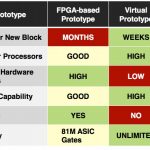
Virtual platforms have the advantage that they are fairly quick to produce and can be created a long time before RTL design for the various blocks is available. They run fast and have very good debugging facilities. However, when it comes to incorporating real hardware (sometimes called hardware-in-the-loop HIL) they are not at their best. Another weakness is that when IP is being incorporated, for which RTL is available by definition, then creating and validating a virtual platform model (usually a SystemC TLM) is an unnecessary overhead, especially when a large number of IP blocks are concerned.

FPGA prototyping systems have the opposite set of problems. They are great when RTL exists or something close to its final form but they are hopeless at modeling blocks where there is no RTL. Their debugging facilities vary since it is not possible to monitor every signal on the FPGA but you never know which ones you need until a bug occurs.

Synopsys have products in both these spaces. Virtualizer is a SystemC/TLM-based virtual prototype. Synopsys acquires Virtio, VaST and CoWare’s virtual platform technologies so somewhere under the hood I’m sure these technologies are lurking. And according to VDC they are the #1 supplier of virtual prototyping tools.

They also have an FPGA based ASIC prototyping system called HAPS, which is also the market leader.

Projects often use both of these. Early in the design cycle they use a virtual platform since there isn’t any RTL. Later, when RTL is nearly complete, they switch to the FPGA approach so that they guarantee that the software is running on the “real” hardware.

Now Synopsys have combined these two technologies into one. That is, part of the design can be a virtual prototype and part of the design can be represented as an FPGA-based prototype. The two parts communicated through Synopsys’s UMRBus which has been around for a couple of years. This brings the best of both worlds and removes the biggest weaknesses of each approach. And, as a design progresses, it is no longer necessary to start in the virtual prototype world and make a big switch to FPGA. It can starts as a mixture and the mixture can simply change over time depending on what is wanted. There are libraries in both worlds, processor models, TLM models, RTL of IP, daughter boards. All these can be used without needing to be translated into the other world.

Here’s an example. A new USB PHY and a device driver. In between a DesignWare USB core, an ARM fast model with some peripherals (as a virtual prototype) and Linux. This can all be put together an run communicating with the real world (in this case a Windows PC).


Understanding and Designing For Variation in GLOBALFOUNDRIES 28nm

Understanding and Designing For Variation in GLOBALFOUNDRIES 28nm
by Daniel Nenni on 06-03-2012 at 8:30 pm

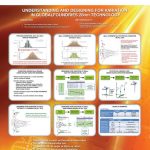
On Wednesday there is a User Track Poster Session that examines the design impact of process variation in GLOBALFOUNDRIES 28nm technology. For those of you who are wondering what process variation looks like at 20nm take this 28nm example and multiply it by one hundred (slight exaggeration, maybe).

Variation effects have a significant impact on nanometer circuit designs. Variation causes performance loss, yield loss, and re-spins, resulting in delayed time to market and financial losses. To address this challenge, GLOBALFOUNDRIES provides variation models that can be used to simulate process variation effects in the design flow. This enables designers to improve their designs and make them robust to variation effects.

This poster session examines the design impact of process variation in GLOBALFOUNDRIES 28-nm technology. Variation effects are compared between GLOBALFOUNDRIES’ 28-nm and 40-nm technologies, as well as between different types of variation within the 28-nm technology. A design example will be discussed that demonstrates the application of variation-aware design in GLOBALFOUNDRIES 28-nm technology.


Solido Variation Designer was used to perform variation-aware analysis and design in this work. Solido Variation Designer is a variation-aware custom IC design tool that leverages variation data in GLOBALFOUNDRIES models to provide efficient, accurate variation-aware design. This tool made it possible to perform thorough analysis in a variety of variation analysis and design tasks, including: fast PVT corner analysis, sigma-driven statistical corner extraction, high-sigma Monte Carlo analysis, identification of variation-aware design sensitivities, and rapid design iteration.

Speaker:
Pei Yao – GLOBALFOUNDRIES, Milpitas, CA
Authors:
Pei Yao – GLOBALFOUNDRIES, Milpitas, CA
Richard Trihy – GLOBALFOUNDRIES, Milpitas, CA
Jiandong Ge – Solido Design Automation, Inc., Saskatoon, SK, Canada
Kristopher Breen – Solido Design Automation, Inc., Saskatoon, SK, Canada
Trent McConaghy – Solido Design Automation, Inc., Saskatoon, SK, Canada
Person of Interest: Daniel Nenni – SemiWiki.com, Silicon Valley, CA