You are currently viewing SemiWiki as a guest which gives you limited access to the site. To view blog comments and experience other SemiWiki features you must be a registered member. Registration is fast, simple, and absolutely free so please,
join our community today!
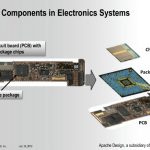
On Wednesday this week Ansys/Ansoft/Apache are presenting a new webinar Chip Aware System Design. It is presented by Dr Steven Gary Pytel Jr of the Ansoft part of Ansys, and Matt Elmore of the Apache subsidiary. The topics that will be covered include:
- Power Delivery Network (PDN) design requirements
- ABCD Matrix theory
- SYZ Matrix
…
Read More
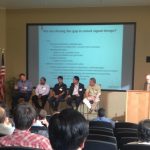
Yesterday I attended some of the Cadence mixed-signal technology summit. The day ended with a panel session on Are We Closing the Gap Yet in Mixed-signal Design? Richard Goering moderated. The panelists were all mixed signal experts:
- Nayaz Khan of Maxim
- Nishant Shah of Broadcom
- Shiv Sikand of IC Manage
- Bill Meier of Texas Instruments
…
Read More
Atrenta Wins Goldby Paul McLellan on 09-21-2012 at 6:16 pmCategories: EDA
What is the most read article on design on EE Times website? Brian Bailey has an article up running through the top 10. It turns out that the #1 article is Understanding Clock Domain Issues by Saurabh Verma and Ashima S. Dabare of Atrenta. It actually had more than double the views of the second place paper. Checking clock domain crossing… Read More
Synopsys announced today that they had completed the two main hurdles to acquiring SpringSoft. Remember, SpringSoft is actually a public Taiwanese company so has to fall in line with Taiwanese rules. The first hurdle is that they have obtained regulatory approval in Taiwan for the acquisition (roughly equivalent to FTC approval… Read More
As Dan wrote here, we got invited by Intel to IDF and by ARM to a cheeky little party that they organized the day before. I asked ARM if they were announcing anything and they said basically that it would be foolish to make any announcement the week of their biggest competitors big show. Well, that wasn’t a rule that Apple felt like… Read More
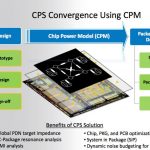
Aveek Sarkar presented a webinar on chip-package-system (CPS) earlier this summer. One of the big challenges with low-power electronic systems is that the performance, power and price goals are mutually conflicting. It’s like the old joke about “pick any 2”. But for a real system all need to be optimized. … Read More
Samsung Invests in Carbonby Paul McLellan on 09-12-2012 at 10:00 amCategories: EDA
I’ve talked before about how venture capitalists will no longer invest in EDA companies since the prospect for a huge return just isn’t there any more. By big return I mean an acquisition at hundreds of millions of dollars, like SPC, CCR, Ambit, Cadmos, Simplex. But we all know that chips cannot be designed without software… Read More
Finite state machines (FSMs) are a very convenient way of describing certain kinds of behavior. But like any other aspect of design, it is important to get everything right. Since finite state machines have been formally studied, there is a lot of knowledge about the types of bugs that a finite state machine might exhibit.
When flipflops… Read More
In one of those odd coincidences, I was having dinner with a friend last week and somehow the Carrington Event came up. Then I read a a piece in EETimesabout whether electrical storms could cause problems in the near future. Even that piece didn’t mention the Carrington Event so I guess George Leopold, the author, hasn’t… Read More
Low power is the hottest topic these days. The designers of hardware and software are trying to find instances where they can save power . This article tries to identify the role that can be played by the hardware which traditionally it is always software who drives it.… Read More