You are currently viewing SemiWiki as a guest which gives you limited access to the site. To view blog comments and experience other SemiWiki features you must be a registered member. Registration is fast, simple, and absolutely free so please,
join our community today!
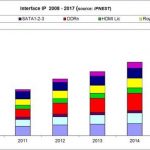
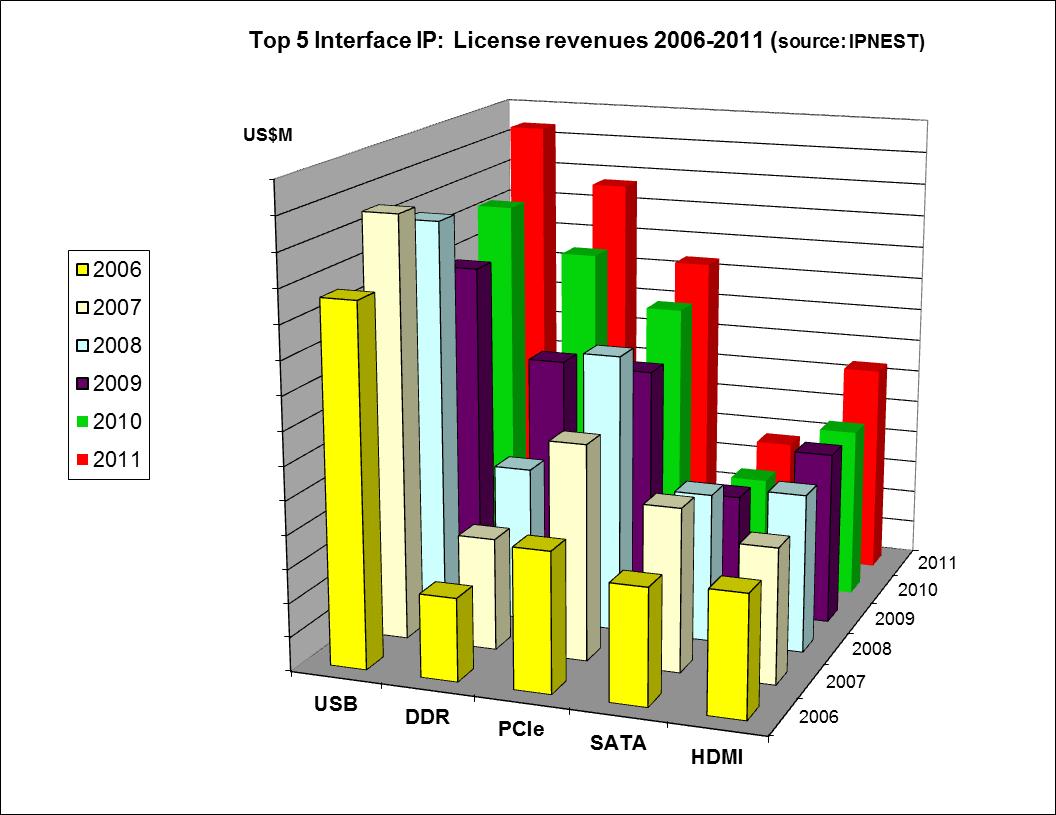
How to best forecast a specific protocol adoption? One option is to look at the various IP sales, it will give you a good idea of the number of SoC or IC offering this feature on the market in the next 12 months. Once again, if you wait for the IP sale to have reached a maximum, it will be too late, so you have to monitor the IP sales dynamic when… Read More
We have already discussed the recently released M-PCIe ECN from PCI-SIG in Semiwiki at the end of 2012, but the new “standard” (in fact an Engineering Change from PCI-SIG and MIPI Alliance) was only real on paper, at that time. The upcoming webinar from Synopsys, M-PCIe: Utilizing Low-Power PCI Express in Mobile Designs, shows … Read More
I never understood when I was a kid how ‘the Blob’ could actually catch someone but it sure did. It caught the unsuspecting, the off guard. I mean you’d have time for a soda and shower if you saw it on your road. And no, your manager is not the Blob; don’t think like that, it’s always his boss. The blob comes to consume the worker who was unaware… Read More
Do you think this figure will go down? Considering the massive move to Mobile equipment, pushing to de-localize your storage medium to instead use the cloud capabilities, and looking at the huge number of people buying smartphone and tablet in emerging countries, no doubt that Data Center related energy consumption is expected… Read More
PCI Express 3.0 specification is 1000 pages long. Most of us, and most of the designers integrating PCIe gen-3 into their latest ASIC, FPGA or system will probably never read it completely, or even open it. In fact, they don’t need to read it completely, but they should care about one point, whether they buy an ASSP or a PCIe design IP:… Read More
… is now 8 years old, and the money paid for this 10 engineers start-up was considered, at that time, as a “bingo” for Cascade’s funders: “In October 2004, the Company completed the acquisition of Cascade Semiconductor Solutions, Inc. (Cascade) for total upfront consideration of $15.8 million and contingent consideration of … Read More
So, you dropped that piece of complex IP you just licensed into an SoC design, and now it is time to fire up the simulator. How do you verify that it actually works in your design? If you didn’t get verification IP (VIP) with the functional IP, it might be a really long day.
Compliance checking something like a PCIe interface block is a … Read More
PCI Express 3.0 increased the supported data rate to 8 Gbps, which effectively doubles the data rate supported by PCI Express 2.0. While the data rate was increased, no improvement was made to the channels. As such, an 8 Gbps channel in PCIe 3.0 experiences significantly more loss than one implemented in PCIe 2.0. To compensate for… Read More
Who makes the decision and declare that a specific interface protocol is successful? Not me, as I can only consolidate market share data and some insight information coming from the industry. The end user, when going to a shop (real or virtual) and spend a significant part of his budget to buy an electronic product, selecting among… Read More
Looking at the various Interface protocols like HDMI, SuperSpeed USB, Universal Flash Storage (UFS) or even SATA integrated in Application Processor for smartphone and media tablet, one extremely powerful Interface protocol, already in use in electronic systems from various market segments from PC, PC Peripherals, Networking,… Read More