You are currently viewing SemiWiki as a guest which gives you limited access to the site. To view blog comments and experience other SemiWiki features you must be a registered member. Registration is fast, simple, and absolutely free so please,
join our community today!
Here’s what the presentations selected for the 2026 Hot Chips Conference tell us about what Silicon Valley companies are doing these days.
The conference, running this week at Stanford’s Memorial Auditorium, doesn’t publish detailed abstracts ahead of time, but the program itself, just the lineup of who’s presenting what, … Read More
NVIDIA’s expansion of the NVIDIA Agent Toolkit with PhysicsNeMo and CUDA-X libraries marks a shift from general-purpose AI assistants toward autonomous engineering systems. Instead of limiting agents to document retrieval, code generation, or workflow automation, the expanded toolkit lets developers connect reasoning… Read More
For anyone tracking enterprise infrastructure, the storage landscape is moving at a breakneck pace. The explosive growth of generative AI, multi-million token context windows, and massive data-centric workloads have pushed traditional memory and storage architectures to their absolute limits.
This August, the industry… Read More
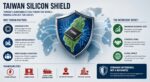
The “Silicon Shield” describes the idea that Taiwan’s central role in advanced semiconductor manufacturing raises the economic and strategic cost of military action against the island. The shield is not a literal defense system. It is a form of structural deterrence created by technological concentration: governments and… Read More
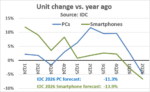
Global unit shipments of PCs and smartphones were both down versus a year ago in the 2nd quarter of 2026, according to IDC. PCs were down 4.9% and smartphones were down 6.7%. Both PCs and smartphones showed growth in 2024 and 2025. IDC is predicting an 11.3% decline in PCs and a 13.9% decline in smartphones in 2026.
What is causing the… Read More
Synopsys is catalyzing the era of pervasive intelligence with comprehensive engineering solutions spanning silicon design, IP, and simulation and analysis. At this year’s Design Automation Conference (DAC), the company will showcase innovations transforming silicon and systems development for a wide range of applications… Read More
Mark Ren has 26 years of EDA and AI R&D experience spanning IBM Research and NVIDIA Research, driving design automation innovations that power modern chip design. He received the IBM Corporate Award for contributions to the design closure for high-performance microprocessors. At NVIDIA, he helped establish the company
…
Read More
Most crypto forty-niners died broke in a warehouse full of their computing rigs. Former Ethereum miner CoreWeave took its gold to Wall Street. On June 22, 2026, it joined the Nasdaq-100 — fifteen months after its IPO, nine years after its founders assembled their first GPU rig in a New Jersey office.
The people who built the physical… Read More
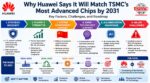
Huawei’s assertion that it could match TSMC in producing the world’s most advanced chips by 2031 reflects both technological ambition and geopolitical necessity. As one of China’s leading technology companies, Huawei has faced significant restrictions on access to advanced semiconductor technology due to U.S. export controls.… Read More
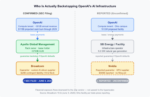
Every family has that one wedding where, halfway through the toasts, someone leans over and whispers “wait, who’s paying for all this?” This is that wedding. OpenAI and Broadcom are the happy couple. Apollo Global Management walked the bride down the aisle. Nvidia may have just stood up to offer a toast, a very… Read More