




This interview originally appeared as the foreword to our book “Prototypical: The Emergence of FPGA-based Prototyping for SoC Design” but I thought it would be worth publishing for those of you who have not downloaded it yet. I also wanted to mention that our friends at S2C are currently offering a 50% discount on the… Read More

Tag: fpga prototyping
Optimizing Prototype Debug
In the spectrum of functional verification platforms – software-based simulation, emulation and FPGA-based prototyping – it is generally agreed that while speed shoots up by orders of magnitude (going left to right) ease of debug drops as performance rises and setup time increases rapidly, from close to nothing for simulation… Read More
Software-Driven Verification Drives Tight Links between Emulation and Prototyping

I’ve mentioned many times what has become a very common theme in SoC and system verification – it has to be driven by the software because any concept of exhaustively verifying “everything” is neither feasible nor meaningful. Emulation has become a critical component of this flow in validating and regressing… Read More
Fit-for-purpose IoT ASICs are about more than cost
We’ve been saying for a while that it looks like there is a resurgence in design starts for ASICs targeting the IoT. A recent webinar featuring speakers from ARM and Open Silicon (and moderated by Daniel Nenni) affirms this trend, and provides some insight on how these designs may differ from typical microcontrollers.
One of my first… Read More
IoT Prototyping Workshop in Monterey CA!
With the coming onslaught of IoT designs from big companies and small, the opportunity for IoT FPGA prototyping deserves a closer look. This session will start off with a keynote “The Internet of Trust and a New Frontier For Exploration” and will be followed by a discussion with industry experts Don Dingee, Frank Schirrmeister,… Read More
Prototyping the Future of Semiconductors!
With major semiconductor mergers and acquisitions running rampant in 2015 (more than double the M&A activity in 2014), the question is where will we go from here? There are many different ways to slice this but for this blog let’s talk about the thousands of semiconductor professionals that will be changing jobs as a result … Read More
A Brief History of FPGA Prototyping
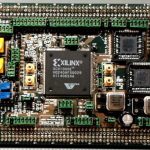
Verifying chip designs has always suffered from a two-pronged problem. The first problem is that actually building silicon is too expensive and too slow to use as a verification tool (when it happens, it is not a good thing and is called a “re-spin”). The second problem is that simulation is, and has always been, too slow.
When Xilinx… Read More
FPGA Prototyping: From Homebrew to Integrated Solutions
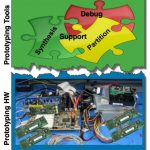
Years ago, when FPGA prototyping started, there were no solutions that you could go out and buy and everything was created as a one-off: buy some FPGAs or an FPGA-based board, and put it all together. It was a lot of effort, nobody really knew in advance how long it would take, there was very limited visibility for debug and the whole … Read More
Conquering the Next IoT Challenges with FPGA-Based Prototyping
The need for ever-connected devices is skyrocketing. As I fiddle with my myriad of electronic devices that seem to power my life, I usually end up wishing that all of them could be interconnected and controlled through the Internet. The truth is, only a handful of my devices are able to fulfill that wish, but the need is there and developers… Read More
This is how FPGA Prototyping Works
FPGA prototyping has come a long way since the late 1980s when chipmakers began using FPGA devices for building system prototypes of ASIC designs. The utility of a working FPGA prototype allows hardware designers to develop and test their systems, and it provides software developers early access to a fully functioning hardware… Read More