You are currently viewing SemiWiki as a guest which gives you limited access to the site. To view blog comments and experience other SemiWiki features you must be a registered member. Registration is fast, simple, and absolutely free so please,
join our community today!
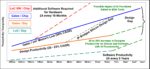
The semiconductor industry today is faced with several substantial issues—the continuing rise in design costs for complex SoCs, the decrease in the incidence of first-time-right designs and the increase in the design cycle time against shrinking market windows and decreasing product life cycles. An additional factor has … Read More
The outlook for DoorDash’s highly anticipated public offering announced last week is inextricably bound up in the impact of the COVID-19 pandemic. It seems that the worse the COVID-19 pandemic becomes, the better the IPO circumstances look for DoorDash, but that’s not exactly how DoorDash tells the tale.
DoorDash filed… Read More
Silicon Catalyst has been hosting semiconductor forums since 2018. At these events, a group of industry leaders gathers to discuss trends in the semiconductor industry and what the future may hold as a result. I recently had an opportunity to speak with Pete Rodriguez, CEO at Silicon Catalyst. Pete explained that these forums … Read More
The semiconductor foundry business has been front page news of late and for good reason, it’s an exciting time in the semiconductor industry and the foundries are where it all begins. Unfortunately, most of the “exciting” news has been overblown but this topic is of great interest, to me at least. Having been intimately involved… Read More
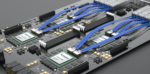
They say that getting there is half the fun. On December 1, Achronix and Samtec will present a webinar on this topic in the context of high-performance front panel to midplane and midplane to backplane channel design. Technology, materials and system design will all be discussed with a focus on achieving 112Gbps PAM4 channels with… Read More
Wondering what you might do to up your game this year? What about improving your communication skills? Soothing an angry client, trying to find appeal for a product that’s not exciting customers, or finding the right investor? Working through a growth challenge you under-estimated, or generating excitement in an audience you… Read More
General Motors President Mark Reuss told Reuters last week that he is worried about the COVID-19 pandemic currently running rampant in the U.S. and globally. “I’m so worried about it because it’s accelerating and it’s not being contained,” he said during a “fireside chat” at the Reuters Automotive Summit which concludes Monday.… Read More
If you search on “the six signs” you will find references to a fantasy novel, “The Dark is Rising Sequence” by Susan Cooper. In this fantasy work there are six signs: wood, bronze, iron, water, fire and stone. Their purpose has something to do with driving away the Dark. Here is a quote from the book that puts these six signs in some context:… Read More
Back in July I first read the news that Perforce had acquired Methodics, and wasn’t too surprised, because many of the EDA vendors that we blog about do get acquired or merge with similar sized companies in order to be part of a bigger offering. When Methodics announced a webinar introducing IPLM 3.0 (IP Lifecycle Management),… Read More
I’ve become a bit of a connoisseur of voice-based control, so when Chris Rowen did a pitch on Babble Labs at Arm Dev Summit last month, I wanted to listen in. Chris was the CEO of Babble Labs, recently acquired by the Cisco Webex group where he’s now listed as VP Engineering of the Voice Technology Group. You should expect to see this… Read More











Agentic AI Demands More Than GPUs