





Marc Evans, Director of Business Development & Marketing, Andes Technology USA
I work at a RISC-V IP company, and I genuinely root for Arm — probably more than most people in my position would admit. Not because I’m confused about who competes with whom, but because Arm’s best move for their shareholders is also RISC-V’s biggest tailwind yet.
This isn’t really an Arm vs. RISC-V story. It’s a platform economics story: what happens when a neutral platform provider begins competing with the customers it enables.
The Value Chain Climb — and Why It Makes Sense
Throughout its history, Arm has steadily moved up the value chain — from CPU IP to system and GPU IP to full Compute Subsystems — capturing more silicon value at each step. More license fees, more royalties, more of the margin their customers were earning. Smart business.
The economics are straightforward: IP licensing captures a small but highly profitable slice of system value. Moving into silicon means competing for a much larger share of that system value — potentially orders of magnitude more revenue, at lower margin but far greater profit. For a public company under growth pressure, that math is compelling.
Now they’ve announced their AGI CPU with Meta as a lead customer, targeting a $100B TAM in datacenter CPUs. This is a smart move — and largely aligned with where the market was already going.
The hyperscalers were already moving off x86: AWS Graviton, Google Axion, Microsoft Azure Cobalt, Oracle on Ampere. Arm is formalizing that shift and taking direct aim at Intel, AMD, and the internal silicon teams of hyperscalers.
This doesn’t meaningfully threaten Arm’s broader customer base. Hyperscalers at tier-1 scale have the volume and leverage to manage that relationship. Tier-2 players generally can’t justify the custom silicon investment regardless of who supplies the IP. Good for Arm shareholders. Good for the ecosystem. Cheer for it.
The Statement Worth Paying Attention To
But then came this, from Rene Haas at Arm Everywhere:
“There will be some tomorrows,” he said at Arm Everywhere, “And we think this opportunity to take the work we’ve done across all of the markets — as you’ve heard in the videos from edge to cloud, from milliwatts to gigawatts — we think we have an opportunity to address greater than a $1T TAM by the end of the decade.”
That’s the statement worth paying attention to.
Because that $1T TAM isn’t new market creation. It’s not x86 territory. It maps directly to Arm’s existing customer base: smartphones, automotive, industrial, AI acceleration, storage and networking, communications infrastructure.
The Structural Tension
Arm’s IP business was built on a model where they capture value because their customers succeed. Licensing revenue scales with their customers’ volume. The incentive alignment was clean — Arm wins when its customers win.
Moving into silicon in their customers’ end markets changes that alignment.
At sufficient scale, Arm’s silicon revenue competes directly with the revenue of the same companies paying their licensing fees and royalties. When silicon becomes the larger profit pool, which business gets the roadmap investment? Which gets the favorable terms?
That shift inevitably influences where engineering investment and long-term roadmap priority go.
That’s not a criticism. It’s just what the business model evolution implies.
When Switzerland Picks a Side
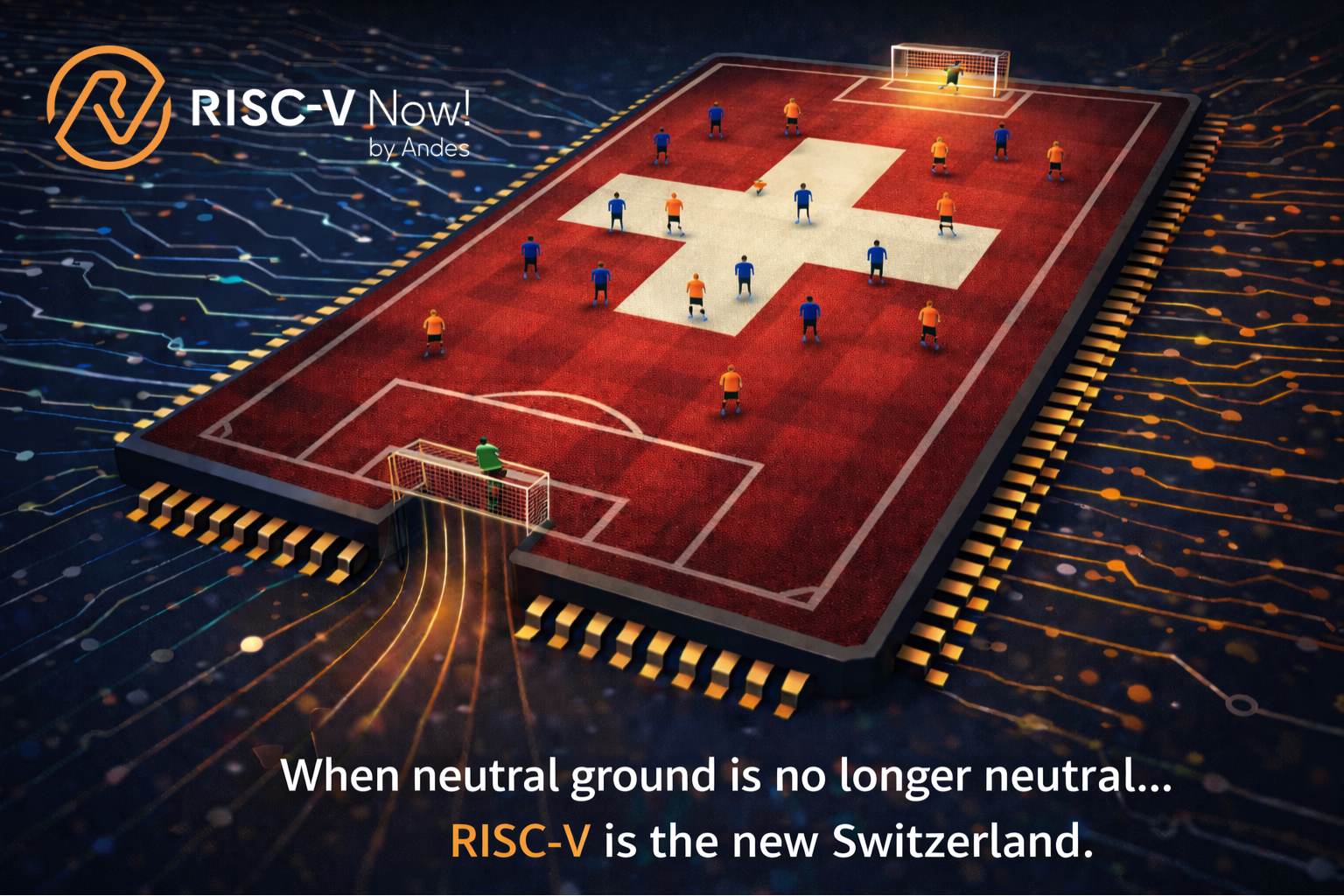
Arm’s entire IP business was built on being Switzerland. You could build on Arm and trust that your foundational CPU supplier wasn’t going to show up as a competitor in your end market. That neutrality had real value. Customers paid for it, designed around it, built long-term product roadmaps on top of it.
That Switzerland just picked a side. And that changes the relationship.
If you’re an automotive OEM trying to differentiate on processing, or an industrial company with a specific long-cycle compute roadmap, you now have to factor something into your planning you never had before: your strategic IP vendor is also a competitor with de facto first-mover advantage in your market, while simultaneously setting your license fees and royalty rates.
Those are design cycles measured in years and product investments measured in hundreds of millions. The risk doesn’t have to be immediate to be real. By the end of the decade — which is exactly the timeframe Haas cited — this becomes existential for some.
The New Switzerland
RISC-V is the new Switzerland — and it’s not entirely ironic that RISC-V International is incorporated in Switzerland.
Open standard, no single entity controlling the architecture, no sole vendor who can pivot to compete with you. You can license a proven commercial implementation and differentiate however you need to — with full confidence that your IP supplier’s business model depends on your success, not on displacing you.
The risk profile is structurally different. That matters in a design decision with a five-to-ten year horizon.
What About the Software Ecosystem?
It’s a fair challenge, and I won’t oversell it. But the framing matters.
What made Arm ubiquitous was underwriting the full transition of the software world from x86 to a RISC architecture — operating systems, compilers, middleware, application stacks. That was a decades-long, industry-wide investment.
Moving between RISC architectures is a fundamentally different problem. The architectural model is established, tooling and abstraction layers exist, and the transition cost is a fraction of the original lift.
The RISC-V software base reflects that — Linux, Android, real-time OSs, and expanding AI and HPC frameworks are already in place for a broad set of real products shipping today.
More importantly: ecosystem maturity follows economic incentive. It always has.
If you’re starting a design today with a two-year horizon to production, the question isn’t where the RISC-V software ecosystem is right now. It’s where it will be when your product ships.
Arm’s move just poured accelerant on that timeline.
The Bottom Line
This isn’t about ideology. It’s about structural incentives — and those incentives are shifting in a way that is both predictable and significant.
So yes — go Arm. Build the chips. Capture that silicon TAM. It’s the right move for your shareholders and it’s genuinely good for the industry: competition at the silicon level raises the bar for everyone, and customers ultimately win with real choice.
But for the companies now rethinking their silicon roadmap — the ones doing the math on long-cycle design risk, differentiation strategy, and supplier alignment — this shift is no longer abstract. It’s something to plan around now, before the next design cycle commits you to a path.
Where This Discussion Is Happening
These questions are already being worked through in real silicon programs. RISC-V Now! by Andes is focused on exactly this transition — real deployments, real tradeoffs, and lessons from teams who have already made the move to production. Not standards. Not theory. What’s actually shipping, what worked, and what didn’t. If you’re doing serious roadmap evaluation, this is the room to be in.
Learn more and register at www.riscv-now.com.
Also Read:
RISC-V Now! — Where Specification Meets Scale!
The Evolution of RISC-V and the Role of Andes Technology in Building a Global Ecosystem
The Launch of RISC-V Now! A New Chapter in Open Computing
Share this post via:



Comments
There are no comments yet.
You must register or log in to view/post comments.