You are currently viewing SemiWiki as a guest which gives you limited access to the site. To view blog comments and experience other SemiWiki features you must be a registered member. Registration is fast, simple, and absolutely free so please,
join our community today!
            WP_Term Object
(
    [term_id] => 14
    [name] => Synopsys
    [slug] => synopsys
    [term_group] => 0
    [term_taxonomy_id] => 14
    [taxonomy] => category
    [description] =>
    [parent] => 157
    [count] => 784
    [filter] => raw
    [cat_ID] => 14
    [category_count] => 784
    [category_description] =>
    [cat_name] => Synopsys
    [category_nicename] => synopsys
    [category_parent] => 157
    [is_post] =>
)

WP_Term Object
(
    [term_id] => 14
    [name] => Synopsys
    [slug] => synopsys
    [term_group] => 0
    [term_taxonomy_id] => 14
    [taxonomy] => category
    [description] =>
    [parent] => 157
    [count] => 784
    [filter] => raw
    [cat_ID] => 14
    [category_count] => 784
    [category_description] =>
    [cat_name] => Synopsys
    [category_nicename] => synopsys
    [category_parent] => 157
    [is_post] =>
)
The relentless demand for lower power SoCs is evident across many markets. Examples include cutting-edge mobile, IoT, and wearable devices along with the high compute demands for AI and 5G/6G communications. Drivers for low power include battery life, thermal management and, for high compute applications, the overall cost… Read More
In the relentless pursuit of ever-increasing data speeds, the 1.6 Terabits per second (Tbps) era looms on the horizon, promising unprecedented levels of connectivity and bandwidth within data centers. As data-intensive applications proliferate and the demand for real-time processing escalates, the need for robust and efficient… Read More
Mergers and acquisitions have been a big part of EDA since the beginning. We keep an EDA/IP Mergers and Acquisitions Wiki, it is 13 years old now and has more than one million views. Personally, I have been involved with dozens of acquisitions over my 40 year career, some good, some bad, all are interesting and are an important part … Read More
Dan is joined by Randy Fish, Director of Product Line Management for the Silicon Lifecycle Management (SLM) family at Synopsys. Randy has over 30 years of experience in the EDA, IP and semiconductor industries.
In this broad view of SLM, Randy explains what is special about monitoring and optimizing embedded memories. It turns… Read More
As semiconductor industry folks know, Synopsys is a behemoth of a company. At $5.84B in FY2023 revenue (FY Nov-Oct), approximately 20,000 employees and a market cap of about $74B, it leads the silicon-to-systems design solutions space within the industry. From humble beginnings in 1986 as a disruptive startup, the company has… Read More
At the recent RISC-V Summit, the very last session was a panel about chiplets called Chiplets in the RISC-V Ecosystem. It was moderated by Calista Redmond, the CEO of RISC-V International. The panelists were:
- Laurent Moll, COO of Arteris
- Aniket Saha, VP of Product Management of Tenstorrent
- Dale Greenley, VP of Engineering of Ventana
…
Read More
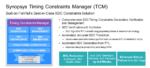
In the world of semiconductor design, constraints are essentially specifications and requirements that guide the implementation of a specific hardware or software component within a larger system. They dictate timing, area, power, performance, and of course functionality of a design, playing a crucial role in ensuring that… Read More
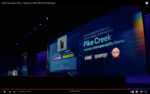
Intel recently made headlines when CEO Pat Gelsinger unveiled the world’s first UCIe interoperability test chip demo at Innovation 2023. The test chip built using advanced packaging technology is codenamed Pike Creek and is used to demonstrate interoperability across chiplets designed by Intel and Synopsys. More details … Read More
Last week Synopsys announced their next step in generative AI (GenAI) in Synopsys.ai Copilot based on a collaboration with Microsoft. This integrates Azure OpenAI together with existing Synopsys.ai GenAI capabilities to extend Copilot concepts to the EDA world. For those of you unfamiliar with Copilot, this is a development… Read More
Hyperscale data centers are evolving rapidly to meet the demands of high-bandwidth, low-latency applications, ranging from AI and high-performance computing (HPC) to telecommunications and 4K video streaming. The increasing need for faster data transfer rates has prompted a scaling of Ethernet from 51Tb/s to 100Tb/s. Numerous… Read More