WP_Term Object
(
    [term_id] => 13
    [name] => Arm
    [slug] => arm
    [term_group] => 0
    [term_taxonomy_id] => 13
    [taxonomy] => category
    [description] =>
    [parent] => 178
    [count] => 401
    [filter] => raw
    [cat_ID] => 13
    [category_count] => 401
    [category_description] =>
    [cat_name] => Arm
    [category_nicename] => arm
    [category_parent] => 178
    [is_post] =>
)

WP_Term Object
(
    [term_id] => 13
    [name] => Arm
    [slug] => arm
    [term_group] => 0
    [term_taxonomy_id] => 13
    [taxonomy] => category
    [description] =>
    [parent] => 178
    [count] => 401
    [filter] => raw
    [cat_ID] => 13
    [category_count] => 401
    [category_description] =>
    [cat_name] => Arm
    [category_nicename] => arm
    [category_parent] => 178
    [is_post] =>
)
Arm is expanding its computing platform for an era in which artificial intelligence does more than respond to individual prompts. The company expects AI agents to operate continuously across phones, data centers, vehicles, robots and other physical systems—perceiving their surroundings, reasoning about objectives and … Read More
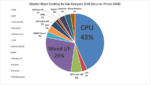
The $9.5 Billion Design IP Market: Shifting Boundaries, Arm’s Monopoly, and the RISC-V Responseby Kalar Rajendiran on 09-04-2026 at 6:00 amCategories: AI, Arm, IP, IPnest, RISC-V, Semiconductor, Semiconductor Intelligence, Semiconductor Services, SiFive, Synopsys
While semiconductor design intellectual property (IP) is a $9.45 billion market, it acts as the absolute architectural bottleneck for the entire global semiconductor value chain. The choices made at the IP layer today dictate the cost, power, and security of a downstream technology economy rapidly marching toward a trillion… Read More
Arteris has expanded its partnership with Arm to deploy Cycuity Radix hardware security assurance technology across additional next-generation Arm central processing unit (CPU) programs. The expansion follows five years of collaboration and successful use of Cycuity Radix on select Arm CPU designs, and it moves hardware… Read More
I have written before about an inter-chiplet communication challenge to realizing the dream of multi-die designs built around open-market chiplets. Still a worthy dream but it’s going to take a journey to get there. Arm recently donated their Foundation Chiplet System Architecture (FCSA) to the Open Compute Project (OCP) as… Read More
When I first heard about GenAI on mobile platforms – from Arm, Qualcomm and others – I confess I was skeptical. Surely there wouldn’t be enough capacity or performance to deliver more than a proof of concept? But Arm, and I’m sure others, have been working hard to demonstrate this is more than a party trick. It doesn’t hurt that foundation… Read More
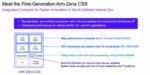
Last year Arm announced their support for standards-based virtual prototyping in automotive, along with a portfolio of new AE (automotive enhanced) cores. They also suggested that in 2025 they would be following Arm directions in other LOBs by offering integrated compute subsystems (CSS). Now they have delivered: their Zena… Read More
When Apple introduced Siri in 2011, it was the first serious attempt to make voice interaction a mainstream user interface. Embedded into the iPhone 4S, Siri brought voice into consumers’ lives not as a standalone product, but as a built-in feature—a hands-free way to interact with an existing device. Siri set the expectation… Read More
The tech world is sprinting toward a future where your fridge orders groceries, your car avoids traffic before you hit it, and security cameras don’t just watch—they understand. But behind these innovations lies a messy truth: building the brains for these smart systems is complicated.
Fresh off the 2024 Arm Tech Symposia… Read More
When contemplating the Lego-like hardware and software structure of a leading system-on-chip (SoC) design, a mathematically inclined mind might marvel at the tantalizing array of combinatorial possibilities among its hardware and software components. In contrast, the engineering team tasked with its validation may have… Read More
Most of the RISC-V action at the end of June was at the RISC-V Summit Europe, but not all. In fact, a group of well-informed and opinionated experts took over the Pavilion stage at the Design Automation Conference to discuss functional verification challenges for RISC-V and open-source IP.
Technology Journalist Ron Wilson and … Read More