WP_Term Object
(
    [term_id] => 51
    [name] => RISC-V
    [slug] => risc-v
    [term_group] => 0
    [term_taxonomy_id] => 51
    [taxonomy] => category
    [description] =>
    [parent] => 178
    [count] => 181
    [filter] => raw
    [cat_ID] => 51
    [category_count] => 181
    [category_description] =>
    [cat_name] => RISC-V
    [category_nicename] => risc-v
    [category_parent] => 178
    [is_post] =>
)

WP_Term Object
(
    [term_id] => 51
    [name] => RISC-V
    [slug] => risc-v
    [term_group] => 0
    [term_taxonomy_id] => 51
    [taxonomy] => category
    [description] =>
    [parent] => 178
    [count] => 181
    [filter] => raw
    [cat_ID] => 51
    [category_count] => 181
    [category_description] =>
    [cat_name] => RISC-V
    [category_nicename] => risc-v
    [category_parent] => 178
    [is_post] =>
)
Marc Evans, Director of Business Development & Marketing, Andes Technology USA
I work at a RISC-V IP company, and I genuinely root for Arm — probably more than most people in my position would admit. Not because I’m confused about who competes with whom, but because Arm’s best move for their shareholders is also… Read More
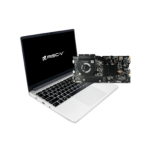
At a workshop in Boston on February 27, something subtle but important happened. Developers sat down in front of a RISC-V laptop, installed Fedora, and ran a local large language model. No simulation. No dev board tethered to a monitor. A laptop.
For more than a decade, RISC-V advocates have promised that the open instruction set… Read More
RVA23 marks a turning point in how mainstream CPUs are expected to scale performance. By making the RISC-V Vector Extension (RVV) mandatory, it elevates structured, explicit parallelism to the same architectural status as scalar execution. Vectors are no longer optional accelerators bolted onto speculation-heavy cores.… Read More
by Jagadish Nayak
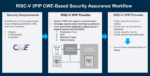
RISC-V adoption continues to accelerate across commercial and government microelectronics programs. Whether open-source or commercially licensed, most RISC-V processor cores are integrated as third-party IP (3PIP), potentially introducing supply chain security challenges that demand structured,… Read More
At the 2025 RISC-V Summit, amid debates over cloud scaling and AI cost, DeepComputing CEO Yuning Liang offered a radical view: the future of intelligence isn’t in the cloud at all — it’s already in your pocket. His lunchtime conversation began with iPhones and ended with the death of the operating system. In between, he sketched … Read More
Up to now the RISC-V community has been developing open-source processor implementations to a stage where they can appeal to system designers looking for alternatives to proprietary Arm and x86 cores. Toward this end, two projects have emerged as particularly significant examples of where RISC-V is heading. One is Ara, a vector… Read More
On February 3, 2026, Andes Technology officially announced the launch of RISC-V Now!, a new global conference series designed around the next phase of RISC-V adoption: real-world deployment and commercial scaling. This initiative marks a shift from exploratory and research-focused events toward practical, production-oriented… Read More
When Morris Chang left Texas Instruments in 1983 to found TSMC, he was not merely starting a new company—he was proposing a new industrial logic. Chang recognized that semiconductor manufacturing had become so capital-intensive that it could no longer survive as just one function inside a vertically integrated company.… Read More
In a strategic move that could reshape the future of AI data center design, SiFive, a leading developer of RISC-V processor IP and compute subsystems, has announced plans to integrate NVIDIA’s NVLink Fusion interconnect technology into its high-performance data center platforms. This collaboration bridges the open-architecture… Read More
The rapid growth of signal processing workloads in embedded, mobile, and edge computing systems has intensified the need for efficient, low-latency computation. Rich Fuhler’s update on the RISC-V Packed SIMD extension highlights why scalar SIMD digital signal processing (DSP) instructions are becoming a critical architectural… Read More