You are currently viewing SemiWiki as a guest which gives you limited access to the site. To view blog comments and experience other SemiWiki features you must be a registered member. Registration is fast, simple, and absolutely free so please,
join our community today!
WP_Term Object
(
    [term_id] => 178
    [name] => IP
    [slug] => ip
    [term_group] => 0
    [term_taxonomy_id] => 178
    [taxonomy] => category
    [description] => Semiconductor Intellectual Property
    [parent] => 0
    [count] => 1951
    [filter] => raw
    [cat_ID] => 178
    [category_count] => 1951
    [category_description] => Semiconductor Intellectual Property
    [cat_name] => IP
    [category_nicename] => ip
    [category_parent] => 0
    [is_post] =>
)
What brought you to semiconductors?
As a kid I was interested in electronics and early personal computers. I went on to graduate from Manchester University in 1986, the birthplace of the modern computer, studying Computer Engineering where for my final year project I designed a gate array using Ferranti Electronics technology… Read More
Virtual conferences are getting better all the time. Easy-to-navigate agendas, good production value in terms of visual presentation, professionally produced video segments and interspersed live events all contribute to the experience. Arm held their developers’ summit in the US on October 6-8, and it had all the attributes… Read More
I am pleased to introduce Truechip to the SemiWiki community. Truechip is a leader in the IP Verification – Design and Verification solutions market, one of the fastest growing market segments we track. Truechip has been serving customers for more than 10 years specialization in VIP integration, customization and SOC Verification.… Read More
Again on the theme of rationalizing NVIDIA’s $40B acquisition of Arm, two more hot areas for growth are mobility and industrial automation markets. NVIDIA is already strong in intelligent mobility and Arm is is virtually everywhere in the modern car. Ditto for robotics in industry. In fact the two domains have significant overlap:… Read More
I had a chance to preview the subject webinar recently. Yes, it’s a long title, but a very important topic. When it comes to hyper-scale data centers, there are substantial challenges associate with thermal management, power distribution and processing performance. Moortec explores approaches to these issues using their … Read More
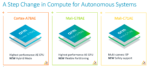
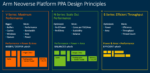
I’ve covered Arm Neoverse updates a few times already, a span of products with application from the cloud through infrastructure to the edge. Logical strategy of course but Arm has been delivering some impressive wins suggesting this is more than just a loose marketing concept. Overlap with NVIDIA in datacenters and supercomputing… Read More
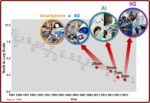
At the recent TSMC OIP Ecosystem Forum and Technology virtual events, TSMC re-affirmed their previous prediction that 5G is going to be a multi-year silicon mega-trend with the biggest drivers being the ramp up of 5G handsets, supporting infrastructure and the continued growth of high performance computing (HPC).
We all want… Read More
Silicon on insulator (SOI) technology has been around a very long time. I recall five-inch wafers full of SoS (silicon on sapphire) devices while working at the RCA Solid State Technology Center back in the dawn of time. Today, the concept of silicon on insulator is alive and well. Companies like GLOBALFOUNDRIES offer a special … Read More
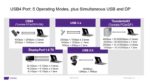
When USB initially came out it revolutionized how peripherals connect to host systems. We all remember when Apple did away with many separate connections for mouse, keyboard, audio and more with their first computers supporting USB. USB has continued to develop more flexibility and more throughput. In 2015 Apple again introduced… Read More
This is another installment covering TSMC’s very popular Open Innovation Platform event (OIP), held on August 25. This event presents a diverse and high-impact series of presentations describing how TSMC’s vast ecosystem collaborates with each other and with TSMC. Not all SerDes are the same. The presentation covered here,… Read More









Musk’s Orbital Compute Vision: TERAFAB and the End of the Terrestrial Data Center