




If you remember, when TI decided to exit the booming wireless segment in 2012, the company decided to re-focus their application processor product line (OMAP) initially developed for smartphone “to a broader market including industrial clients like carmakers”. Being a TI employee in the 90’s in south of France, where TI has started… Read More

Semiconductor Intellectual Property
TSMC and ARM Serving up 7nm!
One thing I learned while writing the books about TSMC and ARM is that collaboration has always been at the core of both companies. They started with collaboration on day one and it is now a natural part of their business models. And the word collaboration in the fabless semiconductor ecosystem gets redefined at every process node,… Read More
Is Smart Bluetooth de facto standard for IoT Wearable, Beacons, Fitness and Health ?
Synopsys launch BTLE PHY IP, qualified by the Bluetooth Special Interest Group (SIG) and meeting compliance with the Bluetooth® Smart v4.2 specification. The company has built a partnership with Mindtree to provide a complete solution, integrating Synopsys’ Bluetooth Smart PHY IP and Mindtree’s production-proven BlueLitE… Read More
Explore Google Chromium USB Type-C example designs using GoArks USB – C Thru

One of the early adopters of USB Type-C and USB Power Delivery is Google for their Chromium projects. More interestingly Google shared the complete design of the USB Type-C products in public domain right from schematic to source code of the solutions. This article explores how to use USB C-Thru board to explore Google’s designs… Read More
Creating a better embedded FPGA IP product
Our introduction to Flex Logix and its embedded FPGA core IP drew several comments, predominantly along the lines of a few things like this have been tried before. In this installment, we dive into the EFLX cores, the FPGA toolchain, the roadmap, and a powerful integration feature.… Read More
Upcoming ARM & Open-Silicon Webinar on Custom SOC’s for IoT
IoT products call for a higher level of system integration than ever before. Companies seeking to go to market now have a much higher bar in terms of size, power, reliability and manufacturability. The first IoT devices evolved from embedded development boards, like the groundbreaking Arduino. These were fine for prototypes … Read More
Post-making new Things stand out on the IoT
Sales says this next IoT project is going to be huge. Engineering isn’t so sure. Marketing says we should pilot it to find out. If it were just software, it might not be such a problem, but with hardware comes investment tradeoffs. Without guaranteed volumes of millions of units, are ASICs a realistic option to hit aggressive size,… Read More
Webinar from CEVA: Machine Type Communication
By 2020, ABI Research predicts that there will be more than 45 billion connected devices worldwide. More than half of these devices will incorporate multiple standards in the same device, such as Wi-Fi, 802.15.4g, GNSS and cellular communications.
This webinar will address the question: How To Design a LTE-Based M2M Asset Tracker… Read More
Enterprise SSD SOC’s Call for a Different Interconnect Approach
The move to SSD storage for enterprise use brings with it the need for difficult to design enterprise capable SSD controller SOC’s. The benefits of SSD in hyperscale data centers are clear. SSD’s offer higher reliability due to the elimination of moving parts. They have a smaller foot print, use less power and offer much better performance.… Read More
Mentor ARM subscription signals ecosystem shift
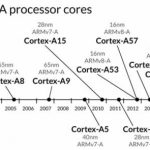
Since creating the landmark “all-you-can-eat” license with Samsung in 2002, ARM has inked several subscription deals with chipmakers and EDA firms. The latest ARM subscriber license deal just announced is for Mentor Graphics. What makes their strategy unique?… Read More
Silicon Insurance: Why eFPGA is Cheaper Than a Respin — and Why It Matters in the Intel 18A Era