




Telecom infrastructure is one area where X86 architecture hasn’t dominated historically. Infrastructure gear is spread across MIPS, Power, and SPARC architectures, with some X86, and a relative newcomer: ARM, already claiming 15% share. That’s a stunning figure considering only a bit less than 5 years ago… Read More

Semiconductor Intellectual Property
Synopsys Launch EV6x Vision Processor… Challenging the Competition!
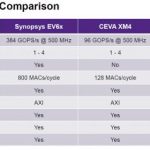
When Synopsys bought Virage Logic in 2010, ARC processor IP was in the basket, but at that time ARC processor core was not the most powerful on the market, and by far. The launch of EV6x vision processor sounds like Synopsys has moved ARC processor core by several orders of magnitude in term of processing power. EV6x deliver up to 100X… Read More
Software Security is Necessary but NOT Sufficient
As the silicon designs inside the connected devices of the Internet of Things transition from specifications to tapeouts, electronics companies have come to the stark realization that software security is simply not adequate. Securing silicon is now a required, not optional, part of RTL design processes.… Read More
From Zero to IoT Prototype in One Month
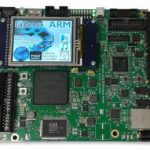
The best things in life may not always be free, but they don’t have to be incredibly difficult to get to. A challenge for IoT designers has been that their bubbling excitement over the potential of their new gizmo is quickly tempered by the complexities of actually building the hardware. Not exactly what they have come to expect in … Read More
HBM controller IP holds the key to bandwidth

We were waiting to see what a different roster including SK Hynix and Synopsys would have to say on HBM in the latest Open Silicon webinar. This event focused on HBM bandwidth issues; a packaging session on 2.5D interposers was promised for a future webinar.… Read More
ARM vs Intel: The New War Frontiers
With Intel’s exit from smartphone processor market, the competitive zones are redefined with its rivalry with ARM. Is ARM’s domination the only reason for Intel’s exit? With no competing architecture, is ARM a monopoly in smartphone processor IP market? What are the new areas of competition between ARM and Intel? I will attempt… Read More
Network generator embeds TensorFlow, more CNNs
Research on deep learning and convolutional neural networks (CNNs) is on the rise – and embedding new algorithms is drawing more attention. At CVPR 2016, CEVA is launching their 2[SUP]nd[/SUP] generation Deep Neural Network (CDNN2) software with new support for Google TensorFlow.… Read More
eSilicon Offers Free Semiconductor IP For Universities!
It is easy to forget the importance of academia’s role in the semiconductor ecosystem but it is important not to. If you look at the DNA of the semiconductor industry you will see how dependent we are on academic research for innovation and the necessary disruption that keeps us all gainfully employed. FinFETs are the first things… Read More
10 signs on the neural-net-based ADAS road
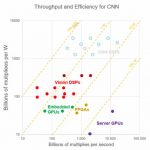
Every day I read stuff about the coming of fully autonomous vehicles, and it’s not every day we get a technologist’s view of the hurdles faced in getting there. Chris Rowen, CTO of Cadence’s IP group, gave one of the best presentations I’ve seen on ADAS technology and convolutional neural networks (CNNs) at #53DAC, pointing… Read More
ARM and Mentor Enabling the Ecosystem for the Backbone of IoT

Charlene Marini (VP of ARM Segment Marketing) did a nice presentation at the ARM/Mentor Summit last month at the Mentor HQ in Fremont. I just got the slides so let me give you a quick summary from my notes. It was a very good presentation on IoT and emulation which in my mind is the new simulation. I also attended an IoT panel at #53DAC that… Read More
Silicon Insurance: Why eFPGA is Cheaper Than a Respin — and Why It Matters in the Intel 18A Era