





Agentic AI is often presented as a revolutionary shift in semiconductor manufacturing, driven by large language models and generative AI. However, this framing overlooks an important reality: today’s advances are built on decades of prior work. As Jonathan Holt of PDF Solutions emphasizes in his recent keynote at the APCM 2026 conference, the capabilities associated with agentic AI are the result of 30 to 40 years of development in process control, data infrastructure, and system integration. Rather than a clean break, agentic AI represents the next stage in a long technological evolution.
A 40-Year Evolution: From Tool Control to Intelligent Systems
The journey began with early computer-integrated manufacturing (CIM) efforts in the 1980s, where tools were first digitized for monitoring and control. Over time, this evolved into widespread adoption of statistical process control, advanced process control, and run-to-run systems. By the 2010s, machine learning models were being used to predict yield, detect anomalies, and optimize performance.
Despite these advances, most systems remained isolated, designed to solve specific problems without broader coordination. This fragmentation limited the full potential of the data and intelligence being generated.
The Limitation of “Point Solutions”
Traditional semiconductor systems have been highly specialized, addressing tasks such as fault detection, virtual metrology, and scheduling. While effective, these solutions were often siloed and connected through rigid, hard-coded integrations. This made systems difficult to adapt as processes evolved.
Agentic AI changes this paradigm by enabling systems to interact dynamically rather than through fixed pipelines, allowing for greater flexibility and scalability.
What Actually Makes Agentic AI Different
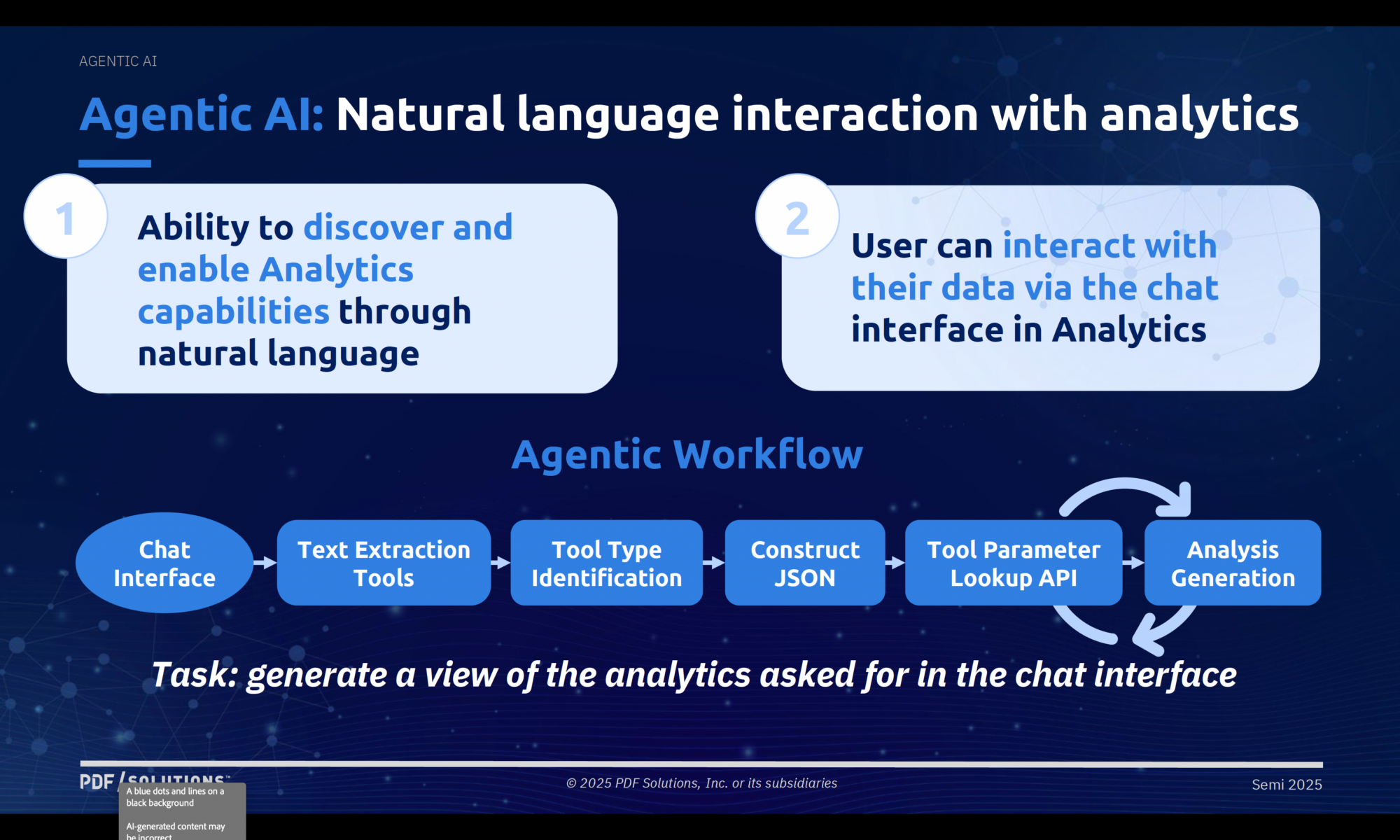
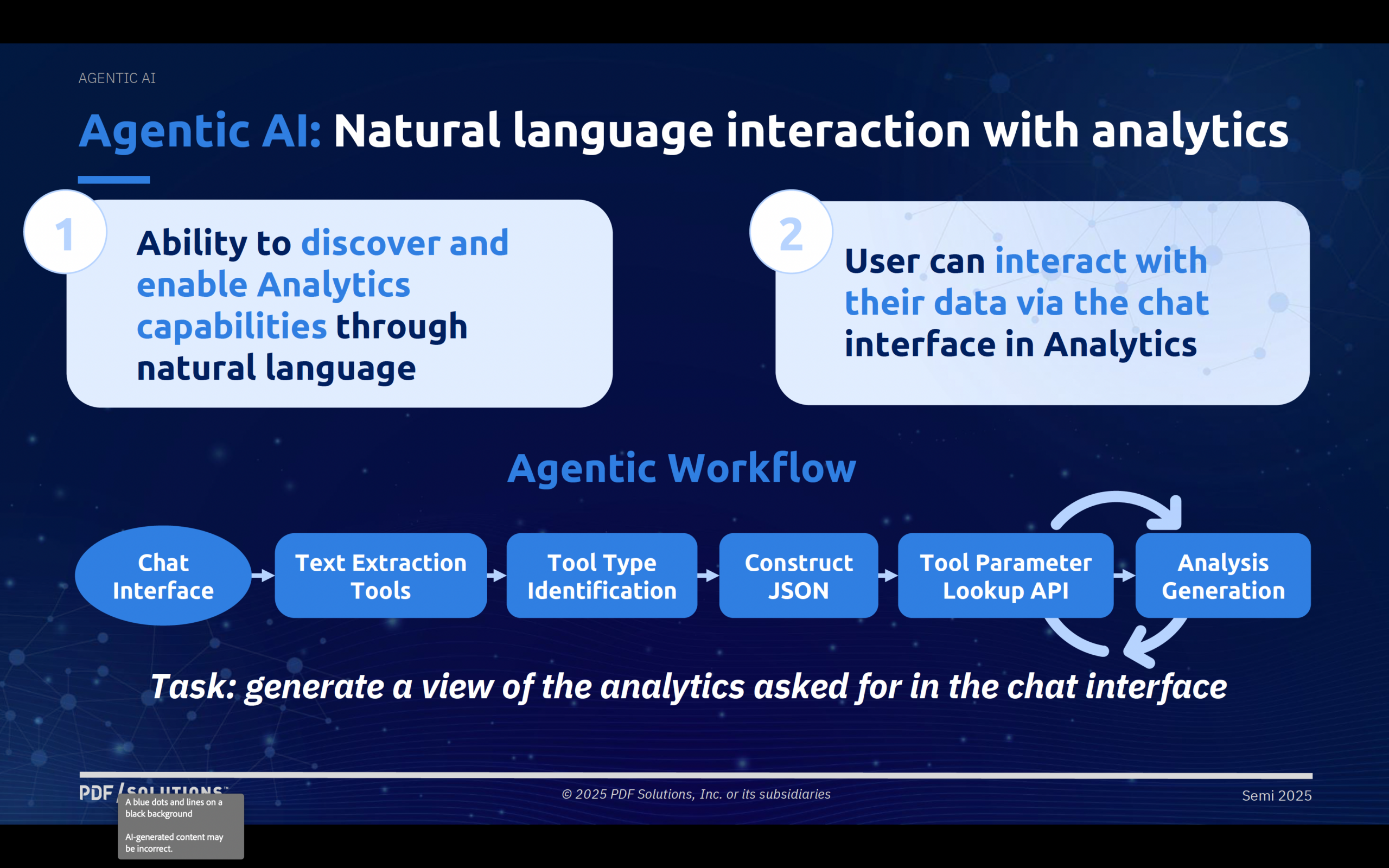
The key innovation of agentic AI is coordination. Instead of isolated tools, systems are structured as agents that can communicate, share context, and collaborate toward shared goals. These agents can break down complex problems, execute tasks, and adapt based on feedback.
This transforms AI from a passive analytical tool into an active participant in manufacturing workflows, capable of making real-time, goal-driven decisions.
The Role of LLMs and MCP: Accelerating the Transition
Recent advances in large language models (LLMs) and communication protocols such as Model Context Protocol (MCP) have accelerated this shift. They enable natural language interaction and standardized communication between systems, significantly reducing the effort required to build and connect workflows.
However, these technologies are accelerators, not foundations. Their effectiveness depends on the underlying infrastructure developed over decades.
The Hidden Backbone: Infrastructure Built Over Decades
Agentic AI relies on a mature foundation that includes extensive sensor networks, standardized communication protocols, and robust data platforms. Digital twins, knowledge systems, and enterprise integration layers provide the context and structure needed for meaningful coordination.
This infrastructure is what makes agentic AI practical today, allowing systems to operate across tools, processes, and even geographically distributed factories.
Agentic AI in Practice: What’s Real Today
While the vision of fully autonomous manufacturing is compelling, current implementations are still semi-autonomous. The industry is roughly 70 to 80 percent of the way toward full autonomy, with human oversight still playing a critical role.
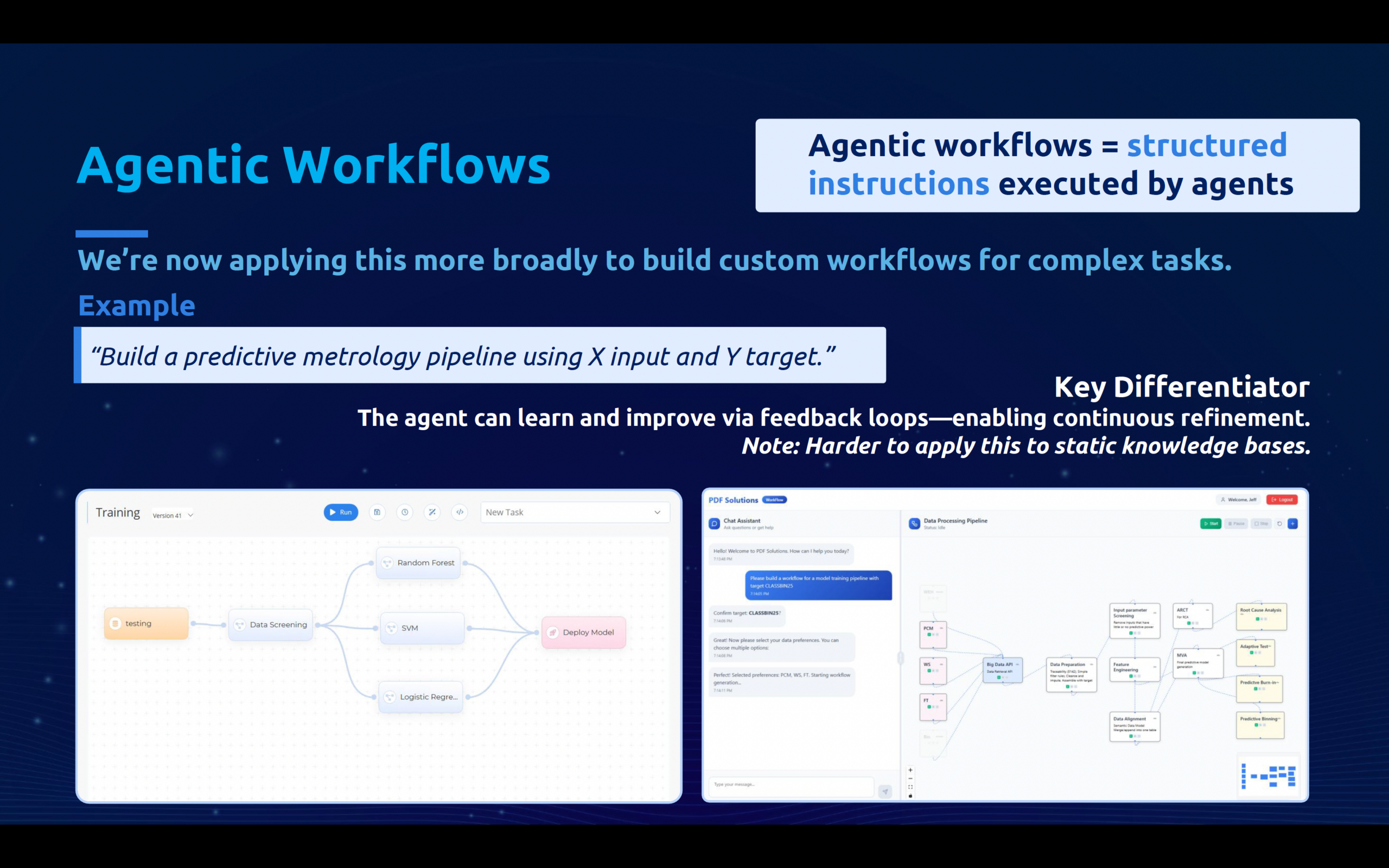
Today’s applications include automated model development, adaptive testing, and cross-stage decision-making. Systems can analyze data, recommend actions, and refine their behavior over time, but humans remain essential for validation and governance.
The Trade-Off: Intelligence vs. Trust
A key limitation of agentic AI is data sharing. While broader access to data would improve model performance, concerns around intellectual property restrict how information is exchanged. As a result, systems typically share only the necessary outputs rather than raw data.
This approach preserves security but limits the full potential of collaborative intelligence, highlighting a fundamental trade-off between capability and trust.
From Programming to Autonomy: A Useful Analogy
The evolution toward agentic AI mirrors the progression of software development: from low-level programming to object-oriented systems and now to autonomous, self-organizing workflows. In this new paradigm, AI not only uses predefined components but also manages and optimizes them dynamically.
The 8-Layer Stack of Agentic Manufacturing
Agentic manufacturing can be understood as a layered architecture, starting with physical equipment and sensors, followed by control systems, integration layers, data platforms, and multi-agent coordination. At the highest level lies the goal of fully autonomous orchestration.
Today, most organizations operate in the middle to upper layers of this stack, with full autonomy still a future objective.
The Real Bottleneck: Not Technology, But Integration
The primary challenges in adopting agentic AI are not related to algorithms but to integration, standardization, and organizational readiness. Aligning systems, managing data, and ensuring reliability across complex environments remain significant hurdles.
Strategic Implication: The Platform Is the Advantage
The effectiveness of agentic AI depends heavily on the strength of the underlying platform. Organizations with well-developed data infrastructure and integration capabilities are better positioned to scale and realize value. Without this foundation, even advanced AI systems risk remaining isolated.
Summary
Agentic AI is best understood as the culmination of decades of progress rather than a sudden breakthrough. Its value lies in connecting and enhancing existing systems, enabling a more adaptive and collaborative manufacturing environment.
The key question going forward is not what AI can do, but how effectively it can be integrated into the complex ecosystems that define modern semiconductor manufacturing.
To learn more:
“The Evolution of AI in Process Control: From Basic SPC to Agentic AI Systems”
“Evolution of Agentic AI for Process Control”
Also Read:
Two Paths for AI in Semiconductor Manufacturing: Platform Integration vs. Point Solutions
WEBINAR: Beyond Moore’s Law and The Future of Semiconductor Manufacturing Intelligence
Operationalizing Secure Semiconductor Collaboration: Safely, Globally, and at Scale
Share this post via:



Comments
There are no comments yet.
You must register or log in to view/post comments.